
King Charles meets Kenya veterans after admitting colonial abuses
NAIROBI: King Charles III paid tribute on Wednesday to Kenyan soldiers who fought for Britain in two world wars, after acknowledging there was “no excuse” for colonial-era abuses committed in the East African country.
But his comments on Tuesday on the first day of a state visit to Kenya disappointed some who were seeking a formal apology for Britain´s brutal crackdown on the nation´s independence struggle.
The 74-year-old monarch said the “wrongdoings of the past are a cause of the greatest sorrow and the deepest regret,” but stopped short of an apology. “There were abhorrent and unjustifiable acts of violence committed against Kenyans as they waged... a painful struggle for independence and sovereignty. And for that, there can be no excuse,” he told a state banquet.
“None of this can change the past but by addressing our history with honesty and openness, we can perhaps demonstrate the strength of our friendship today, and in so doing, we can I hope continue to build an ever-closer bond for the years ahead.”
The Kenya Human Rights Commission (KHRC), which had earlier urged Charles to “issue an unconditional and unequivocal public apology” for colonial abuses, dismissed his remarks as “nothing to write home about”.
“In no way did he acknowledge any of the grave concerns that we have raised,” KHRC programme adviser Martin Mavenjina told AFP.
“One would have expected an apology but the king has fallen short of apologising.” Charles, accompanied by Queen Camilla, is on his first tour of an African and Commonwealth nation since becoming king last year.
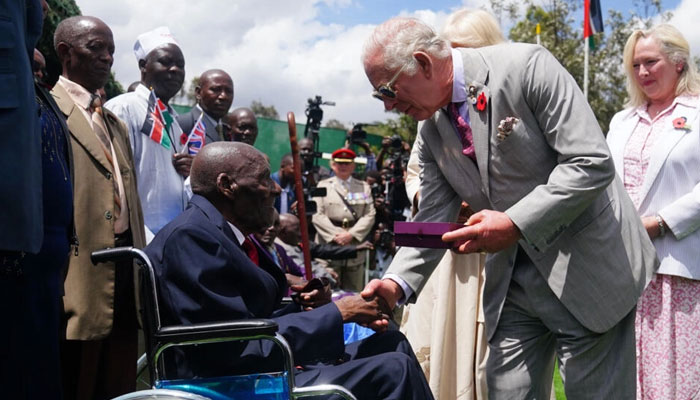
On Wednesday, the royals visited a war cemetery in Nairobi to honour Africans who served the British empire in two world wars, laying a wreath in front of their graves before meeting Kenyan veterans, some in wheelchairs.
“I hope we can do something special for you,” Charles told one veteran as he handed out medals to the former soldiers, part of a British initiative to belatedly recognise the contribution of non-European forces to the war effort.
One veteran, Samweli Mburia, who said he was over 100 years old, told AFP he had originally received a medal during colonial rule but got rid of it because he “feared retribution” from independence fighters.
“There were a lot of people who were not happy we... fought in the war,” said Mburia, who served in Egypt, Ethiopia and Myanmar.
On Tuesday, Charles and his host President William Ruto laid a wreath at the Tomb of the Unknown Warrior in Uhuru Gardens, a place steeped in Kenyan history. It was there that Kenya´s independence was declared at midnight on December 12, 1963, on the site of a camp where British colonial authorities detained suspected Mau Mau guerrillas during the suppression of their 1952-1960 uprising.


