
SHC overturns life sentence awarded in drug smuggling case
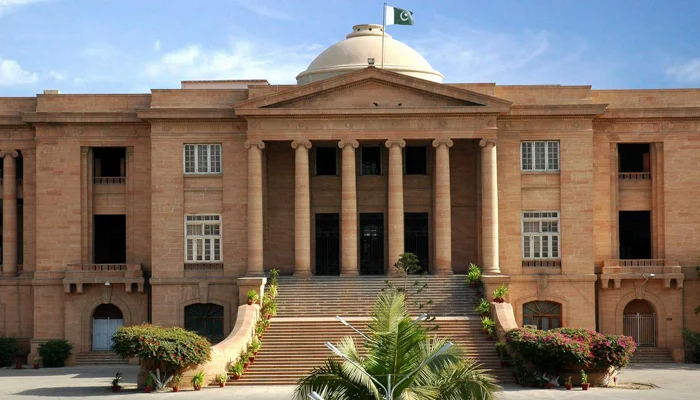
The Sindh High Court (SHC) has set aside the life imprisonment sentence of two men, who were earlier convicted in a drug smuggling case, after finding that the prosecution failed to prove the charges levelled against them.
Rahamudin and Abdul Saeed had been sentenced to life in jail by the additional district & sessions court (West). According to the prosecution, the appellants had been arrested by the Special Investigation Unit on receiving intelligence that they were smuggling charas in their rickshaw on November 9, 2021.
Police had claimed to have recovered 36 kilograms of charas from their possession. The appellants’ counsel Mohammad Farooq said the prosecution had failed to prove safe custody and safe transmission of the charas to the chemical examiner.
He said that the private witness did not support the prosecution’s case, yet he was not declared hostile by the prosecution. He also pointed out material contradictions in the prosecution witnesses’ statements and evidences, and sought the acquittal of his clients giving them the benefit of the doubt.
Additional Prosecutor General Ali Haider Saleem said that although the private witness did not support the prosecution’s case, other police officials fully implicated the appellants in the commission of the offence, and the recovery of charas from their possession.
He then requested that the high court dismiss the appeal, claiming that the prosecution had proved its case against the appellants beyond any reasonable doubt.
After hearing the arguments and the perusal of the evidence in the case, an SHC division bench headed by Justice Naimatullah Phulpoto said the prosecution had failed to prove its case against the appellants.
The bench said that according to the prosecution’s evidence, the time of arrest and recovery was midnight, and the source of light was torch, but the said torch was not produced before the trial court.
The court said that first Mashir, who was a private witness, had not supported the prosecution and specifically said before the trial court that he could not identify the accused at the time of arrest and recovery, yet the prosecution failed to declare him hostile.
The bench said the prosecution had also failed to prove safe custody and transmission of the charas because nowhere in the evidence of the police inspector was it mentioned to whom he had handed over the charas for custody.
The court said the prosecution had failed to establish where the charas was kept for a day, and even the Malkhana incharge had not been examined by the prosecution.
The bench said the prosecution needed to establish that the chain of custody of the charas recovered from the appellants had remained unbroken, safe, secure and indisputable to be able to place reliance on the report of the chemical examiner.
The court said that the facts of the present case revealed that the chain of custody had been compromised, so reliance cannot be placed on the report of the chemical examiner to support the conviction of the appellants.
The bench said the prosecution has failed to prove its case beyond any reasonable doubt, so the benefit of the doubt is being extended to the appellants. The court then set aside the trial court’s decision, and ordered releasing the appellants if not required in other cases.


