Met office forecasts heavy rains in parts of Balochistan, Sindh
Karachi is expected to receive drizzle/light rain on August 27, says the Met Office
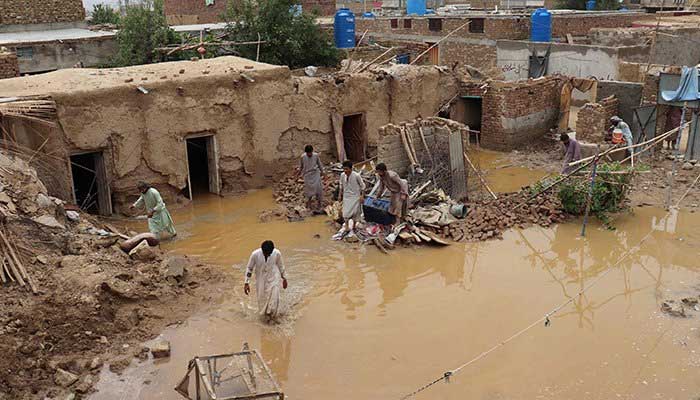
KARACHI: As the recent monsoon rains wreaked havoc and caused widespread destruction in the country during the past few weeks, the Pakistan Meteorological Department (PMD) on Thursday warned that parts of Balochistan and Sindh are expected to receive more downpours during the next 24 hours.
In its daily weather forecast, the Met Office said, “A well-marked low-pressure area (LPA) located over Balochistan and adjoining areas of Sindh. A westerly wave is also present over upper/western parts of the country.”
Under the influence of the prevailing weather system, rain-wind/thundershower is expected in Balochistan, Khyber Pakhtunkhwa, Punjab, Sindh, Kashmir and Gilgit-Baltistan today (Thursday).
In addition to this, scattered heavy falls are also likely in different parts of the country. The Met Office maintained that the low-pressure area prevailing in central Sindh has weakened.
Heavy rains in Balochistan may cause flash floods in Dadu, Jamshoro and Qambar Shahdadkot, said the PMD.
The Met Office warned that flash flooding is expected in Qilla Saifullah, Quetta, Ziarat, Harnai, Pishin, Loralai, Barkhan, Kohlu, Dera Bugti and other areas today and tomorrow.
Karachi is expected to receive drizzle/light rain on August 27, said the Met Office.
The PMD also advised commuters and tourists to remain cautious during the forecast period.


-
 Punjab by-polls: Notices served on minister, SAPM for ‘violating’ election code of conduct
 -
 27th Amendment empowers FCC to hear all constitutional cases: minister
 -
 JF-17 attracts strong attention at Dubai Airshow as friendly country inks procurement MoU
 -
 US lawmakers laud Punjab govt's initiative to modernise brick-kiln
 -
 Security forces gun down 30 terrorists in multiple IBOs in KP: ISPR
 -
 MQM-P calls for new province in Sindh
 -
 US report validates Pakistan military edge over India: PM
 -
 Banned TTP poses serious threat to Pakistan security: UNSC panel