Joe Biden vows military defence of Taiwan if China invades
"We agreed with One China policy...but idea that it can be taken by force is just not appropriate, it would be another action similar to Ukraine," says Joe Biden
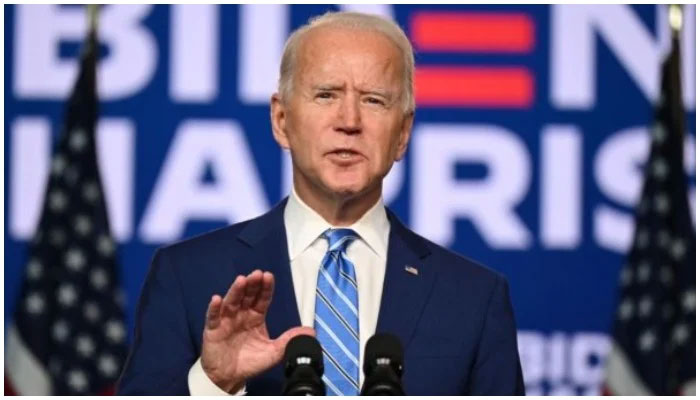
TOKYO: President Joe Biden vowed Monday that US forces would defend Taiwan militarily if China attempted to take control of the self-ruled island by force, warning Beijing was already "flirting with danger".
The remarks, made in Tokyo where he is meeting with Japan's prime minister ahead of a regional summit Tuesday, were Biden's strongest to date on the issue and come amid rising tensions over China's growing economic and military power.
Washington and allies like Japan have framed their tough response to Russia's invasion of Ukraine as a warning to others, especially China, against unilateral military action.
Biden hammered that message home after talks with Japanese Prime Minister Fumio Kishida in which the pair agreed to monitor Chinese naval activity and joint Chinese-Russia exercises.
Biden then went further. Asked if Washington was willing to get involved militarily to defend Taiwan, he replied: "Yes."
"That's the commitment we made," he added.
"We agreed with the One China policy, we signed on to it... but the idea that it can be taken by force is just not appropriate, it would dislocate the entire region and would be another action similar to Ukraine," Biden said.
Biden directly linked the fates of Ukraine and Taiwan, saying Western sanctions on Russia must exact a "long-term price" because otherwise "what signal does that send to China about the cost of attempting to take Taiwan by force?"
He warned Beijing was already "flirting with danger right now by flying so close and all the manoeuvres undertaken" — referring to a growing number of Chinese sorties, naval exercises and other power projections in the Taiwan Straits.
In Beijing, foreign ministry spokesman Wang Wenbin swiftly responded, declaring that "no one should underestimate the firm resolve, staunch will and strong ability of the Chinese people in defending national sovereignty and territorial integrity."
"China has no room for compromise or concession," the spokesman said.
Policy has not changed
Like most nations, the United States diplomatically recognises Beijing over Taiwan. But it also maintains de facto diplomatic ties with the self-ruled, democratic island.
For decades it has maintained a policy of "strategic ambiguity" in which it never makes clear what it would do in the event of an invasion while agreeing to help Taiwan build its defences against attack from Beijing.
The policy was designed both to keep Beijing from declaring war and also to stop Taiwan from formally declaring independence.
Biden's remarks Monday overshadowed his rollout of a new, 13-nation regional trade framework as well as Tuesday's meeting of the Quad group.
The White House said that Biden was not diverging from the official "One China" policy, which includes the commitment to "provide Taiwan with the military means to defend itself".
"Our policy has not changed," the official said.
But Beijing's growing sabre-rattling on the issue, as well as Russia's Ukraine invasion, is shaking up the status quo.
Among those augmenting diplomatic support for Taipei is Japan, which has regularly warned China against "unilateral" attempts to change the impasse.
Kishida called for stability in the Taiwan Strait and said Tokyo was committed to boosting its defence spending, a sensitive subject in a country with constitutional limits on its military.
"Japan will fundamentally strengthen its defence capacity, and to back that up will significantly increase its defence spending," Kishida said at a joint press conference with Biden.
"We don't rule out any options, including (acquiring) the capacity to counter-attack," he added.
Asia trade grouping launched
Biden is in Japan on the second leg of an Asia trip intended to reinforce regional ties and show Washington remains committed to the region despite its heavy involvement with the crisis in Ukraine.
He finished his hectic day by joining Kishida and the prime minister's wife in an upscale Tokyo restaurant set in a peaceful garden and serving sushi and other traditional food.
Earlier, he announced Monday that 13 countries have joined a new, US-led Asia-Pacific trade initiative touted as a counterweight to China's aggressive expansion.
And on Tuesday, Biden meets with fellow Quad leaders from Japan, Australia and India.
He arrived in Tokyo on Sunday after stopping in Seoul for talks with newly elected President Yoon Suk-yeol.
While there, Biden said he was willing to meet Kim Jong Un if the leader-for-life is "sincere", despite the threat of a possible North Korean nuclear test hanging over the Asian tour.


-
 Takaichi to meet Trump ahead of high-stakes Trump-Xi summit
 -
 6 killed, multiple injured in Southern Philippines school shooting
 -
 South Korea rejects military deployment to Middle East amid Trump pressure
 -
 New Zealand sets record straight on EU associate membership report
 -
 Manitoba scraps daylight saving clock changes after overwhelming public support
 -
 What the EU partnership could mean for Canada for work, study, and trade
 -
 Kerry-Lynne Findlay refuses to resign after BC Conservative MLAs ask her to step down
 -
 Scientists discover new wild cat species in Bolivia for the first time in a century
-
 Former Republican senator Jon Kyl dies at 84, family announces
 -
Spain’s PM shares cryptic EU maple leaf image as Canada moves closer to Europe
-
Academic admits using fake Jeffrey Epstein fund letter to claim $750,000 settlement
-
US military F-16 crashes in Michigan during training exercise, pilot ejects to safety