Unitree soars 629% in stock market debut as China accelerates robotic advancement overhaul
The blockbuster debut pushed the Chinese humanoid maker’s valuation past $60 billion as investor demand surges and Beijing accelerates its robotics push
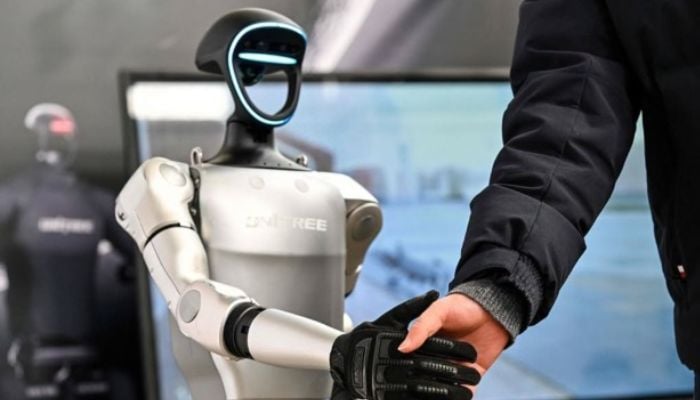
Chinese robotic industry is rapidly boosting revenue through new advancements. In a latest tech update shares of Unitree Robotics skyrocketed more than 600% during its highly anticipated stock market debut on the Shanghai Stock Exchange’s STAR Market.
The world’s largest humanoid robot maker, Unitree Robotics, made its stock market debut in Shanghai on Wednesday, with its shares soaring more than 600% in early trading.
The Chinese humanoid robotics pioneer saw its stock jump from its initial public offering (IPO) price of 150.80 yuan (~$22.30) to an intraday high topping 1,100 yuan, driving its market valuation briefly past $60 billion.
Unitree raised approximately $904 million at its initial $9 billion valuation, but heavy investor appetite fueled an explosive first-day trading frenzy.
The company widely known for its acrobatic quadruped "robot dogs" and advanced humanoids like the G1 and the newly unveiled "Superman" model is backed by major tech giants including Alibaba, Tencent, and AI developer DeepSeek.
Unitree's massive rally heavily outperformed broader Chinese equities, bucking a downward trend on the Shanghai Composite and CSI 300 indexes.
While Unitree is not the first Chinese humanoid robot maker to list on the stock market, its debut marks the first in mainland China.
Robots like automated industrial equipment and smart vacuum cleaners are already widely used in factories, warehouses and homes.
Now, the humanoid robotics industry is attracting huge amounts of investment as major companies including Tesla, BYD and Amazon are developing two-legged machines capable of performing tasks usually carried out by people.
The listing on the technology-focused Star Market, which is widely known as China's Nasdaq marks a milestone for Beijing's ambitious plans for the country's robotics industry.
It comes as the US and China are battling to dominate the global market for robots and artificial intelligence (AI) models that power them.


-
 US inflation rises less than expected: What to know
 -
 OpenAI’s revenue run rate nears $70 billion: What to know
 -
 Canada’s economy records zero growth in July as key sectors decline
 -
 UK diesel price hits all-time high amid Middle East supply crunch, RAC warns
 -
 Meta’s Muse AI agent gets new tools for small businesses: What to know
 -
 China weighs allowing ByteDance, Alibaba to purchase new Nvidia RTX Pro 5500 chips
 -
 Why Bill Gates is calling for stronger AI rules amid growing safety concerns
 -
 Meta’s Muse agent targets one of the economy’s most profitable sectors: Key details to know