Hantavirus outbreak on cruise ship: Second case confirmed after deaths
The ship made the journey of more than 6,000 miles at sea starting from Argentina
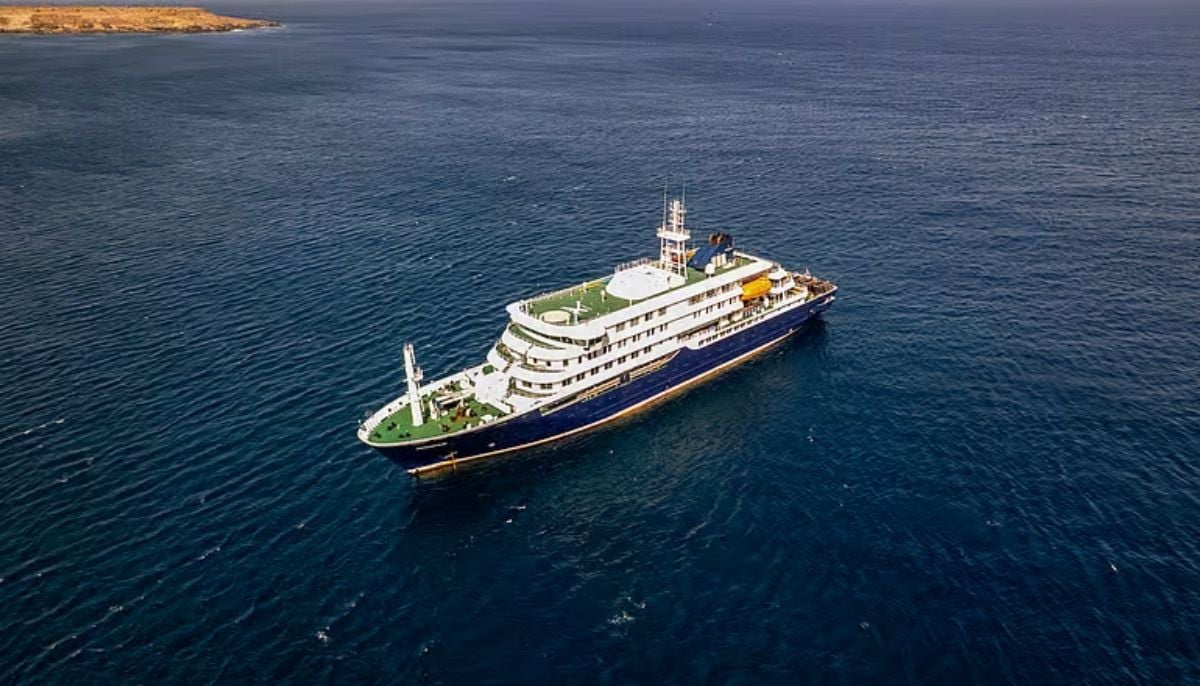
Two cases of hantavirus have been confirmed after cruise ship deaths in which three people died and another was left seriously ill.
The outbreak occurred on a cruise ship crossing the Atlantic Ocean. According to the MV Hondius ship’s operator Oceanwide Expeditions, the dead include a Dutch person, his wife and a German passenger. A Dutch woman tested positive for the virus.
A 69-year-old British national has also been confirmed as a carrier of the rare virus and subsequently evacuated to a South African hospital for intensive care.
Meanwhile, the vessel remains anchored off the coast of West Africa near Cape Verde after local authorities blocked passengers from disembarking on the grounds of safety concerns on Tuesday.
Plans are currently underway to evacuate three more individuals from the ship: a German national’s close contact and two crew members who are suspected of having contracted the virus.
The Oceanwide Expeditions authorities have kept some 149 people from 23 countries on the ship “under strict precautionary measures” marked by hygiene and isolation protocols.
The ship made the journey of more than 6,000 miles at sea starting from Argentina.
According to the WHO’s director of epidemic and pandemic preparedness, Dr Maria van Kerkhove , the global health agency is discussing plans with Spanish authorities, allowing it to continue the ship's journey to the Canary Islands.
The plan would help the experts to properly carry out “risk assessment” with all passengers remaining on board. But our first and foremost priority is to treat the two crew members, said Van Kerkohve.
Oceanwide Expeditions said they are considering the option of sailing to Las Palmas, “as a gateway for disembarkation, where further medical screening and handling could take place.”
Hantavirus is usually transmitted from rodents to humans through their faeces, urine and saliva. It is rare to witness the transmission between people even through close contact.
"Our working hypothesis is that there's probably a couple of different types of transmission that might be happening," van Kerkove said.
WHO's regional director for Europe, Dr Hans Henri P Kluge, said "hantavirus infections are uncommon".
"While severe in some cases, it is not easily transmitted between people. The risk to the wider public remains low. There is no need for panic or travel restrictions."


-
 Lili Reinhart reveals why she 'felt convinced' to do 'The Love Hypothesis'
 -
 Madonna's secret adoption after daughter Lourdes Leon's birth exposed
 -
 Secret UFO tape discovered after 70 years may reveal hidden details about 'Invasion of Washington'
 -
 Jenna Leigh Green drops bombshell about her role in 'Sabrina the Teenage Witch' after decades
-
 Ex-Pentagon official makes chilling claim: UFOs provoke US military
 -
 Inmates stage daring takeover of Bertie-Martin Regional Jail
 -
 Paris mortuaries at capacity as heatwave death toll climbs
 -
 US Supreme Court allows Lisa Cook to remain at Fed
 -
 Car crashes into North Circular Bus stop, two injured
 -
 Germany Shooting: 5 adults killed at Stade Youth Centre, suspects detained
 -
 'Iran has requested a meeting': Trump announces surprise Doha talks
 -
 Dangerous heat wave sweeps US before July 4: Which states will be hottest?
-
 Andy Burnham rules out Cabinet appointments until leadership race concludes
 -
Will missing flight MH370 ever be found? Malaysia extends search until 2027
-
Spanish PM Pedro Sanchez faces pressure as wife Begona Gomez ordered to stand trial
-
Father, son pulled alive from rubble four days after Venezuela quakes