Fuel emergency: UK government unveils ‘flight consolidation’ plan to save summer travel
New plans will help to avoid disruptive, last-minute cancellations for passengers

The UK government has introduced emergency contingency plans to prevent airport chaos this summer as the conflict in the Middle East threatens global jet fuel supplies.
The measures aim to give airlines the flexibility to reduce schedules without facing financial or regulatory penalties. Under normal rules, airlines must use their takeoff and landing slots 80% of the time to keep them.
The government will temporarily waive this, allowing airlines to cancel flights weeks in advance without losing these multi-million-pound assets. Airlines are encouraged to merge multiple daily flights to the same destination.
For example, a carrier running ten daily flights to Frankfurt might reduce to eight, moving passengers onto the remaining planes to save fuel.
Transport secretary Heidi Alexander said she was confident most people travelling this summer would have a similar experience to last year. In line with travel experts' suggestions, the policy will prioritize holiday travel over high-frequency business routes.
She told the BBC's Sunday with Laura Kuenssberg programme: “On the basis of the information that I've got today, I am confident that the majority of people that are travelling this summer will have a similar experience to last year.
“There may be a need for airlines to trim their schedules slightly.”
While currently there is no shortage, the closure of the Strait of Hormuz has blocked traditional supply routes from the Middle East.
The International Energy Agency (IEA) warns Europe could face critical shortages by June. In this regard, the UK is attempting to mitigate the risk by increasing imports from the US and West Africa, while ordering domestic refineries to maximize production.
The government is consulting on allowing the use of Jet A fuel in the UK- which has a higher freezing point than the standard Jet A1 used in Europe-to broaden the supply pool.
If a flight is cancelled, passengers are still entitled to a refund or rerouting, as well as “care and assistance.”
Airlines are lobbying to classify fuel shortages as “extraordinary circumstances” to avoid paying out cash compensation.
While the UK has not yet agreed to waive compensation, the European Commission has signaled that airlines might be exempt if they can prove the disruption was directly caused by the fuel crisis and was unavoidable.
Shadow Transport Secretary Richard Holden criticized the move, arguing that the need for such plans exposes the UK’s lack of energy security compared to other nations.


-
 Apple faces record $5.7 billion patent verdict over haptic technology: Here’s why
 -
 Anthropic IPO: Co-founders push for majority voting power
 -
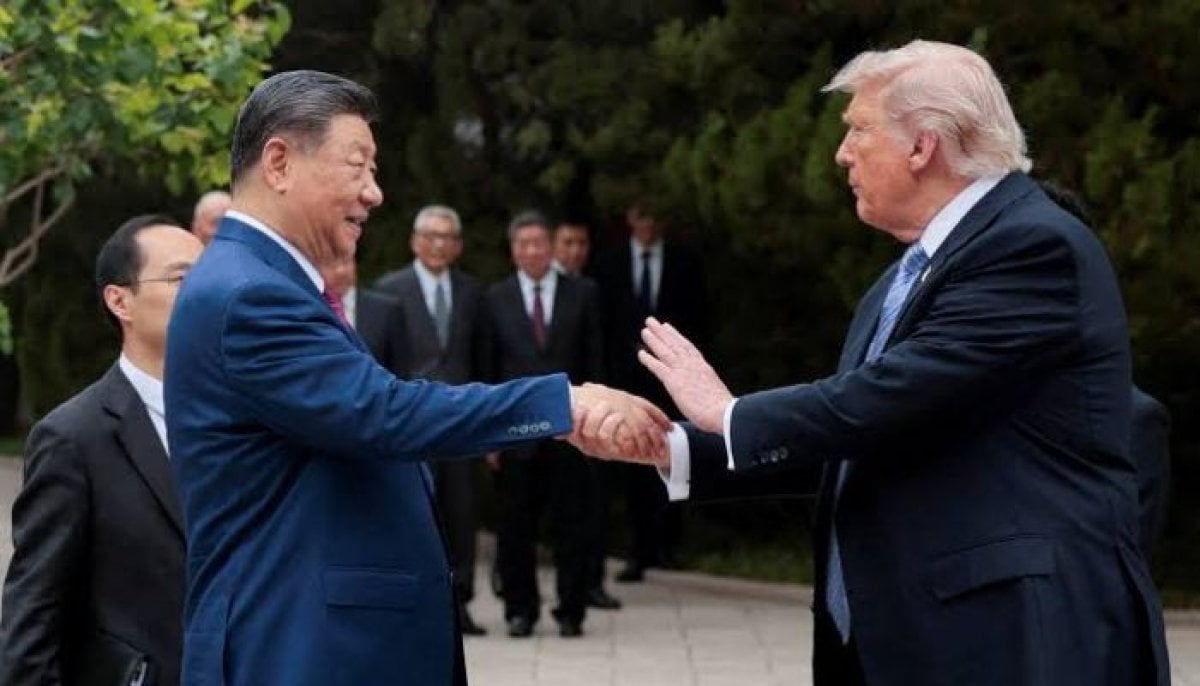 Trump-Xi summit: China sees ‘surprise’ surge in U.S. orders
 -
 Polymarket sues New York Attorney General to block prediction market crackdown
 -
 AI tools for health generated nearly $1 billion in extra costs: report
 -
 Qualcomm and Apple extend global patent licensing agreement: What to know
 -
 Chinese AI startup DeepSeek hits $1 billion annualized revenue run rate following API price hikes
 -
 Morgan Stanley staffer accidentally emails Asia deal to outsiders: Key details to know
-
 Oil prices drop for fifth straight session amid hopes for Iran diplomacy and Saudi pipeline
 -
Apple aims to take on Microsoft, Nvidia in a rush to lower AI costs with new devices
-
SoFi launches first U.S. stablecoin settlements on Mastercard: What users need to know
-
Banks raise red flags over AI shopping bots and scam risks: What to know