Trump’s new tariff strategy: New import taxes implemented to replace those struck down by Supreme Court
Trump rolled out temporary import taxes to replace those struck down by the Court

The High Court struck down President Trump’s sweeping global tariffs, ruling he overstepped his authority by using the International Emergency Economic Powers Act (IEEPA); consequently, the administration has pivoted to a more durable legal strategy.
The government must now refund $166 billion to importers. To stem the revenue loss, the administration used Section 122 of the Trade Act to slap a temporary 10% tariff on imports.
However, these expire on July 24, and Congress is unlikely to extend them due to the upcoming midterm elections. The administration is now fast-tracking investigations under Section 301.
Unlike the IEEPA, Section 301 tariffs are legally sturdier because they are tied to specific investigations into unfair trade practices and have survived court challenges in the past.
“For too long, American workers and firms have been forced to compete against foreign producers who may have an artificial cost advantage gained from the scourge of forced labor,” U.S. Trade Representative Jamieson Greer said in March.
In this connection, the Office of the US Trade Representative (USTR) is launching two probes this week to justify the new round of permanent taxes.
The first is an investigation into 60 economies representing 99% of US imports regarding their efforts to prohibit products made with forced labor. Subsequently, 16 major trading partners, including China, the EU, and Japan are accused of overproducing goods to drive down global prices and hurt US manufacturers.
In line with critics, the investigations are merely a formality. Treasury Secretary Scott Bessent has already publicly stated that original tariff revenues will be replaced by these new taxes before the probes have even finished.
The administration is moving at double the normal speed; while past Section 301 probes took a year, these are being rushed to ensure new tariffs are ready by the July 24 deadline. Meanwhile, the resulting tariffs would be paid by US importers and likely passed on to consumers.
This comes at a sensitive time, as voters are already frustrated with the high cost of living ahead of November.
Despite the Supreme Court’s attempt to limit the President’s trade powers, the administration is using a “procedural shield” to rebuild its protectionist wall. While legal challenges are certain, the administration believes the formal investigation process provides enough legal cover to make these tariffs stick.
“One of the reasons Trump used IEEPA is because it was just a complete blank slate’’ — or seemed to be before the Supreme Court ruling, Cato’s Lincicome said, describing it as “a little tariff switch in the Oval Office that Trump could flip on and off anytime he wants; he wakes up in the morning and he doesn’t like a Canadian television commercial, he flips the switch ... You really can’t do that with 301.’’


-
 Trump economic approval hits new low as Americans blame him for rising prices
 -
 Russia reveals why Kanye West’s shows were cancelled
 -
 New ICE rules require body cameras and ban high-speed car chases
 -
 Brazil investigates reported Trump funding for campaign against Supreme Court
 -
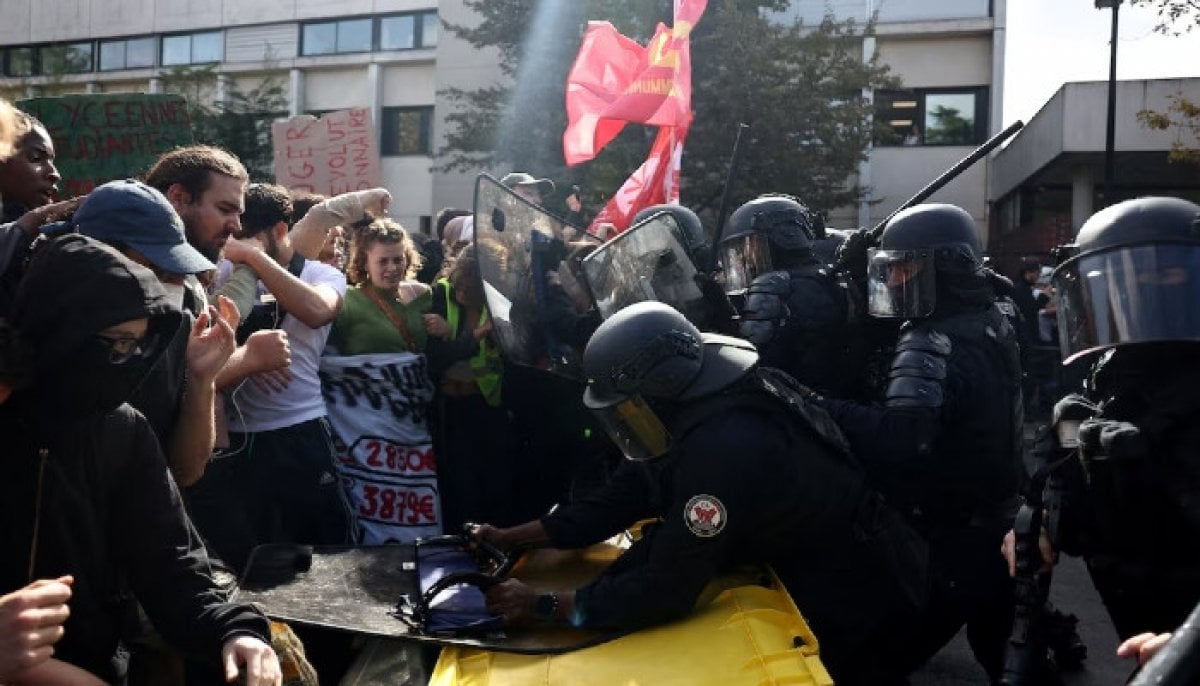 France school protests turn violent with more than 160 schools shut
 -
 US data centre ran dozens of generators without permits for nearly a year, report finds
 -
 Man previously detained in Nancy Guthrie case 'booked' into jail
 -
 UK, France and Baltic states excluded from Pentagon-led NATO talks
-
 CNN abruptly dropped from White House press pool for second time
 -
California's iconic roller coaster shuts down permanently following brain injury claims: report
-
Lindsay Clancy's lawyer gains following among her supporters
-
Netanyahu protected from protesters by New York police amid Mamdani's arrest threat