FCC seeks DRAP report on availability of life-saving drugs

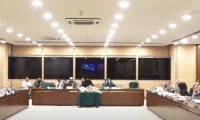
ISLAMABAD: The Federal Constitutional Court (FCC) on Monday directed the Drug Regulatory Authority of Pakistan (DRAP) to submit a comprehensive report on the nationwide availability of life-saving medicines and adjourned further proceedings for an indefinite period.
A three-member bench headed by Chief Justice Aminuddin Khan took up the case. During the hearing, the petitioner informed the court that he had sought the registration of 41 life-saving drugs, of which registration for 30 medicines had been completed. However, he added, DRAP had not yet provided complete information regarding the availability of these medicines in the market.
He added that during the previous hearing, DRAP had assured the court that details of life-saving medicines would be uploaded on its website, but many of the drugs still did not appear in the online database.
DRAP’s counsel argued that prices of several medicines—particularly those used for diabetes—were being regulated, and that information regarding life-saving drugs was being updated on the website.
The court directed DRAP to submit a detailed report on the availability of the medicines across the country and adjourned the hearing indefinitely. Meanwhile, the FCC bench suspended a Sindh High Court’s (SHC) ruling that barred the use of public parks in Karachi for commercial and sports-related activities.
The order was issued while hearing an appeal filed by the Karachi Metropolitan Corporation (KMC) against the earlier judgement. During the proceedings, KMC’s counsel argued that the matter pertained to the administrative and legal authority of the corporation.
He informed the court that KMC, through a formal resolution, had approved the use of nine public parks in Karachi for sports activities. According to the counsel, the SHC judgement—issued on August 26, 2025—declared KMC’s decision null and void without granting the corporation its right to a fair hearing under Article 10-A of the Constitution.
He added that KMC had already approached the Supreme Court against the verdict. The bench observed that the case involved matters of public interest and required detailed consideration. Subsequently, the court suspended the SHC decision, issued notices to all parties, and adjourned further hearings until November 27.
It is noteworthy that the SHC ruling came in response to petitions filed by citizens who challenged KMC’s move to allow the commercial use of public parks for sports activities, arguing that such actions compromised the original purpose of public recreational spaces.
The same FCC bench, meanwhile, set aside a Lahore High Court (LHC) ruling regarding the appointment of the vice chancellor of King Edward Medical University (KEMU), effectively disposing of the case.
At the outset of proceedings, the bench noted that no counsel appeared before the court. After reviewing the case record, the court held that the LHC decision could not be sustained and was therefore declared null and void.
The bench observed that if any party felt aggrieved by a judicial decision, it retained the right to approach the appropriate forum for relief. With these remarks, the appeal was disposed of. It may be recalled that the LHC had terminated the appointment of Professor Asad Aslam as KEMU VC while hearing a petition challenging the selection process.
Meanwhile, another FCC bench rejected a plea for an immediate stay order in a constitutional petition filed by employees of the Punjab Revenue Department seeking regularisation of their services. The court directed the petitioners to engage legal counsel before further proceedings.
The two-member bench comprising Justice Hasan Azhar Rizvi and Justice K K Agha heard the case. The petitioners appeared in person and submitted that they had challenged the acceptance of an appeal filed by the Punjab Revenue Department.
Justice Rizvi, addressing the petitioners, remarked that they must appoint an appropriate lawyer, as the court could not hear the case without legal representation. The petitioners requested interim protection, arguing that without a stay order, their gate entry to the department could be blocked.
At this, Justice Rizvi cautioned the petitioner, stating, “Do not try to be over-smart; more than just gate entry can be stopped. First, hire a lawyer; otherwise, we will dismiss the petition right now.”
A petitioner assured the court that he was willing to hire counsel but still sought interim relief. The bench, however, rejected the emotional plea, observing that no stay order could be granted in the absence of an advocate. The court granted the petitioners time to engage counsel and adjourned further hearing.
Meanwhile, the same bench while hearing the appeal of the Khyber Pakhtunkhwa government regarding workers’ dues, issued a stay order against the decision of the Peshawar High Court (PHC).
During the hearing, KP Additional Advocate General Shah Faisal argued that the case concerns poor labourers. He submitted that according to the law, if a private institution dismisses a worker, it must pay the worker’s dues. He further submitted that if the private institution does not pay, the affected worker can file an appeal with the relevant department, and if the decision is in the worker’s favour, the private institution must deposit the dues as security during its appeal.
However, he contended that the PHC removed the requirement for a security deposit in the private institution’s appeal. Meanwhile, the court accepted the request of the AAG, suspended the PHC decision, and issued notices to the parties.


-
 Aurangzeb confirms Saudi Arabia $10bn interest, says B2B shift ongoing
 -
 Pakistan to build artificial island to boost oil exploration
 -
 Special pink bus service launched for women on Green Line route
 -
 Same number plates from other provinces lead to wrong e-challans for Karachiites
 -
 State institutions ‘fail’ to perform constitutional duties: KP CM
 -
 CTD orders psychological testing of police on VVIP security duty
 -
 Navy busts drug consignment valued at $130m
 -
 Three ex-secretaries in race for ETPB chief post