Water under siege
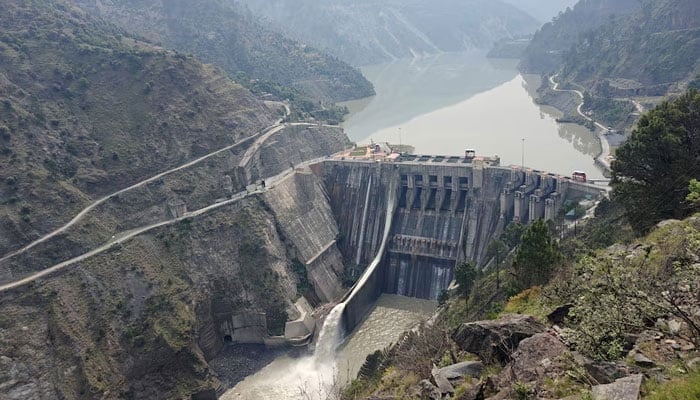
When India announced earlier this year that it was ‘suspending’ the Indus Waters Treaty (IWT), the warning bells in Islamabad rang loud.
Days later, Afghanistan’s interim government confirmed its intention to fast-track a major dam on the Kunar River, a key tributary of the Kabul that flows into Pakistan’s Indus system. Together, these moves signal a new and deeply troubling phase in South Asia’s hydropolitics, one in which water is no longer just a shared resource but a potential weapon. For a country whose very survival depends on the Indus Basin, the threat is existential: can Pakistan defend its waters before they are cut off, and what kind of defence makes sense in a region already haunted by conflict?
Despite being the lower riparian, Pakistan signed the IWT on September 19, 1960 under the advice and insistence of the World Bank and the US – conceding its rights to the three eastern rivers (Ravi, Beas and Sutlej) during the negotiations. What was presented as a negotiated settlement was, in essence, a strategic renunciation of natural claims. The final outcome, celebrated internationally as a model water-sharing accord, allocated the eastern rivers to India and the western rivers to Pakistan, specifically the Indus, Jhelum and Chenab.
The treaty survived wars in 1965, 1971 and 1999 – and countless crises. Yet in April 2025, India abruptly declared the treaty ‘in abeyance’ after a security flare-up in Pahalgam. Pakistan called it a false-flag provocation and warned that tampering with Indus flows would be an act of war. Experts acknowledge that India currently lacks the infrastructure to cut off western river flows entirely, but the political signalling is unmistakable: suspending the treaty is less about engineering capacity than geopolitical leverage. In an era of climate stress, leverage can rapidly morph into coercion.
To Pakistan’s north, Afghanistan’s renewed push to dam the Kunar River adds urgency. The Kunar contributes nearly three-quarters of the Kabul River’s annual flow, which enters Pakistan near Peshawar and ultimately feeds the Indus system. Pakistan has long sought a water-sharing framework with Kabul; none has materialised. Kabul’s announcement to “begin construction as soon as possible” asserts sovereign right but intensifies Pakistan’s water insecurity. Nearly 80 per cent of Pakistan’s renewable freshwater originates beyond its borders; if both India and Afghanistan pursue aggressive upstream development, the Indus Basin could face a two-front squeeze.
This mounting anxiety feeds an increasingly pointed debate at home: should Pakistan adopt pre-emptive measures, such as a strategic dam on the Chitral River (which becomes the Kunar inside Afghanistan), before upstream constraints turn catastrophic? But unilateral action near contentious frontiers risks diplomatic escalation. Water wars rarely open with airstrikes – they begin with survey teams, bulldozers and hurried construction orders. The wiser strategy is to build internal strength before external confrontation.
That strength may lie not only in mountain reservoirs but beneath our rivers. Pakistan’s riverine aquifers are vast underground reservoirs that extend not only under the riverbed but also alongside it throughout the floodplains, forming one of the world’s largest connected groundwater systems, paralleling the Indus and its tributaries,and holding an estimated 400 million acre-feet of water. Hydrologists like Dr Hassan Abbas argue this is Pakistan’s true ‘strategic storage’: nature’s giant underground dam, immune to bombing, diversion, sabotage or blockade. Sustainable extraction technologies, such as horizontal collector wells, could secure urban supply, support agriculture during droughts and serve as a national water reserve. Crucially, unlike surface dams, aquifer development avoids international friction and domestic displacement.
Yet romanticisation would be dangerous. Pakistan already relies on groundwater for over half of its irrigation and nearly 70 per cent of its domestic supply. Over-abstraction, falling water tables, saline intrusion, contamination from arsenic and nitrates, and diminishing recharge mean the aquifer is being mined faster than replenished. Without an integrated approach – small dams where feasible, managed aquifer recharge, regulated tube-wells, flood-spreading basins, modern irrigation methods and strict water accounting – the ‘hidden ocean’ risks becoming a mirage.
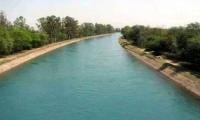
The broader crisis is administrative, not merely hydrological. Pakistan stores less than 10 per cent of its annual water flows. Canal losses exceed 30 per cent. Cities like Lahore and Quetta are digging deeper every year to chase falling groundwater. Meanwhile, rice and sugarcane flood irrigation continues in already stressed zones. Climate change accelerates glacial melt, meaning short-term floods and long-term scarcity. Per-capita water availability has fallen from over 5,000 cubic metres in 1951 to under 900 today – below the threshold of absolute scarcity. As one irrigation official quipped, “Our biggest dam is inefficiency. And it leaks”.
Still, diplomacy must remain Pakistan’s first line of defence. The Indus Waters Treaty, despite its flaws, remains one of the world’s most durable conflict-management frameworks. It was built not on trust, but on verification, mediation and structured rights. Rekindling that discipline is urgent – not only with India, but with Afghanistan. The World Bank, which midwifed the original agreement, can again play a stabilising role. Abandoning negotiation would be reckless; securing national water rights through credible diplomacy remains essential.
In the face of intensifying water pressures – from India’s treaty brinkmanship, Afghanistan’s upstream ambitions, climate-driven hydrological volatility and Pakistan’s own chronic mismanagement – Islamabad must adopt a doctrine of minimum credible resilience. This demands urgent investment in domestic storage, scientifically governed aquifer recharge, strict efficiency standards, enforceable water regulation and unblinking diplomatic vigilance.
Water can no longer be treated as a passive inheritance; it is a strategic asset that must be secured, expanded and defended with the same seriousness accorded to national security. The alternative is reactive brinkmanship that serves neither national security nor national stability.
Water is Pakistan’s lifeblood – and its future battleground. Hydropolitics in South Asia is entering a sharper, more unforgiving phase. Pakistan’s salvation lies not in bellicose statements or hurried megaprojects but in disciplined management, diplomatic foresight and strategic investment in both underground and surface water systems.
As Dr Hassan Abbas reminds us, “Pakistan’s salvation does not lie in more dams, but in looking under its rivers”. Before the rivers run dry, that may prove the most patriotic act of all.
The writer is the author of‘Honour-bound to Pakistan inDuty, Destiny and Death. Iskander Mirza. Pakistan’s First ElectedPresident’s Memoirs from Exile’.He can be reached at:syedkhawarmehdi1812@gmail.com