The wheel of exclusion
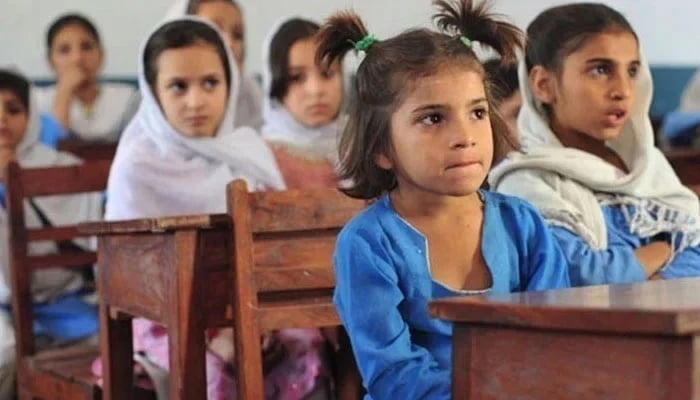
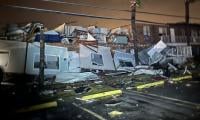
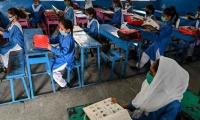
Salma is seven years old. Her family lost everything during the 2022 floods in Sindh, including their home and the only school in their village.
When the government rebuilt a school an hour’s walk away, her parents were eager to enrol her, recognising the value of education for their daughter. However, they worried about her safety walking such a long distance alone, so they arranged for her to walk together with other girls from their village.
But when enrolment began, Salma was the only one who was refused admission because she had a severe hearing disability. The headmaster said that the school did not have any teacher trained to support children with hearing loss.
Salma’s story is hypothetical, but it mirrors the experiences of thousands of Pakistani children. It highlights how multiple identity factors – being a girl, being poor and displaced and living with a disability – can combine to shape a child’s access to education. Such intersecting causes of exclusion can be referred to as the ‘Wheel of Exclusion’, where factors such as poverty, gender, disability, displacement, language, class and religion etc intersect, creating overlapping barriers that multiply disadvantage. In Salma’s hypothetical case, while she overcame the gender and distance barriers to schooling, she fell victim to the lack of disability inclusion in the school.
According to official estimates, more than 26 million children in Pakistan remain out of school, one of the highest figures in the world. Due to patriarchal social norms, girls form the majority, particularly in rural areas. While exact numbers are not available, some estimates indicate that children with disabilities account for approximately one in ten out-of-school children. Such estimates can be expected to rise with recurring climate disasters that cause immediate and continued displacement.
Almost all exclusion from schooling is driven by poverty; however, in some cases, language, caste, religion and location can also be a cause of being out of school. Furthermore, inclusion, when viewed not as enrolment but genuine equal participation, means that even those enrolled in schooling may face unequal treatment based on their gender, social class, religion, etc. These are not separate groups, as often the same children are counted multiple times under different categories.
While recent government initiatives such as URAAN Pakistan, Benazir Taleemi Wazaif, and the commitment to scaling school meals target increasing enrolment, they view them as isolated challenges. Such viewing does not account for intersecting drivers of educational exclusion, for example, new schools in remote areas may reduce distance to school but may not include disability accessible design.
It is time to shift how we view educational exclusion – in silos – to highlight its intersectional nature across the varied markers of identity held by each individual. This is where understanding multi-level exclusion through a metaphorical Wheel of Exclusion framework helps: imagine a wheel divided into interconnected segments, each representing barriers to educational inclusion, such as poverty, gender, disability, location, class, religion, language and climate. The wheel can only move forward when all its spokes are strengthened together. Focusing on one aspect while neglecting others may help some children, but leaves many excluded.
Some examples of key reforms highlight this, such as the twin-track approach to disability inclusion that aims to enrol learners with disabilities in mainstream schools while also providing targeted support. While this is a positive step, it also needs to be viewed in the context of intersecting social factors.
For example, a visually impaired girl student in a rural area does not only need Braille textbooks to enable her enrolment; she also needs safe transport to school, female teachers, and community acceptance. Similarly, addressing school hunger through meal programmes is valuable, but without toilets for girls, menstrual hygiene facilities, or ramps for children with mobility challenges, those schools remain inaccessible to many.
Once enrolled, for students to feel equal in school, learning materials must reflect gender, social, religious, and ethnic diversity. Teacher training must imbibe a similar intersectional approach, enabling them to manage multi-lingual classrooms and adapt lessons to be inclusive towards all the facets of their students’ identities. Initiatives such as Taleemabad, Teach for Pakistan and Durbeen’s teacher academies show promise in reimagining teacher education through such an inclusive lens.
Equity should not be treated as a separate policy theme. It must underpin all aspects of education reform, recognising poverty, gender, disability, language and religion as intersecting rather than parallel factors. Inclusion begins rather than ends with a student’s enrolment in school; it occurs when all children can learn meaningfully, safely and with dignity.
Salma’s parents wanted what every parent wants: a chance for their child to learn and thrive. To enable that for all children, Pakistan’s education policy must make the whole wheel of exclusion turn. Only then will the promise of inclusive education move from policy papers to classroom realities.
Dr Chaudhary is a research associate and Dr Niaz is an assistant research professor at the Faculty of Education at the University of Cambridge. They can be reached @CamillaHCH and @laraibniaz91