The phenomenon of pain can be excruciating and deeply unsettling. But, beyond its immediate impact, it lays bare the realities of life which breed discontent and disaffection.
It is also true that, through centuries, human endeavour has engaged in finding a cure to multiple challenges that one is constantly confronted with. The incessant struggle has yielded results which lie beyond any scale of measurement. Some of these achievements surpass the parameters of excellence, reflecting the infallibility of the human spirit.
While we may have excelled in areas which demand the best in intelligence, expertise, courage and commitment, it is in addressing some seemingly lesser challenges that we have failed to structure a sustainable base for the collective benefit of humanity. Quite often, personal interest has left a deep void in pursuing the struggle for human salvation.
Much has been written about the enactment of the 27th Amendment, and much shall continue to be written. This has encompassed multiple benchmarks of jurisprudence with one question in common: what prompted this salvo and what benefit will it accrue for the ordinary people of the country in the short and long term?
The progress and prosperity of nations are embedded in the strength of their institutions. Of all its needs, the provision of justice is the most important. The history of the world is replete with instances where states which could not ensure it have perished, while those where justice was effectively provisioned have continued to progress to a position of impregnable strength.
Unfortunately, due to prolonged periods of authoritarian rule, with its shadows lingering over what can best be described as unstable, semi-democratic regimes, Pakistan has continued to oscillate between one extreme and another without clarity on how it should be governed, what it should espouse and what it should shun.
Besides damaging its prospects of taking off on a trajectory of progress, the country has been reduced to being a captive state with a begging bowl in hand, knocking on the doors of friends and lenders alike for sustenance. This has left a deep imprint on its psyche and compromised its dignity and self-respect.
Over time, the notion that Pakistan should be governed by the dictates of a few has taken deep root. This is being implemented through controlling the institutions, most notably the judiciary, which are forced to subscribe to dictated guidelines. For an institution like the judiciary, this has come about at the cost of dispensing justice based on substance and merit.
Pakistan’s judicial system has long been burdened with decisions which have brought infamy to its doorsteps. But now, voices have started emanating from within the institution that all has not been well and going down this path can bring total ruination. In fact, we may already have crossed the red line.
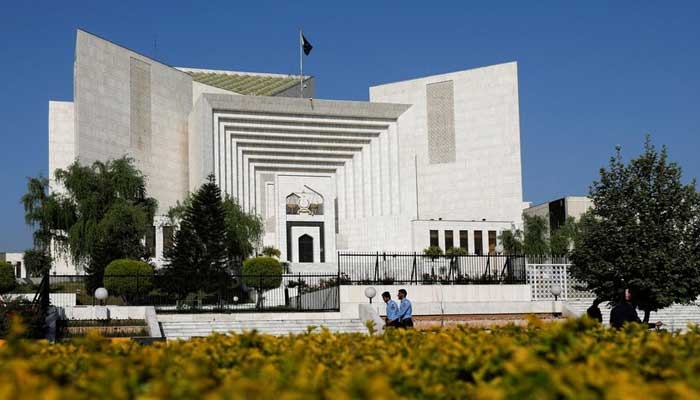
In a letter written to the chief justice of Pakistan, a sitting judge of the apex court has lamented the loss of public trust: “For over seven decades, this nation has endured the burden of injustice, disillusionment and concealment. Too often, truths that shape the destiny of our people have remained shrouded behind the white-marbled walls of our institution. The public, whose faith is the sole source of legitimacy of this court, has the right to know how justice is done and when it is denied”. It goes on: “The moral strength of this court will be measured not by its infallibility, but by its integrity and courage to confront its own shortcomings”.
The statement notes that “the judiciary has been historically captured and continues to serve as a guardian of the power elite rather than as guardian of the constitution and the people’s sovereign will”. These are strong words, indeed, which speak of the stark realisation that much has gone wrong.
First, the 26th and then the 27th Amendment pose a rabid assault on the fundamentals of the judicial architecture in the country. It effectively demolishes the concept of trichotomy of power as enshrined in the constitution regarding the three pillars of the state, the legislature, executive and judiciary, operating independently of each other. By virtue of these amendments, the judiciary has been rendered completely subservient to the diktat of the power elite, thus depriving it of its right and responsibility to ensure justice for the people of Pakistan based on the substance and merit of each case.
Voices from within the judiciary have called for convening a judicial convention to discuss and introspect the challenges the institution is confronted with and how best to deal with them: “Let the convening of a judicial convention be the means for truth and reconciliation within the institution so that we have an opportunity to acknowledge our collective shortcomings. It is our duty to ensure that future generations inherit a judiciary that stands unwaveringly with the constitution, the people and the promise of justice”.
I have long advocated for a dialogue among stakeholders. This is the time to initiate a broad-based inter- and intra-institution engagement to conduct an objective appraisal of where we stand on the threshold of history. It is obvious that much has gone wrong. But things cannot stay this way, as this stagnation will plunge us deeper into the abyss. This engagement is essential for delineating and remedying the flaws which have gradually crept into our body politic and which have generated systemic flaws bordering on dysfunctionality.
We are living through times of discontent. But then, we have lived through such times during all phases of our existence as an independent country, both military and non-military. From one type of government to the next, from one experiment to the next, from choosing one master to the next, from facing one natural or man-made crisis to the next, it has been an endless cycle of uncertainty, which has caused indescribable suffering to the poor and downtrodden multitudes in the country.
There are challenges galore. The spate of terrorism continues to rock the country, targeting military and civilian installations. We are confronted with growing tension on our eastern and western borders. The economic health leaves a lot to be desired. These issues are taking their toll in the form of generating deep-rooted discontent. A state cannot prosper with such destabilising factors.
Divisions within will not be healed unless the people’s mandate is restored. The sanctity of the constitution should not be brutalised through an illicit and contrived majority. Pakistan’s future is embedded in preserving the document in its original letter and spirit and strengthening the institution of democracy that flows from it, not by sowing seeds of autocracy and further perpetuating elite capture.
The writer is a political and security strategist and the founder of the Regional Peace Institute. He is a former special assistant to former PM Imran Khan and heads the PTI’s policy think-tank. He tweets @RaoofHasan