ISLAMABAD: To calculate the latest poverty and inequality figures in Pakistan, the government has established a high-powered committee to estimate national and provincial poverty levels.
However, the government has included representatives from international donors, namely the World Bank, Asian Development Bank (ADB) and UNICEF, in the Poverty Estimation Committee.
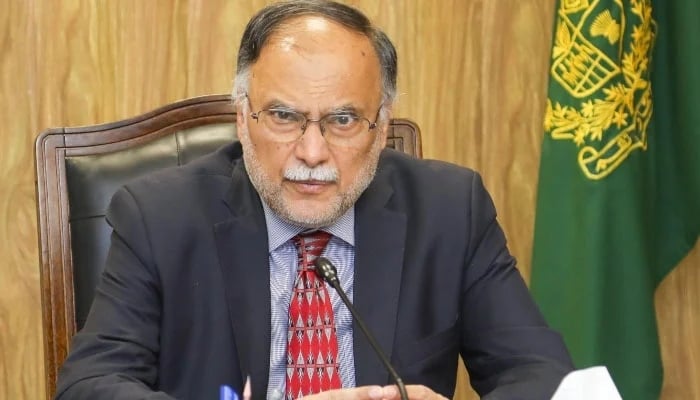
According to a notification issued by the Ministry of Planning, Development and Special Initiatives, following the conclusion of the Household Integrated Economic Survey (HIES) 2024-25 and in line with the ministry’s mandate to estimate national poverty and inequality figures, Minister for Planning Ahsan Iqbal has constituted a 17-member high-powered Poverty Estimation Committee, chaired by Dr G.M. Arif, former Joint Director of the Pakistan Institute of Development Economics (PIDE).
The committee comprises Dr G.M. Arif, former Joint Director, PIDE, Islamabad (Convener/Chairperson); Dr Nadeem Javaid, Vice Chancellor, PIDE, or representative (Member); Dr Aliya H. Khan, Professor (Retired), School of Economics, Quaid-i-Azam University, Islamabad (Member); Dr Abid Qaiyum Suleri, Executive Director, Sustainable Development Policy Institute, Islamabad (Member); Dr Rashid Bajwa, CEO, National Rural Support Programme, Islamabad (Member); Dr Hadia Majid, Chair of the Economics Department, Lahore University of Management Sciences, Lahore (Member); Dr Asma Hyder, Dean, School of Economics and Social Sciences, Institute of Business Administration, Karachi (Member); Dr Akhtar Hussain Shah, former Member, Planning and Statistics Division/Independent Economist, Peshawar (Member); Secretary or representative, Ministry of Finance (Member); Secretary or representative, Ministry of Poverty Alleviation and Social Safety (Member); Secretary or representative, Ministry of National Food Security & Research Member); Representative of Pakistan Bureau of Statistics (Member); Chief Economist, All Provinces (Member); Ali Raza, Poverty Assessment Consultant, UNICEF Pakistan (Member); Dr Babur Wasim, Senior Economist (Consultant), ADB, Pakistan (Member); Ms Christina Wieser, Senior Economist, World Bank Pakistan (Member); and Joint Chief Economist (Economic Policy), Ministry of Planning, Development and Special Initiatives (Member/Secretary). The committee’s four Terms of Reference (ToRs) include estimating national and provincial poverty and inequality figures using the Cost of Basic Needs (CBN) approach based on the Household Integrated Economic Survey (HIES) 2024-25, updating the national poverty line for Pakistan after establishing a justification for its revision, considering social and economic changes since 2013-14, preparing a draft report presenting national and provincial estimates of poverty and inequality derived from HIES 2024-25 and conducting a comprehensive analysis of poverty and inequality data, including their dynamics, underlying causes and contributing factors. Official sources stated that the government has historically calculated poverty based on the Cost of Basic Needs (CBN) approach, adjusted by CPI-based inflation to establish a threshold. Under the formula, the percentage of people living below the poverty line has shown a declining trend, from 50.4pc in 2005-06 to 21.9pc in 2018-19. Poverty in both rural and urban areas also decreased, with a poverty headcount of 11.0pc in urban areas and 28.2pc in rural areas for the period 2018-19. When Pakistan adopted the CBN-based approach, it consulted a World Bank expert on poverty. In Pakistan, economic growth and poverty declined simultaneously, whereas in Vietnam, growth increased alongside poverty, prompting a readjustment of the poverty line. Meanwhile, the government has also undertaken the Labour Force Survey, which is set to be released soon. This correspondent sought comments from Minister for Planning Ahsan Iqbal regarding the Poverty Estimation Committee and inclusion of international donors but received no reply.


-
 Aurangzeb confirms Saudi Arabia $10bn interest, says B2B shift ongoing
 -
 Pakistan to build artificial island to boost oil exploration
 -
 Special pink bus service launched for women on Green Line route
 -
 Same number plates from other provinces lead to wrong e-challans for Karachiites
 -
 State institutions ‘fail’ to perform constitutional duties: KP CM
 -
 CTD orders psychological testing of police on VVIP security duty
 -
 Navy busts drug consignment valued at $130m
 -
 Three ex-secretaries in race for ETPB chief post