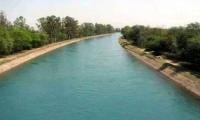
Sindh’s struggle for survival
The Sindh Rural Support Organisation (SRSO) has quietly become one of Pakistan’s most effective engines of resilience. In a country where bureaucracy often confuses motion with progress, the SRSO has distinguished itself through the rare combination of compassion and competence. It began modestly, with the idea that communities – especially women and the poor – should not merely receive help but shape it.
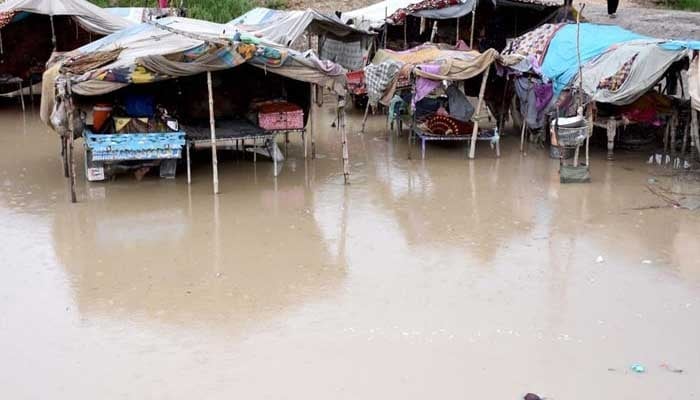
Over two decades, it has turned that principle into practice across Sindh’s flood-prone districts. When the province was submerged in 2022, the SRSO turned its field offices in Shikarpur, Jacobabad, Larkana, Khairpur and Sukkur into lifelines. They distributed food and medicine, but also wages and dignity. 'Cash-for-work' schemes rebuilt roads and morale. Women artisans revived embroidery clusters that became symbols of both income and identity. Even housing reconstruction acquired a climate-conscious twist: elevated eco-homes designed to resist the next deluge rather than commemorate the last one.
The publication of ‘Mausamyati Tabdili Ain Sindh’ (Climate Change and Sindh) marks the SRSO’s entry into the intellectual arena.
The 152-page volume is less a vanity project than a statement of intent: that the climate debate must be written and read in Sindhi if it is to matter. In that, it continues the SRSO’s evolution from a relief agency to a knowledge institution – one that translates floodwater into public policy. The volume’s compiler, Zubair Soomro, embodies the bridge between activism and analysis. A development worker turned editor, he understands that people are more likely to act on ideas they understand. Hence his insistence on linguistic ownership: climate literacy, he argues, cannot survive translation into bureaucratese.
The essays he curates draw their imagery from the Indus delta, the Kotri barrage, the Thatta mangroves and the brittle rhythms of fishing and farming life. The result is a body of writing that feels lived rather than borrowed. Soomro’s editorial hand ensures diversity without dilution. The 17 contributions range from scientific exposition to moral argument. They avoid the twin traps of despair and technocracy that often plague environmental writing. Instead, they weave empirical evidence with cultural intuition – what might be called Sindh’s environmental vernacular. This, more than anything, is Soomro’s quiet triumph: turning climate change from a donor-driven slogan into a people’s conversation.
No such conversation would be complete without Naseer Memon, the province’s most persuasive chronicler of rivers and rights. His career – spanning civil society, journalism and research – has made him both witness and conscience. Memon’s writings have long argued that the Indus Delta’s decline is not an act of nature but of neglect. His notion of the 'right of rivers to exist' predates global debates about ecological personhood and makes a philosophical claim with practical urgency: if the Indus dies, so does Sindh.
In ‘Mausamyati Tabdili Ain Sindh’, Memon contributes three essays that distil decades of thought. He reimagines the river as a living being, dissects the politics of Pakistan’s flood mismanagement and explores how the erasure of land erodes identity itself. Few writers connect hydrology to history with such clarity. Together, Soomro and Memon have forged an intellectual alliance that transforms climate anxiety into cultural critique. Where one edits from within the development sector, the other writes from the margins of power. Between them, they map a new moral geography for Sindh – one where environmentalism is as much about justice as it is about weather.
'Mausamyati Tabdili Ain Sindh' opens with forewords by Durrani and Kalhoro, both of whom anchor the collection in lived experience rather than abstract concern. They remind readers that climate change, in Sindh, is not a forecast but is yesterday’s floodwater still standing in today’s fields. The first essay, ‘Sarhadan Kaan Azad Mausam’ ('Climate Without Borders'), by Ali Tauqueer Shaikh, stretches the reader’s horizon beyond the provincial. Shaikh, a veteran climate strategist, examines compound extreme weather events – the deadly cocktail of heatwaves, droughts and floods that increasingly defines South Asia. His central message is that adaptation must be as borderless as the atmosphere.
The essay links Sindh’s fate to regional cooperation – a hard sell in a neighbourhood addicted to rivalry, but a necessary one. Next comes M Ehsan Leghari, whose essay on the Indus’s lower Kotri stretch introduces a chilling idea: ecocide. A biologist and conservationist with decades of experience in Sindh’s irrigation ecology, Leghari documents the loss of fish species, the intrusion of seawater and the collapse of delta ecosystems. He reminds readers that biodiversity is not aesthetic but existential. His writing bridges science and ethics, turning ecological decline into an indictment of state apathy. The Indus, he implies, is being murdered in instalments.
The book then widens its scope. Imdad Hussain Siddiqui, the Sindh ombudsman, contributes a thoughtful piece titled 'Climate Change and the Leadership Role of the Sindh Ombudsman'. A career jurist and administrator, Siddiqui argues that climate adaptation is as much a question of governance as of geography. His essay shows how oversight institutions – often dismissed as ceremonial – can enforce climate accountability by ensuring that local officials protect the rights of affected citizens. He frames environmental justice as a constitutional duty, not a bureaucratic favour. In a province where redress is rare, his voice lends moral authority and administrative realism.
Equally compelling is 'Sindh and the Climate Crisis' by Nasir Ali Panhwar, an environmental policy expert and executive director of the Centre for Environment and Development. Panhwar’s career has long intertwined research and advocacy; his focus on water management and urban resilience makes him one of Sindh’s most informed commentators. In this essay, he traces the historical evolution of Sindh’s vulnerability – from colonial canal construction to modern urban sprawl – and argues that climate policy must move from reaction to foresight. His prose is spare but sharp: If we continue to treat the river as a pipe and the desert as waste, we will have neither.
Together, Siddiqui and Panhwar remind readers that climate change is not only a scientific concern but a political one. Where Leghari writes as a naturalist, Siddiqui speaks as a reformer, and Panhwar as a planner. Their essays, distinct in tone but united in urgency, reveal a spectrum of Sindh’s intellectual response – from the courtroom to the delta, from the policy bench to the field trench. A cluster of other articles turns to adaptation, agriculture, and the gendered experience of crisis. Several authors – teachers, journalists and development workers – offer firsthand observations from flood-affected villages, proposing micro-solutions such as floating gardens, seed banks and women-led disaster committees.
Yet it is again Memon’s trilogy that gives the book its spine. In one essay, he declares that rivers possess an existence beyond their economic use; in another, he skewers the flood empathy cycle, where sympathy peaks after catastrophe and ebbs with the waters. His third essay reflects on cultural displacement – the drowning of memory when geography disappears. What sets the collection apart is its accessibility. The Sindhi prose is clean, the layout elegant, and the tone serious without self-importance. Citations from the IPCC and COP meetings coexist with local proverbs. The mix is refreshing – a reminder that sophistication need not be foreign.
As a whole, 'Mausamyati Tabdili Ain Sindh' is both a document and a diagnosis. It records the human cost of climate change in a province already living its future and it exposes the institutional lethargy that allows disaster to repeat itself. More importantly, it establishes Sindhi as a language of environmental scholarship. That alone is an achievement. The SRSO and its collaborators have done something rare in Pakistan: they have created a book that belongs equally on an academic’s desk and in a villager’s home. It argues, persuasively, that adaptation begins not with infrastructure but with understanding – and that understanding grows best in the language of the people.
In that sense, 'Mausamyati Tabdili Ain Sindh' is not merely a book about climate change. It is a reminder that the struggle for survival, like the Indus itself, flows from the same source: memory, dignity and the refusal to surrender to the tide.
The writer holds a PhD from the University of Birmingham, UK. He tweets/posts @NaazirMahmood and can be reached at:
mnazir1964@yahoo.co.uk