Can the G20 do more?
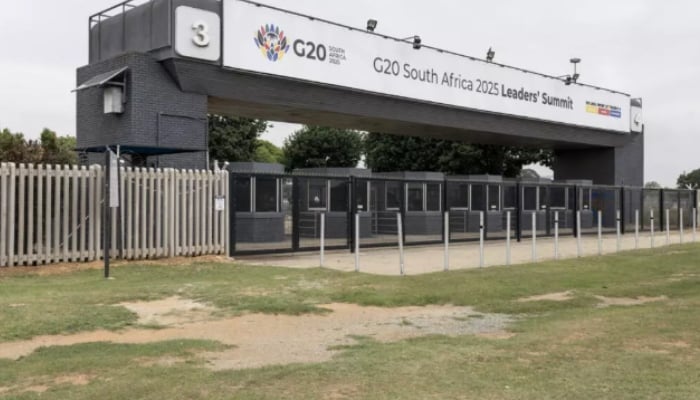
The G20 is a space that was intended to catalyze multilateral action. In fact, it touts itself as the “the premier forum for international economic cooperation,” and it is the one place where leaders of the world’s largest economies sit down together at least once a year for face-to-face dialogue.
South Africa will host this year’s G20 summit from November 22 to 23, and the United States will host the next one in December 2026. Do we have any reason to think this forum holds potential for not only restoring multilateralism but also advancing a more equitable global economy?
This is a question I’ve grappled with over the past several months as part of a team of analysts from the UK, Brazil, South Africa, and other countries. In our new joint report, The G20 at a Crossroads, we document a few examples of decisive actions this body has taken during its nearly two decades of existence.
In the midst of the financial crisis that erupted in 2008, for instance, labor unions and others successfully lobbied G20 leaders to adopt coordinated stimulus measures that helped avoid a depression-level global collapse.
In response to the Covid-19 pandemic, the G20 approved of at least some debt relief for low-income countries and authorized $650 billion in financial aid in the form of “special drawing rights,” the largest-ever allocation of this IMF-created international reserve asset.
These actions were far from perfect. Governments prematurely aborted the stimulus programs they adopted after the 2008 crash in favor of austerity budgets that deepened and prolonged economic crises.
Pandemic support programs were woefully insufficient for the poorest countries and failed to prevent many of them from sinking even further into debt. Between 2019 and 2023, Sub-Saharan Africa’s total external debts increased from $747 billion to $864 billion while the number of global billionaires grew from 2,153 to 2,640. Overall, 3.4 billion of the world’s people live in countries that spent more money in the years 2021-2023 servicing their foreign debts than on public education or health.
What can we learn from these examples? G20 leaders obviously have the power to mobilize vast resources, but the few times they’ve used this power, the focus has largely been on containing market crises to protect the interests of the wealthiest creditors and investors rather than improving the lives of the most vulnerable.
And so while we need to push for renewed multilateralism, we cannot be satisfied with a return to old models. We need new approaches that go beyond crisis management to build a more resilient, sustainable, and just global economy for the long term.
To achieve this, the G20 must tackle what we describe in our report as the “lived crises of our time” – the daily realities of extreme droughts, food insecurity, unaffordable housing, precarious work, debt traps, and forced displacement.
Decades of neglecting these threats to global stability has undercut the welfare of people in both the Global North and South. High levels of poverty and unemployment in the developing world, for example, weaken the bargaining power of US workers who are competing in a global labor pool.
Climate change, obviously, knows no boundaries. And skyrocketing inequality is fueling political polarization, authoritarianism, and xenophobia around the world, as elites deflect blame onto migrants and other convenient scapegoats instead of confronting structural failures.
Excerpted: ‘Can the G20 Do More Than Serve Markets and Investors?’.
Courtesy: Counterpunch.org