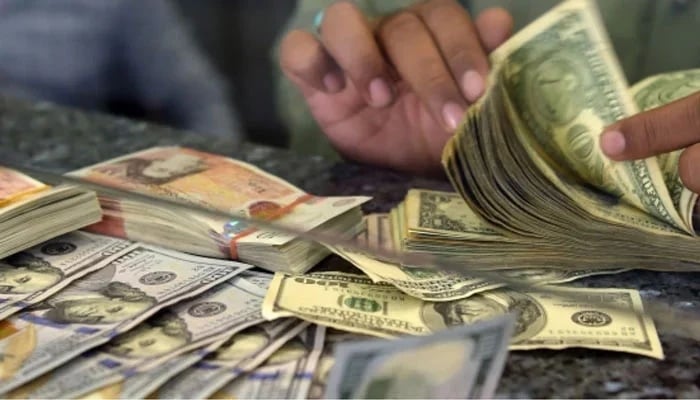
The discount rate of any nation is not just a monetary number but a confession of a nation’s economic temperament. It reflects how prudently it balances growth, stability and credibility with the nation’s macro-economic targets. In Pakistan’s scenario, our economy is encumbered with debt, deficits, and dependence; therefore, the policy rate becomes not just a mechanism of finance but a reflection of collective financial discipline. Any variation in policy rate is an admission of intent, thus signalling whether Pakistan chooses foresight or improvisation.
Over the last 25 years, our monetary policy has frequently imitated the past rather than anticipating the future. The discount rate fell from 14 per cent in 2001 to 7.0 per cent in 2004, only to surge again to 15 per cent after the 2008 global financial crisis. During 2010-2020, it fluctuated between 6.0 per cent and 13 per cent, and thus rose to an unprecedented level at 22 per cent in 2023.
Comparative analysis tells us that the Indian policy rate over the last decade was around 6.0 per cent, Bangladesh maintained 6.5 per cent and Vietnam around 7 per cent. These countries harmonised their monetary perspectives with industrial and export strategies, thus transforming their stability into competitiveness, for instance, in 2024-2025, Indian exports exceeded $450 billion, Bangladesh crossed $55 billion and Vietnam’s exports surpassed US$370 billion. Whereas, Pakistan’s exports stagnated at around $30 billion, trapped in cyclical austerity and reactive alleviation. When other countries pursued a coordinated strategy between fiscal prudence, monetary consistency and export facilitation, Pakistan allowed one lever to offset another, with disruptive fiscal behaviour negating the monetary objective.
The illusion of tightness reflects that the inflation in Pakistan has never been the due to excess demand, It has always been largely imported, i.e. because of fiscal deficits, high energy price pass-throughs, and a persistently weak rupee. Nonetheless, monetary tightening has remained the reflexive response, a signal of restraint not reform.
In FY2022–23, the SBP raised the policy rate to 22 percent to fight inflation exceeding 31 percent but the result was contractionary not corrective. We have witnessed that the large-scale manufacturing decreased by 4.5 percent, private investment dimin, and inflation persisted. Where high interest rates penalised production but failed to address structural triggers , such as fiscal deficits and cost-push pressures.
When the government borrowing is consuming 60 per cent of banking liquidity, then the discount rate ceases to discipline and starts redistributing. The policy becomes enigmatic, that’s like austerity in speech but expansionary in consequence. Since January 2025, high interest rates have cost the government Rs 3 trillion in excess interest on domestic debt and that is more than the entire defence budget. Despite low inflation, the 11 per cent policy rate benefits banks’ windfalls but stifles growth.
It is a well-known fact that exports are the bloodstream of reserves, but the very policy anticipated to safeguard reserves often undermines export competitiveness. In FY2024–25, our exports reached $32 billion against our imports of over $58 billion, producing a deficit of $26 billion. Reserves around $11.5 billion were available to cover barely two months of import.
When the central bank raises rates to protect reserves, it makes borrowing more expensive for exporters, and when it lowers rates to boost growth, it weakens the rupee. Between FY2017 and FY2023, we have seen that an increase in the discount rate corresponded to a 0.4 per cent decline in export growth and a 3.0 per cent retrenchment in private credit. Our economy keeps swinging between growth and restraint. Every time the economy starts to grow, it’s soon held back by corrective measures.
We can learn from Vietnam’s experience where the central bank maintained stable, export-linked credit windows, ensuring industrial advancement throughout inflationary periods. The discount rate only works if the banks pass it on properly. In Pakistan, that channel is obstructed, as banks charge about 7.0 per cent more on loans than they pay on deposits. India's spread is around 3.0 per cent, whereas Bangladesh operates below 3.0 per cent. This makes credit prohibitively expensive, especially for SMEs and exporters, who borrow at 22–25 per cent. More than 80 per cent of bank assets are parked in government securities – risk-free and tax-shielded – and banks have little incentive to fund the private sector. The private-sector credit-to-GDP ratio in Pakistan remains inadequate, at around 17 per cent, compared to 45 per cent in India and over 60 per cent in Malaysia. Our banking sector is now serving the government, not the economy, thus they are acting as debt brokers instead of growth drivers. The discount rate merely anchors a stationary system.
Pakistan’s foreign exchange system exhibits a similar degree of disintegration. The interbank rate trades around Rs280 per US dollar while the open market often trades 4–5 per cent higher. This differential incites speculation, promotes informal channels and deters remittances away from official banking. In 2023 alone, nearly $7 billion is anticipated to have avoided the formal system. All financial crises made it clear that true stability cannot be legislated and can only be earned through consistency and credibility in government policies. A currency managed through administrative decrees rather than transparent intervention always cultivates uncertainty. Stability means clarity where businesses can rely on rational signals rather than whispered directives.
Pakistan also has 59 million payment cards and under two million credit cards – less than 3.0 per cent penetration. An interest rate above 50 per cent APR makes borrowing unbearable. Meanwhile, the digital-payment frauds exceeded Rs3 billion last year, yet victims hardly get their money back. When people lose their savings and find no institutional redress, the damage is psychological, not just financial.
India’s contrasting experience is revealing as its UPI handled $1.8 trillion in 2023, facilitated by quick dispute resolution and transparent systems. The real difference isn’t technology but enforcement and accountability. Trust remains an integral component of the financial system. In our banking system, 60 per cent of deposits sit in non-interest current accounts. These funds finance the government’s fiscal deficit rather than being channelled into the private sector and productive investment. When sovereign borrowing dictates monetary policy, the independence of the central bank becomes questionable. The State Bank cannot simultaneously finance the state and discipline it at the same time.
The repercussions are thus simple: inflation rises and private investment deteriorates, making the national economy pay twice. There is a need to understand that the monetary credibility isn’t just given – it’s secured through transparency, predictability and strong institutions. We can certainly learn from the Reserve Bank of India’s model – providing detailed Monetary Policy Committee minutes, disclosing voting patterns and forward guidance that anchor market expectations are published. The SBP, in contrast, issues brief communiques that leave interpretation to speculation. Real autonomy will only emerge when policy communication is open, leadership appointments are merit-based, tenures secure and decisions insulated from political pressure.
For Pakistan, we need to reconstruct our monetary compass where the discount rate must guide growth, not just respond to crises. This can only be possible if there are coherent fiscal, monetary and structural policies, restored trust and clear incentives for SMEs and exporters. These policies must facilitate a mechanism through which a unified, transparent exchange rate, strong consumer protections and full disclosure of bank charges are made essential. Institutional credibility must be further strengthened through detailed MPC minutes and transparency reports of MPC meetings. Above all, a cut to 9.0 per cent is urgently needed to revive investment, ease SME credit and restore economic competitiveness.
These are structural reforms and will surely transform the SBP from a responder into a strategist, and monetary policy from a tool of reaction to a tool of design. The discount rate, at its essence, is the moral index of governance – measuring not merely inflation but the integrity with which a state aligns its policies with purpose. Each abrupt change without clarity erodes confidence; each consistent, transparent move restores it.
Pakistan’s economic revival will not be orchestrated via oscillation between tightening and easing of the discount rate, but through coherence, credibility and courage in decision-making with shared collaboration. When the discount rate symbolises prudence rather than anxiety, when it signals policy by design rather than desperation, it will once again become what it was meant to be – the compass of national confidence, guiding Pakistan through trust, not turmoil.
The writer is a political economist, public policy commentator and advocate for principled leadership and regional cooperation across the Muslim world.