Bipartisan hate
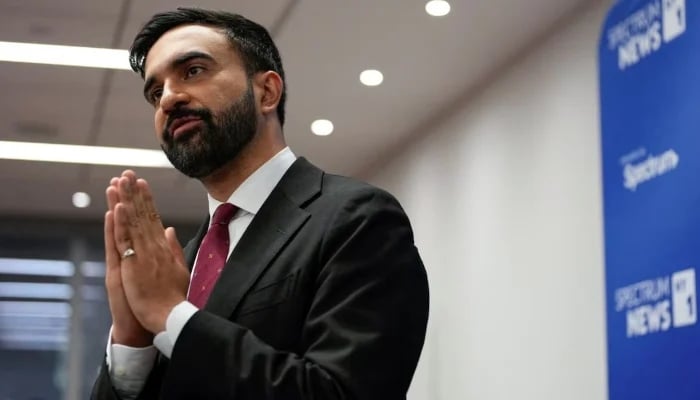
This week, Democratic Socialist Zohran Mamdani made history by becoming the first Muslim mayor of New York City. His road to victory was anything but smooth. After he secured a historic win in the mayoral primary, he faced a landslide of attacks from across the political spectrum. In the months that followed, the hateful rhetoric from right-wing provocateurs, social media personalities, and even his three opponents mushroomed.
Republican candidate Curtis Sliwa claimed that Mamdani supports “global jihad”; independent candidate and former New York governor Andrew Cuomo agreed with a comment that Mamdani would celebrate “another 9/11”; and outgoing NYC mayor, Eric Adams, who dropped out and endorsed Cuomo, suggested that a Mamdani mayorship would turn New York into Europe, where “Islamic extremists … are destroying communities.”
Sadly, as researchers of anti-Muslim bias, and Muslim individuals who came of age in a post-9/11 America, we know attacks of this nature – on someone’s character or fitness for a job because of their religious background or national origin – aren’t entirely unexpected. We know that Islamophobia spikes not after a violent act, but rather during election campaigns and political events, when anti-Muslim rhetoric is used as a political tactic to garner support for a specific candidate or policy.
Worryingly, these attacks also reflect a general trend of rising Islamophobia, which our research has recently uncovered. The latest edition of the Institute for Social Policy and Understanding’s (ISPU) American Muslim Poll, which contains our Islamophobia Index, released on October 21, reveals that in the last three years, Islamophobia has sharply risen in the US, across almost all demographic groups.
Among the general population in the US, on our 1 to 100 scale, the index increased from a score of 25 in 2022 to a score of 33 in 2025. This jump was most pronounced among white Evangelicals, whose score increased from 30 to 45 between 2022 and 2025, and Catholics, whose score increased from 28 to 40 during the same period. Protestants also saw a rise of 7 points, from 23 in 2022 to 30 in 2025. Jews had an Islamophobia score of 17 in 2022, the lowest of any group that year, which increased only slightly to 19 in 2025, the same score as Muslims in 2025. The only group that did not change since 2022 is the non-affiliated.
Undoubtedly, the weaponisation of Islamophobia by high-profile individuals is a major driver of this worrying trend. And it can lead to devastating outcomes for Muslims: From job loss and inability to freely worship, to religious-based bullying of Muslim children in public schools and discrimination in public settings, to even physical violence. Simply put, dangerous rhetoric can have dangerous consequences.
Excerpted: ‘The bipartisan comfort with Islamophobia harms us all’. Courtesy: Aljazeera.com