Why DTH never took off in Pakistan
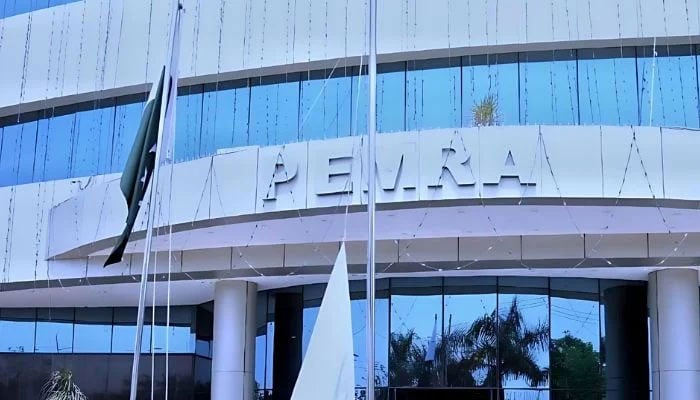
In 2016, Pakistan stood on the threshold of what seemed like a transformative shift in television distribution. Pemra’s long-awaited auction of three Direct-to-Home (DTH) licenses for nearly Rs15 billion was celebrated as a turning point.
To encourage rollout, Pemra introduced a concessional regime designed to make market entry viable: streamlined licensing, phased infrastructure obligations, and regulatory flexibility. It signalled that Pakistan was ready to transition from analogue cable networks to high-quality, encrypted satellite broadcasting. Investors moved confidently, capacity was planned and consumer anticipation was high.
Yet, nine years later, Pakistan remains one of the only major markets in the region without a functioning DTH service. The promise has remained theoretical – not because the technology is complex or the market is unattractive, but because the architecture of regulation, taxation and institutional coordination did not evolve at the speed of innovation.
The DTH licensing process quickly became ensnared in overlapping governance structures. While Pemra issued licences, the Frequency Allocation Board had to approve satellite frequency assignments, Suparco oversaw national satellite coordination, and the Ministry of Information and Broadcasting remained involved in policy oversight.
Each step introduced delays, interpretation gaps and procedural uncertainty. Instead of a single, predictable pipeline from licence award to commercial launch, DTH operators faced a labyrinth of sequential approvals. The regulatory system functioned defensively, structured to avoid risk rather than to enable controlled, accountable innovation. Even well-capitalised investors became cautious when timelines stretched indefinitely and implementation conditions shifted mid-process. Momentum dissipated in administrative time.
One of the most critical structural constraints was the expectation that DTH platforms use PAKSAT, Pakistan’s national satellite system, as the primary broadcast uplink. The intention aligned with national sovereignty and the development of domestic satellite capacity. But commercially, it narrowed the operator’s flexibility while incurring additional costs. Regional competitors typically negotiate satellite bandwidth across multiple global fleets to secure redundancy, cost-efficiency and market-appropriate technical performance.
In Pakistan, the effective single-supplier arrangement for satellite transponder capacity limited negotiating leverage, raised operational cost baselines and reduced resilience options. A policy conceived to strengthen national capability ultimately restricted competitive dynamics and impaired the business case before service launch.
At the consumer level, affordability challenges emerged just as operators prepared for rollout. The economics of DTH depend heavily on the cost of set-top boxes (STBs) and dish kits. Pemra’s 2016 concessional regime aligned with this reality, but tax policy shifted shortly thereafter. The Federal Board of Revenue reclassified STBs into higher-duty brackets, significantly increasing their landed cost. A device that costs $20 in comparable markets could sell for $40–$55 in Pakistan once import duty, additional customs charges, sales tax, withholding taxes and distribution margins are factored in. For a price-sensitive household market where average monthly ARPU remains low, this shift alone rendered rapid adoption improbable. The tax system inadvertently undermined the very service it was intended to enable.
Layered atop the hardware challenge was a complex taxation regime applied to content, satellite distribution, and advertising. Withholding tax on foreign programming and advertising placements, provincial service taxes on broadcast transmission and Pemra’s annual licensing and spectrum-related fees combined to create a heavy fiscal load on legitimate DTH operators.
Meanwhile, a thriving informal ecosystem of illegal foreign satellite feeds and unregistered decoders continued to expand, largely unchecked. Households could access unregulated satellite content at a lower cost and with little enforcement deterrence. The result was a distorted market in which the legal, licensed service bore higher operational burdens than the illicit alternative. Policy, rather than enabling formalisation, allowed the informal sector to dominate.
Yet the most fundamental misalignment was strategic. Pakistan pursued the rollout of a traditional one-way DTH broadcasting model at a time when the global industry was shifting toward hybrid satellite-and-internet ecosystems. The future of television distribution is no longer based on broadcasting alone. It is built on platforms where satellite efficiently handles the one-to-many channel distribution layer, while interactivity, on-demand content, targeted advertising, data analytics and commerce flow through an IP return path. In this model, the household dish is not an endpoint but the entry point to a broader digital ecosystem.
This shift matters profoundly for Pakistan. A hybrid model using national satellite capacity for distribution and low-earth-orbit (LEO) or terrestrial broadband for the return channel could allow DTH platforms to deliver both television and internet connectivity, particularly in regions where fibre deployment remains slow and cellular coverage is uneven.
Such an integrated system would also modernise Pakistan’s media economy by replacing small-sample ‘people-meter’ audience measurement with real-time, privacy-safe, census-scale analytics. Advertisers could price campaigns based on verified viewership. Broadcasters could adapt programming to engagement patterns. Content creators would have measurable markets. Consumers would gain both choice and agency.
To unlock this evolution, governance must shift from defensive control to strategic enablement. The expectation to use PAKSAT must transition from obligation to competitive partnership, supported by transparent pricing, predictable service-level guarantees and flexible redundancy. The concessional regime for smart STBs should be reinstated, accompanied by local assembly requirements and secure chipset standards, to prevent piracy. Taxation must be rationalised so that licensed operators are not disadvantaged relative to illegal foreign feeds. And perhaps most importantly, Pakistan requires a one-window operational framework where PEMRA, FAB, Suparco and PTA coordinate synchronised, time-bound processes rather than sequential administrative pathways.
The lesson of the DTH experience is not that the market was misjudged; rather, it is that the market was not fully understood. It is that the regulatory architecture remained anchored in a static conception of broadcasting while the world moved towards integrated digital connectivity. The objective now is not to revive a decade-old model, but to redesign the platform to align with the communications and economic landscape Pakistan is entering.
DTH was never just about adding more channels. It was about modernising access, enabling participation and linking households to the wider digital economy. That purpose remains valid. The technology has evolved; the opportunity has expanded. The signal has not been lost. It simply needs a system prepared to tune to the future rather than the past.
The writer is a public policy expert and leads the Country Partner Institute of the World Economic Forum in Pakistan. He tweets/posts @amirjahangir and can be reached at: aj@mishal.com.pk