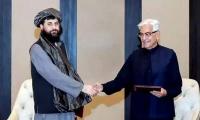
Contrary to Pakistan’s hopes that Taliban 2.0 would prove to be a friendly government, they have turned out to be very unfriendly, indeed hostile. Pakistan-Afghanistan relations have shown marked deterioration since their return.
At the core of many issues between the two countries is the Afghan Taliban’s support for the TTP, which is enabling it to carry out deadly terrorist attacks against Pakistan without let or hindrance. Neither military operations against the TTP hideouts in Afghanistan nor economic and diplomatic pressure against the Taliban for hosting and supporting them have worked so far. And the search for a negotiated solution mediated by friendly countries faces uncertain prospects.
Pakistan’s demand that the TTP disarm, disband or be handed over is unacceptable to the Taliban, who feel this would violate their code of honour. Pakistan is also demanding firm guarantees against cross-border attacks, which the Taliban are unlikely to give, as this would be an open betrayal of their ally. Besides, in case of violation of any formal commitment, Afghanistan might lay itself open to military reprisals by Pakistan.
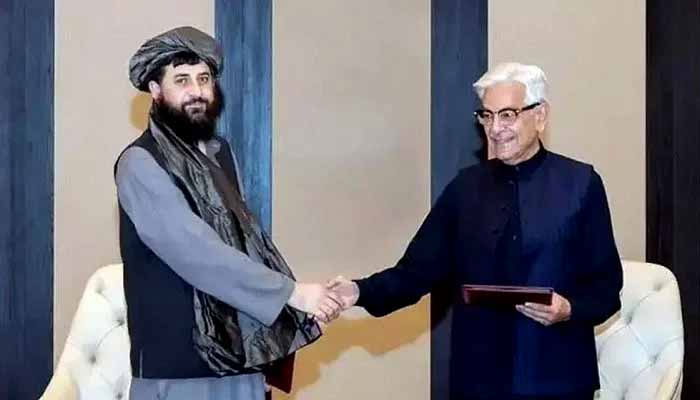
Defence Minister Khawaja Asif has been responding to the Taliban intransigence by warning that if they did not oblige, it would lead to an “open war”. Such statements serve no policy value except frustration at having made a ‘mistake’ for lending support and patronage to the Taliban all these decades. The fact is that attempting to undo a mistake is not always the best way to deal with its consequences.
It will be helpful for our policymakers to try to understand the complexity of the Afghanistan challenge in a historical perspective, made even more complicated by having to deal with an ideological outfit bound by rigid ethnic and tribal customs. And which is trying to transition from a proxy to the government by asserting its independence.
The irony is that our security establishment might think they know the Taliban inside out, having worked with them for decades, not realising that by the same token, the Taliban may have equally sized up our limitations and compulsions. So our leverage is effectively neutralised by theirs. In fact, by inserting themselves into the India-Pakistan conflict, the Taliban may have enhanced their leverage.
Historically speaking, Pakistan and Afghanistan have had a torturous shared past that has left behind a complicated legacy of a divided ethnicity straddling their border. The remote origins of the two countries lie in part in the centuries-long relationship between Central Asia and ancient India. Afghanistan cast the first stone after 1947 when it voted against Pakistan’s admission into the UN. And the relationship has never recovered since. Even when it was normal, it was uneasy like now.
Pakistan is right to have perceived Afghanistan as a troublesome neighbour, but has been wrong in seeking a solution to the problem with interventionist policies.
Pakistanis are puzzled that, after all that we had done for Afghanistan, the Afghans are not grateful. Yes, Pakistan did host millions of Afghan refugees. And it was at one level an act of generosity. But Pakistan had its own security interests in mind. Besides, the Zia regime and that of Musharraf had their own personal and political interests in view, which they thought would be well served by joining America’s wars in Afghanistan and getting the US-Pakistan relationship revived. The relationship would give them international legitimacy. The refugees were the cost Pakistan had to bear in achieving this package of objectives.
Yes, Afghanistan was liberated from the Soviet occupation, and according to former prime minister Imran Khan the “chains of slavery” were broken with the US withdrawal. But what did the Afghans get after being ‘liberated’, a process in which Pakistan helped not once but ‘twice’? The Taliban. In a strange irony, the Taliban are unfriendly to us for reasons we know well now, and the rest of the Afghans who are opposed to their rule are angry with us for having helped bring them to power. So, when we wonder why Afghans are not grateful after all that we did for them, which ‘Afghans’ are we talking about?
We need to have clarity about Afghanistan, especially about what has happened there in the past fifty years, since the overthrow of the monarchy, when the ensuing struggle for power collided and merged with the Soviet invasion in 1979, America’s two Afghan wars and the war on terrorism. These history-changing events impacted the sociopolitical dynamics in both Pakistan and Afghanistan, especially among the Pakhtun population along the Pak-Afghan border. The TTP, which is a product of all this, is now trying to mimic in Pakistan’s tribal areas and beyond what the Taliban did in Afghanistan with their help.
The Afghan Taliban are not going to act against the TTP. There are ideological links between them and the TTP. And the Taliban lack both the capacity and the political will to act against them. The TTP looms large in the internal power struggle among the Taliban as well as in their own battle for survival in the face of internal fissures and threat from the IS-KP, which has become the most active and deadly terrorist group in Afghanistan since the Taliban's return to power in 2021.
The Taliban not only face threats from them but also from the National Resistance Front (NRF). They treat the TTP and various other militant groups operating on Afghan soil as allies and feel that action against the TTP might push some of their cadres to join the IS-KP. The Taliban’s rule remains fragile and we need to avoid such actions as major military operations that add to their insecurities. That will bring them closer to the TTP rather than pull them apart.
If we are worried about the Taliban’s outreach to India, there is all the more reason not to threaten them, as they will gravitate more to India than pull back. The Taliban are engaged in extensive diplomacy to end their isolation and seek international recognition and economic help. They are doing so by reaching out to Russia and China for big power support, and by neutralising US hostility with continued diplomatic contacts offering counterterrorism support and investment opportunities. They are also seeking India’s economic, political and diplomatic support.
The opening to India is driven more by these needs and the Taliban’s compulsion to seek autonomy from the Pakistan establishment than any shared animosity towards Pakistan. Of course, these relations enhance their negotiating position vis-a-vis Pakistan, besides being a deterrent against any attempt at regime change which they suspect would likely involve Pakistan’s collaboration.
So the Taliban’s relations with India make a realpolitik sense. Instead of bristling at Taliban-India ties, Pakistan needs to assure Kabul that they will give them space to have relations with India. It is not their relations with India we should begrudge but what India does with these relations by way of using the Afghan soil and outfits like the TTP and Baloch insurgents against Pakistan. We should draw the red line there. Drawing it before will arouse suspicions about our intentions towards the Taliban and will be an unnecessary irritant.
Afghanistan presents both internal and external challenges. By fighting the TTP at home and by undermining their appeal or hold in the areas where they hold sway, we will render them as rebels without cause. The Taliban may not feel any moral obligation to help them, especially as they will have been diminished as leverage against Pakistan.
We need patience, combined with negotiations and economic pressure, as well as border control and limited kinetic action when necessary, along with consultations with regional actors such as China, Iran and Uzbekistan, where possible. But we should avoid large-scale military conflict that will send the wrong message.
Bottom line: our diplomacy needs to be innovative. Pressure alone will not work. We should also offer incentives. The Afghan Taliban must be made to see both sides of the relations with Pakistan – threats as well as opportunities.
The writer, a former ambassador, is adjunct professor at Georgetown University.