Power tariff drops by over Rs9 to Rs39.64 on improved indicators, IPP deals: Leghari
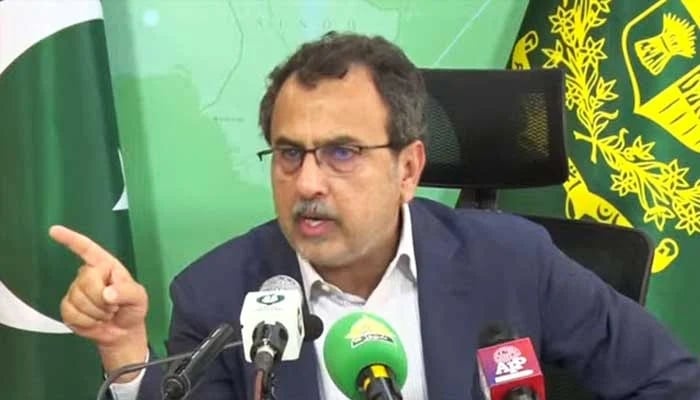
ISLAMABAD: The average national electricity tariff has dropped by over Rs 9—from Rs 48.70 per unit (including taxes) in June 2024 to Rs 39.64 in August 2025—thanks to improved economic indicators and successful negotiations with power producers, with the benefits already reflected in the FY-2026 rebasing and further adjustments set for January 1, 2026 rebasing.
Responding to a question during the Question Hour, Minister for Power Division Sardar Awais Leghari in his written reply noted that the average national tariff has fallen by over Rs 9—from Rs 48.70 per unit (including taxes) in June 2024 to Rs 39.64 in August 2025—while improvements from negotiations with power producers have lowered tariffs, with effects passed on in the FY-2026 rebasing; further changes will follow in the January 1, 2026, rebasing.
To a question of Shagufta Jumani with regard to Pakistan continuing to face surplus electricity generation capacity while actual grid utilisation remains low, Minister for Power Division Sardar Awais Leghari replied in the affirmative. He said since capacity payments are fixed in nature regardless of grid utilisation, lower consumption results in higher per-unit fixed costs for existing consumers.
In a written reply, Minister Awais Leghari stated that the Ministry of Energy (MoE) is developing a subsidy-neutral Surplus Power Package for industrial and agricultural consumers, aligned with the “Bijli Sahulat Package” and offering an incentivised rate of 8–9 cents on incremental consumption, with a three-year outlook.
Since October 2021, the government has targeted subsidies to vulnerable protected consumers, reducing the industrial cross-subsidy from Rs 225 billion to Rs 74 billion in FY 2025 rebasing. He highlighted DISCOs’ losses improving from Rs 591 billion in FY 2024 to Rs 397 billion in FY 2025.
Replying to a question, Parliamentary Secretary for Communications Gul Asghar Khan informed the National Assembly that the Hyderabad–Sukkur Motorway (M-6) project is advancing via multiple financing and partnerships, with sections targeted for completion by 2028–2029. The project was discussed in the Joint Working Group (JWG) on Communications and reviewed in the Joint Cooperation Committee (JCC) meeting in Beijing. Pakistan has invited Chinese enterprises to bid on the M-6 and two additional PPP-mode sections. The National Highway Authority (NHA) initially signed a PPP agreement in December 2022 but terminated it in December 2023 due to the concessionaire’s failure to achieve financial closure. The Islamic Development Bank (IsDB) is now financing Sections 4 (Naushehro Feroz–Ranipur) and 5 (Ranipur–Sukkur), with board approval in September 2025 and a General Procurement Notice published on October 3. Advanced talks are ongoing with the OPEC Fund and Saudi Fund for Development (SFD) for Section 3 (Naushehro Feroz–Ranipur), expecting approvals early next year. Sections 1 (Hyderabad–Tando Adam) and 2 (Tando Adam–Nawabshah) will proceed under PPP mode per ECNEC decision, with transaction advisory services being procured.
Earlier, Minister for Parliamentary Affairs, Dr Tariq Fazal Chaudhry, told the National Assembly that Pakistan and Bangladesh are working on the early resumption of direct flights to boost trade, tourism, and medical travel.
Minister for Parliamentary Affairs, Dr Tariq Fazal Chaudhry, said Bangladesh has allowed two Pakistani airlines, namely “Fly Jinnah” and “Air Sial”, for operating flights between the two countries.
He further informed the House that Pakistan attaches immense importance to its relations with Bangladesh and has undertaken a series of political and economic initiatives to enhance bilateral ties. A MOU has been signed for the export of two lakh metric tons of rice, of which 50,000 metric tons have already been supplied. He said Bangladesh has also streamlined business visa procedures for Pakistani investors.
Answering a question, Dr Tariq Fazal Chaudhry said new RLNG gas connections are being provided to consumers on the instructions of PM. He said the cost of RLNG will be higher than Sui Gas, but lower than LNG. To a question, Parliamentary Secretary for Human Rights, Saba Sadiq, updated the House that a toll-free helpline 1099 operates round the clock to provide free legal advice and assistance on human rights violations, including cases of violence.


-
 Aurangzeb confirms Saudi Arabia $10bn interest, says B2B shift ongoing
 -
 Pakistan to build artificial island to boost oil exploration
 -
 Special pink bus service launched for women on Green Line route
 -
 Same number plates from other provinces lead to wrong e-challans for Karachiites
 -
 State institutions ‘fail’ to perform constitutional duties: KP CM
 -
 CTD orders psychological testing of police on VVIP security duty
 -
 Navy busts drug consignment valued at $130m
 -
 Three ex-secretaries in race for ETPB chief post