Minister questions Bilawal’s opposition to dual nationality ban for bureaucrats
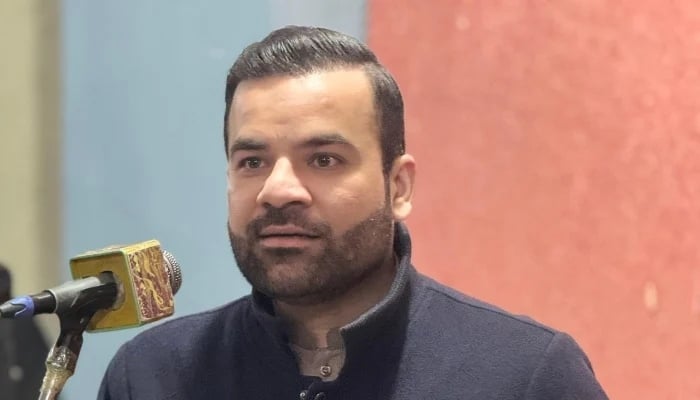
ISLAMABAD: Minister of State for Law Barrister Aqeel Malik has expressed surprise over Pakistan Peoples Party (PPP) Chairman Bilawal Bhutto Zardari’s reluctance to agree to restrictions on dual nationality for bureaucrats.
“I don’t understand why Bilawal did not agree on barring dual nationality for the bureaucracy. If parliamentarians cannot hold dual nationality, why should bureaucrats be allowed to?” he questioned while speaking on Geo News programme ‘Aaj Shahzeb Khanzada Kay Sath’ on Friday.
He said that the government is open to PPP’s proposals on judicial reforms, including the transfer of judges and the establishment of a Federal Constitutional Court.
Malik appreciated the PPP’s suggestion regarding judges’ transfer, calling it “worth consideration,” and stressed that the executive should have no role in such transfers.
He said that discussions on key points of the proposed constitutional amendments were moving in a positive direction, with consensus emerging on at least three major issues — the Federal Constitutional Court, Article 243, and the transfer of judges. “If consensus is achieved on the central points, we will move forward.” Later, the 28th Amendment can also be introduced. It is Parliament’s prerogative — whether it is the 18th or 28th Amendment — to bring improvements whenever needed,” he remarked.
The minister advised the PPP not to link the establishment of a constitutional court with the implementation of other points of the Charter of Democracy (CoD), stressing that consensus already exists on this proposal.
He noted that PPP Chairman Bilawal Bhutto Zardari had himself acknowledged agreement on the formation of a constitutional court. “Bilawal has said there is consensus on the constitutional court,” he said.
Barrister Malik reiterated that the government was not considering any move to roll back the 18th Amendment or reduce provincial autonomy. “We are not talking about curtailing provincial powers. Just as provinces cannot be weakened, the federation too must not be undermined,” he stated.
He added that the PPP, being a major coalition partner, holds crucial votes necessary for the passage of any constitutional amendment. “If consensus is reached on key issues, we will move forward — and later the 28th Amendment may also be considered,” he said.
On the issue of anti-terrorism courts, Barrister Malik said that the situation today was very different from when the CoD was signed. “At that time, terrorism was not at the level we face today. Reforms in the justice system must reflect current realities,” he said.
He reiterated that the PPP had shown flexibility on implementing other pending points of the CoD along with the proposal for a constitutional court.
Responding to a question about the retirement age of judges, the minister confirmed increasing the age to 68 for the judges of the constitutional courts, saying that it was proposals and the final decision rests with the parliamentary committee as if the committee decides to raise it to 70 years or keep at 65, it is within their right to do so,” he said.
Barrister Malik dismissed speculation that the proposed reforms could affect provincial powers. “We are not talking about undoing the 18th Amendment or reducing provincial authority. The PPP is our key coalition partner, and its role is vital to strengthening the constitutional order,” he emphasised.
In response to another question, the minister clarified that while the draft amendment could not be made public yet, the process was entirely transparent.
“All legal procedures are being followed. The draft will go before the committee, then to both Houses — Senate and the National Assembly.”
To a question on amendment on Article 243 of the Constitution, the minister for state said it come under purview of the national security and he cannot hold detailed discussion while sitting at the national media but he can only hint the contours that we have to strengthen the forces, coordination cohesion to be improve. “There is nothing to hide, though national security-related matters naturally require some discretion,” he said.


-
 Aurangzeb confirms Saudi Arabia $10bn interest, says B2B shift ongoing
 -
 Pakistan to build artificial island to boost oil exploration
 -
 Special pink bus service launched for women on Green Line route
 -
 Same number plates from other provinces lead to wrong e-challans for Karachiites
 -
 State institutions ‘fail’ to perform constitutional duties: KP CM
 -
 CTD orders psychological testing of police on VVIP security duty
 -
 Navy busts drug consignment valued at $130m
 -
 Three ex-secretaries in race for ETPB chief post