Pakistan to legislate crypto assets: Aurangzeb
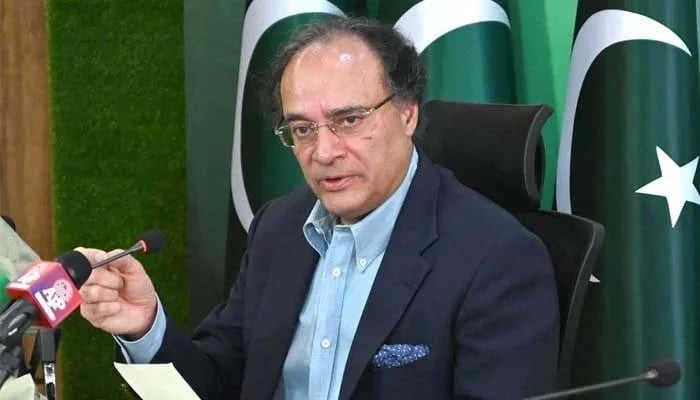
ISLAMABAD: Federal Minister for Finance and Revenue Muhammad Aurangzeb on Thursday announced that Pakistan will soon introduce formal legislation to regulate cryptocurrencies and digital assets, marking a major step toward digital financial inclusion and sustainable investment.
He said the government has already established the Virtual Asset Regulatory Authority (VARA) under an ordinance and formed a Pakistan Crypto Council to develop the digital asset ecosystem responsibly.
He reaffirmed that Pakistan’s approach to virtual assets and blockchain technology will remain firmly aligned with the country’s specific risk profile and regulatory priorities, including safeguards against capital flight, money laundering and investor suitability.
He described digital finance and crypto regulation as tools to channel climate-related investments and innovation, asserting that “climate change and population growth are existential threats to Pakistan’s national survival.” He was speaking at a high-level plenary on “Mobilising Finance for a Circular, Climate-Resilient South Asia,” hosted by the Sustainable Development Policy Institute (SDPI) here.
Senator Aurangzeb emphasised that climate financing is a global priority and Pakistan must urgently align its fiscal, regulatory and institutional frameworks to attract sustainable capital. He noted improving global GDP growth and Pakistan’s structural reforms to stabilise the economy and boost investor confidence, adding that private sector participation and technology-driven finance would accelerate the green transition.
He highlighted Pakistan’s comprehensive framework, including the National Adaptation Plan, NDCs, Climate Prosperity Plan with the V-20, State Bank’s Green Taxonomy, and National Climate Finance Strategy rolled out in Baku last year, stating that despite a large global financing gap, Pakistan has sufficient resources and frameworks for effective implementation. The finance minister said Pakistan has secured a $1.3 billion climate package from the IMF, $500 million from the ADB and a 10-year, $2 billion annual World Bank partnership. He announced plans to issue Panda Bonds in China to diversify financing.
Aurangzeb identified population and climate degradation as existential threats requiring no constitutional amendments. He called for realism on global mechanisms like the Green Climate Fund and Loss and Damage Fund, which remain limited and bureaucratic, stressing mobilisation of domestic resources, private capital and market-based tools such as green bonds and carbon markets. Aurangzeb underscored the vital role of finance ministries in mainstreaming climate action, observing that if climate priorities are not integrated into national budgets, they cannot become national policy. He appreciated innovative private sector initiatives such as Acumen’s $90 million Climate Action Fund and Sindh’s pioneering mangrove carbon credit project, urging them to be replicated and scaled up nationwide. He highlighted the growing potential for debt-for-nature swaps and called for enhanced technical capacity to design, structure and monitor bankable, investable climate projects meeting international standards.
Dr. Abid Qaiyum Suleri, Executive Director of SDPI, stressed that financing remains the backbone of all climate action, lamenting that despite the Paris Agreement’s $1 trillion target for climate finance, only $300 billion—mostly blended finance—has been mobilised.
Bank of Punjab CEO and Pakistan Banking Association Chairman Zafar Masud proposed establishing a Regional Climate Bank to manage climate funds across South Asia, while senior climate officials urged stronger policy coherence for blended finance and circular economy strategies.
Experts from UNEP, SAWTEE and Japan’s Institute for Global Environmental Strategies echoed that South Asian economies must move beyond the linear growth model and adopt circular, climate-resilient systems through blended and digital finance tools.


-
 Aurangzeb confirms Saudi Arabia $10bn interest, says B2B shift ongoing
 -
 Pakistan to build artificial island to boost oil exploration
 -
 Special pink bus service launched for women on Green Line route
 -
 Same number plates from other provinces lead to wrong e-challans for Karachiites
 -
 State institutions ‘fail’ to perform constitutional duties: KP CM
 -
 CTD orders psychological testing of police on VVIP security duty
 -
 Navy busts drug consignment valued at $130m
 -
 Three ex-secretaries in race for ETPB chief post