Hope emerges from Istanbul
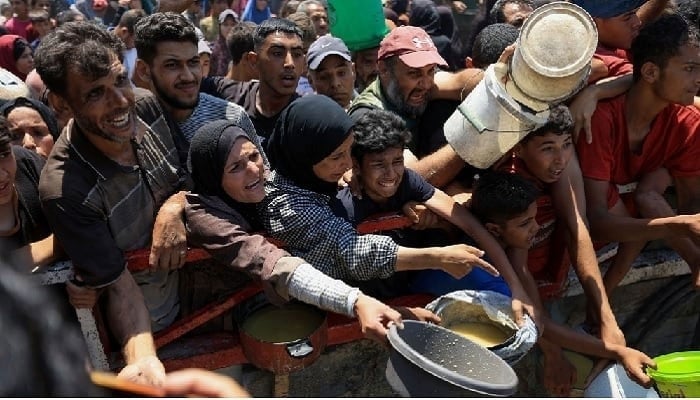
In the incessantly destroyed national and individual lives of Palestinians – by so many global and regional powers and people – hope for a better future was never going to be easy. And especially when the Palestinians enjoyed no consistent political, military and diplomatic support from those in the region. Their virtually unhindered genocide by the Israelis drove them to a living hell, no less.
The world watched, largely helpless, as Israel’s genocide in Gaza unfolded for nearly three years. Despite global outrage – from the streets of Europe to Latin America and the Muslim world – and condemnations from the ICJ, UN and human-rights organisations, the carnage continued. Arab states issued statements and hosted summits, yet no collective sanctions, trade cut-offs or diplomatic withdrawals followed.
In that vacuum, Washington was the only actor capable of freezing Israel’s military machine. US President Donald Trump’s eventual 20-point plan, a far cry from his earlier talk of turning Gaza into a “Mediterranean Riviera” drained of Palestinians, was less than a just peace plan and more of a forced pause to the Israeli-led genocide.
Nevertheless, given the macabre reality, a ray of hope for the Palestinians emerged from Trump’s imperfect Gaza Plan, a deeply flawed yet consequential step that has forced major Muslim states to coordinate for Gaza’s reconstruction and security. It has halted the large-scale massacres and compelled Israel to retreat behind its 'yellow line' in some sectors. In that narrow space, a new process seems to be surfacing, one centred on reconstruction, limited security guarantees and the managed presence of Muslim peace forces.
Against this backdrop, the Istanbul Conference of November 2, 2025, convening foreign ministers from seven key Muslim nations, stands out as a moment of cautious assertion by the Muslim world and one in which Pakistan’s principled voice added moral weight and diplomatic clarity. This Istanbul meeting was the first serious multilateral engagement among Muslim countries since the plan’s implementation. Foreign ministers from Pakistan, Turkey, Indonesia, Egypt, Qatar, Saudi Arabia and Jordan gathered to define how Muslim nations could jointly oversee Gaza’s reconstruction and ensure Palestinian participation in governance.
The symbolism was important – Muslim states meeting without Western presence, even if with their input, discussing Palestinian security, aid and dignity. But the substance was even more telling: the ministers sought to craft mechanisms that would prevent reconstruction from becoming another cycle of destruction.
Their communique focused on ensuring unhindered humanitarian access, transparent and depoliticised aid, Palestinian-led reconstruction in housing, education and health, and coordination of a joint Muslim presence in a possible UN-mandated stabilisation force, with participation from Pakistan, Turkey and Indonesia as non-Arab contributors.
For Pakistan, participation in Istanbul carried special resonance. Its moral consistency on Palestine – rooted in both principle and public conviction – contrasts with the transactional posture of many others. Turkish media reporting from the meeting captured this impact clearly. When Foreign Minister Ishaq Dar took the floor, one report noted, he reminded the gathering: “Reconstruction cannot occur without peace. If we rebuild Gaza without addressing the siege, we will rebuild it only to see it destroyed again”. The account added that “his comment drew nods around the table and a long pause that underlined the depth of shared frustration”. His words reflected Pakistan’s stance: aid and rebuilding must not precede some arrangements of security and sovereignty. The lives and safety of Palestinians cannot be guaranteed if Gaza remains besieged and fragmented.
Pakistan’s position also reflects the country’s strategic principled realism. Clearly, Islamabad could not have taken security-seeking steps involving unilaterally deploying its troops for Gaza’s Palestinians being annihilated, given practical, political and multiple difficulties, including its deep security and economic linkages with Arab states and the millions of Pakistanis working across the Gulf. Nevertheless, Pakistan continues to shape the moral and diplomatic discourse, insisting that any Muslim troop presence must protect, not subdue, Palestinians.
The Trump plan, while widely criticised, appears to have unintentionally created the diplomatic breathing space that the Istanbul process is now using. Trump’s earlier thoughts and drafts had included catastrophic ideas – relocating Palestinians, redrawing borders and reducing Gaza to a demilitarised economic zone.
The final version, though still tilted toward Israeli interests, nonetheless called for a temporary ceasefire, restricted Israeli presence, international reconstruction funds managed under Muslim oversight and talks on demilitarisation – meaning gradual disarmament of Hamas rather than its decimation and destruction. This is not justice but some kind of damage control. It has not only prevented further large-scale Palestinian slaughter but opened a window for the Muslim world to re-enter the conversation not as collaborators or marginalised protestors but as stakeholders.
The Istanbul Conference marks an attempt to move from rhetoric to structured engagement. For decades, divisions between Arab and non-Arab Muslim states paralysed any collective strategy on Palestine. This time, multiple factors, including Turkey’s convening power and Pakistan’s credibility, appear to be helping the Muslims forge a joint position.
Several key developments emerged: coordination with the UN Security Council to legitimise a peacekeeping or stabilisation force under international mandate; joint Muslim oversight of reconstruction funds to prevent manipulation; some Palestinian inclusion in initial governance steps – a small but crucial assertion of agency; and a collective commitment, despite variations in their respective positions, to protect Gaza’s civilians from renewed Israeli assaults through diplomatic deterrence rather than confrontation. These are modest steps, but in the post-genocide context, modesty is progress. Despite some differences among the Muslim governments over the Palestinian political future, their collective approach in Istanbul does spell some relief for the Palestinians.
Pakistan’s diplomacy at Istanbul reinforced what it has consistently done: combine moral conviction with pragmatic restraint. From housing Gaza medical students to leading UN resolutions on the genocide, Pakistan has used every available space short of military engagement. Some critics argue Pakistan could have done more – perhaps gone to the ICJ earlier or led stronger Arab coordination. Yet, within geopolitical constraints, Pakistan’s efforts have kept Palestine on the diplomatic radar and now the collective efforts are reminding the world that Muslim solidarity is not rhetorical. By joining Turkey, Indonesia and others in shaping the reconstruction agenda, Pakistan is helping ensure that rebuilding Gaza is not a prelude to another round of destruction, but implicitly a step toward eventual sovereignty.
The Istanbul conference did not produce miracles, but it changed the tone. It replaced paralysis with cautious coordination, despair with resolve. Trump’s 20-point plan may have been born of political expediency, yet it inadvertently set the stage for Muslim nations to reclaim some agency and for Pakistan to lend its principled voice to a collective, humane framework.
No one in Istanbul mistook this moment for victory. But for the first time in years, the Muslim world acted, however tentatively, together. For Pakistan, standing at that table meant standing again with the Palestinians, not merely in sentiment but hopefully in shaping the path toward their security, dignity and eventual freedom.
The writer is a senior journalist. She tweets @nasimzehra and can be reached at: nasimzehra@gmail.com