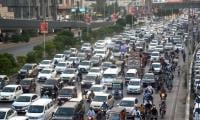
For decades, Pakistan’s borders have symbolised more control than connectivity. Every truck stopped at a dusty checkpoint, every queue snaking across Torkham or Chaman, told a story of missed opportunities.
While our geography offered an enviable advantage, a bridge between South Asia, Central Asia and the Middle East, our border management reflected an outdated mindset of security-first and commerce-later. Today, parliament has finally provided the corrective instrument that could turn these choke points into economic gateways: the Pakistan Land Port Authority (PLPA). For the first time, the country has a single institutional home to manage, modernise and coordinate its land crossings end-to-end.
The newly passed PLPA Act represents one of the most consequential trade facilitation reforms in Pakistan’s recent history. It addresses a chronic problem: fragmented control. Until now, each border point was effectively a patchwork of multiple agencies: customs under the FBR, immigration under interior, transit trade under commerce and security forces under various commands operating with little synergy or accountability. This fragmentation inflated dwell time, discouraged traders and eroded Pakistan’s competitiveness as a transit and export corridor.
The new authority brings an operational alignment by promising “one owner, one playbook”. Its mandate includes managing all land ports, coordinating agencies, developing infrastructure and introducing measurable Service-Level Agreements (SLAs) to track performance and accountability. It’s a shift from passive control to active facilitation.
Historically, Pakistan’s border management has evolved in fits and starts, responding more to crises than to long-term strategy. The Afghanistan-Pakistan Transit Trade Agreement (APTTA), signed in 2010, was meant to transform Pakistan into the primary conduit for Afghan imports and exports, but operational inefficiencies, smuggling leakages and political mistrust undermined its potential. At one time, over 80 per cent of Afghan transit trade flowed through Pakistani ports and land borders. Yet, by 2024, Afghanistan had shifted much of its cargo to Iranian routes via Bandar Abbas and Chabahar.
The numbers tell the story: in FY2022–23, Pakistan handled around 102,886 containers of Afghan transit cargo worth approximately $6.7 billion, a 39 per cent rise from the previous year. But by mid-2025, that figure had collapsed. According to Pakistan’s official data and trade trackers, transit volumes dropped by 84 per cent in July–August 2024 alone and overall transit trade plunged to around $2.9 billion in early 2025 from over $7 billion two years earlier.
This decline was not purely political; it was operational. Traders cited delays, unpredictable clearance times, multiple inspections and arbitrary closures as reasons for rerouting cargo through Iran. At its worst, it could take up to 72 hours for a single truck to clear Torkham, compared to less than 10 hours at comparable Indian or Iranian crossings. These inefficiencies cost Pakistan not only revenue but also reputation. Meanwhile, Bangladesh and India, both having established their own Land Port Authorities decades earlier (in 2002 and 2012, respectively), have demonstrated how unified management can drive predictability and trust. Pakistan’s delay in creating a similar authority meant it spent years watching regional competitors capture the transit and logistics markets it should have led.
The PLPA Act 2025 now offers Pakistan a reset. It consolidates border management under a single framework, enabling performance-based oversight and integration with the Pakistan Single Window (PSW). The idea is to embed a performance culture, measurable SLAs for clearance times, digital dashboards showing throughput and real-time data sharing with traders and agencies alike. The authority’s success will depend on execution discipline.
Pakistan’s geography remains its greatest unmonetized asset. A country that borders China, Iran, India and Afghanistan and sits just off the Gulf’s maritime routes has natural potential to become a regional logistics hub. Yet, for decades, this advantage was lost to inefficiency and unpredictability. The Land Port Authority gives Islamabad a chance to reclaim that advantage by ‘hard-wiring resilience’ into its borders. In practical terms, that means deploying the Transport Internationaux Routiers (TIR) system to secure and document cargo from origin to destination, eliminating redundant inspections and smuggling opportunities. It also means introducing ‘green lanes’ for perishable and strategic cargo from fruits and vegetables to machinery and energy inputs so that essential goods move without bureaucratic friction.
This change could not come at a more critical moment. Pakistan’s regional transit position has been undercut by both geopolitical disruptions and corridor competition. Border flare-ups with Afghanistan, like the Torkham closure in March 2025, stranded thousands of trucks and cost millions in losses. At the same time, new corridors like Chabahar–Central Asia, Iran–Turkmenistan and even China’s alternate Karakoram–Kazakhstan routes are vying for the same transit business. For Islamabad, the only sustainable response to such noisy geopolitics is operational redundancy: multiple open corridors, pre-arrival digital clearance and live SLAs that keep trucks moving when politics stalls.
The integration of the Early Harvest understanding with Afghanistan and the APTTA revision now under negotiation offers a practical test for this new approach. These agreements will only matter if their legal preferences, tariff waivers, bonded warehousing or preferential transit rights are matched by operational efficiency. Commerce policy must move in lockstep with port operations, so that ‘policy on paper’ becomes ‘performance on ground’. It’s not enough to sign treaties; Pakistan must make those treaties visible in the form of shorter queues, faster crossings and verifiable cost reductions.
The potential economic dividends are significant. According to World Bank estimates, effective trade facilitation reforms can reduce trade costs by up to 14 per cent for developing countries. For Pakistan, where overland trade is a lifeline for regional connectivity, even a modest 20 per cent improvement in border efficiency could yield hundreds of millions of dollars in savings and additional revenue. The authority’s work will directly influence the competitiveness of entire sectors logistics, trucking, warehousing and border communities whose livelihoods depend on cross-border commerce.
Yet, realism demands acknowledgment of risks. The first is implementation inertia. Pakistan’s bureaucracy has a history of creating institutions faster than empowering them. Without funding, staffing and digitisation, the PLPA could risk being another well-written law with little impact. The second challenge is inter-agency friction. Customs, immigration and security agencies have long operated autonomously and may resist subordination under a single chain of command.
The tradition of ‘parallel control’ is deeply ingrained in Pakistan’s administrative mindset. Agencies guard their jurisdictions, fearing loss of authority or resource flows. Unless the PLPA is empowered with real operational autonomy, it risks becoming another layer in the bureaucratic maze it was meant to simplify. This is where political will must back institutional reform, clarity of authority and measurable accountability.
The third risk is smuggling backlash. As enforcement tightens under TIR and real-time tracking, vested interests that profited from informal trade will resist change. A credible enforcement and communication strategy must accompany facilitation reforms to prevent political sabotage.
Finally, infrastructure remains a persistent bottleneck. Many land crossings lack basic facilities, such as parking yards, scanners, quarantine sheds or rest areas. Without public-private investment, modern border terminals will remain aspirational. Pakistan can learn from regional examples: India’s Attari Integrated Check Post (ICP) processes over 2,000 trucks daily through automated systems and dedicated green lanes; Bangladesh’s Benapole Port has seen a 40 per cent reduction in clearance time after port authority-led reforms. Pakistan’s border modernisation, under PLPA, must achieve similar efficiency levels if it hopes to regain market share in regional transit trade.
Another challenge lies in digital integration. While the Pakistan Single Window has digitised much of the customs documentation process, it is not yet fully linked to land-port operations. Manual verification, paper-based approvals and inconsistent wi-fi connectivity remain major bottlenecks. Without full interoperability between the PLPA’s systems and PSW’s clearance platform, ‘pre-arrival processing’ will remain a slogan rather than a practice.
But none of these challenges are insurmountable if approached with discipline and transparency. The authority’s leadership must establish a 90-day performance roadmap mapping baseline metrics like average dwell time, truck turnaround, and clearance cost for the top ten crossings. The first quarterly dashboard should set public benchmarks.
More broadly, this reform symbolises a shift in Pakistan’s governance philosophy. For too long, the border has been seen as a barrier to be policed rather than a system to be managed. The PLPA reframes it as a national asset – an interface where sovereignty, commerce and technology converge.
The writer is a trade facilitation expert, working with the federal government of Pakistan.