Threats, inside and out
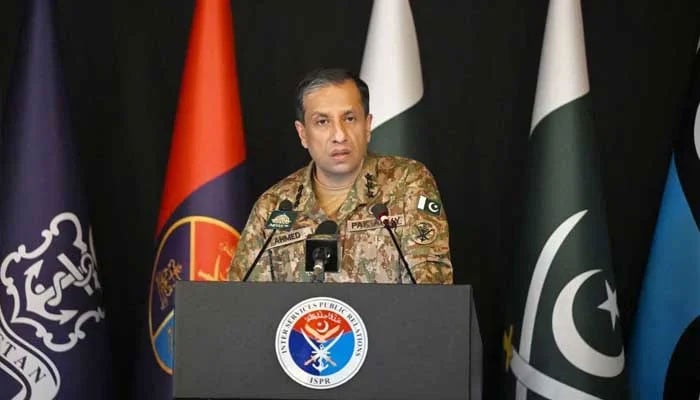
The security briefing given by Director-General of Inter-Services Public Relations Lieutenant General Ahmed Sharif Chaudhry on Monday has shed light on the multiple fronts where Pakistan continues to face grave challenges, both internal and external. From the resurgence of militancy to cross-border infiltration and regional power games, the situation demands not just military vigilance but also political unity and policy coherence. The ISPR DG briefed journalists on the status of Pakistan-Afghanistan talks, cross-border attacks, counterterrorism operations, terrorist financing networks and India’s alleged designs to destabilise Pakistan. Among the more alarming revelations was the extent to which narcotics are funding militancy. According to the DG, around 12,000 acres of land in Khyber Pakhtunkhwa are under poppy cultivation, mainly in Khyber and Tirah valleys, where profits range from Rs1.8 million to Rs3.2 million per acre. These proceeds, he said, fuel militant networks linked to both the TTP and Afghan factions, with even local politicians allegedly complicit in the trade. The narco-economy, thus, has become an entrenched threat – financing terror on both sides of the border.
The ISPR has also outlined recent counterterrorism operations: over the past few months, security forces have killed 112 foreign fighters – about 60 per cent of whom were Afghan nationals. According to the military spokesperson, Pakistan’s current security woes stem from the Afghan Taliban’s failure to honour commitments made under the Doha agreement, while Pakistan still seeks peace and prefers dialogue but will not tolerate cross-border attacks. The military has also categorically denied Afghan Taliban claims that Pakistan is facilitating US drone operations in Afghanistan, calling such allegations baseless. On the eastern front, things are ominous, per the spokesperson who talked about a possible 'false-flag maritime operation' by India and also about the Modi regime trying to plot provocations to justify future aggression. This claim comes amid rising regional tensions and a pattern of Indian attempts to shift attention from domestic political issues through external confrontation. Pakistan’s security agencies, meanwhile, continue to intercept Indian-sponsored networks within the country. In a recent case, law-enforcement authorities arrested a fisherman allegedly working for Indian intelligence, tasked with gathering sensitive material including military uniforms, SIM cards and phone bills. Security forces also neutralised four India-backed militants during an intelligence-based operation in Balochistan on November 1. From the TTP to the BLA, Pakistan’s internal enemies continue to receive funding and direction from hostile actors.
This year alone, Pakistan has faced active hostilities on both its western and eastern borders, a reflection of the precarious regional environment in which it operates. While the military and intelligence agencies are maintaining vigilance, what remains missing is a coordinated national counterterrorism strategy backed by political consensus. The internal political polarisation has distracted attention from these existential threats. Pakistan’s leadership – across all parties – must recognise that political rivalries can be fought another day. The immediate priority should be national security. Whether the threat emanates from the narco-terror networks in KP, safe havens across the Afghan border or covert Indian interference, it can all only be countered through unity, institutional coordination and a long-term plan that goes beyond reactive measures.


-
 Aurangzeb confirms Saudi Arabia $10bn interest, says B2B shift ongoing
 -
 Pakistan to build artificial island to boost oil exploration
 -
 Special pink bus service launched for women on Green Line route
 -
 Same number plates from other provinces lead to wrong e-challans for Karachiites
 -
 State institutions ‘fail’ to perform constitutional duties: KP CM
 -
 CTD orders psychological testing of police on VVIP security duty
 -
 Navy busts drug consignment valued at $130m
 -
 Three ex-secretaries in race for ETPB chief post