Making TRACS work
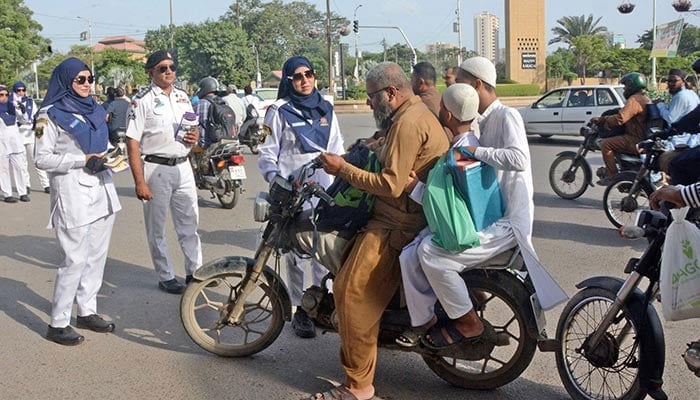
The e-challan system currently being implemented in Karachi is a prime example of how even the best ideas and latest technologies need proper implementation if they are to truly make things better. On paper, the e-challan framework makes all the sense in the world. Officially known as the Traffic Regulation and Citation System (TRACS), it was inaugurated last week by the Sindh chief minister. Around 200 advanced AI-integrated CCTV cameras have been installed across Karachi, with plans to expand to 12,000 cameras city-wide, to detect violations such as over-speeding, red light jumping and helmet non-compliance. Now, instead of an officer having to stand around all day in the heat, noise and dust of the business capital, a fully automated e-ticketing mechanism sends fines directly to the violators. Not only does this help overcome manpower constraints but it also removes much of the bias, arbitrariness and haggling that often comes with traffic checks and fines in Karachi. No one who has ever driven in the city will be a stranger to being cited for a violation that thousands make all the time, every day. TRACS is also reportedly integrated with key government databases, the driving licence system and NADRA e-Sahulat, and modern payment gateways allow citizens to view and pay traffic fines securely online or via their mobile devices.
This is how it is all supposed to work on paper. Then comes the practical part. Already, citizens are reporting inconsistencies and errors in the system. While these reported claims and incidents are indeed troubling and point to some problems in the TRACS system, it is important to remember that reportedly more than 20,000 e-challans have now been issued so it is hard to gauge how representative these issues are of the system as a whole. However, the preliminary issues have been enough to raise a ruckus. A petition has been filed with the Sindh High Court (SHC) seeking a declaration that implementation of the AI-based e-challans without adequate infrastructure and ownership verification safeguards is illegal and unconstitutional.
One can understand why things have played out like this. While TRACS might be cutting-edge, the vehicle registration system and Karachi’s road infrastructure are not. This is likely why we have cases of fines against people against vehicles stolen from them but still under their name. And, as for the roads, many motorists would argue that playing by the rules is impossible in Karachi and some violations are inevitable when driving here. With the fines reportedly going up to Rs5000, one can understand the frustrations with the new system. While the CM has directed traffic authorities to waive motorists’ first e-challan as a goodwill gesture, the deeper problems with the whole system have to be addressed. The e-challans are a good idea and have been implemented successfully in at least one other city in Pakistan, with lower fines. In order to work, they need to be supported by more investment in its roads and an updated and accurate vehicle registration system.


-
 Aurangzeb confirms Saudi Arabia $10bn interest, says B2B shift ongoing
 -
 Pakistan to build artificial island to boost oil exploration
 -
 Special pink bus service launched for women on Green Line route
 -
 Same number plates from other provinces lead to wrong e-challans for Karachiites
 -
 State institutions ‘fail’ to perform constitutional duties: KP CM
 -
 CTD orders psychological testing of police on VVIP security duty
 -
 Navy busts drug consignment valued at $130m
 -
 Three ex-secretaries in race for ETPB chief post