NFC set to discuss resource distribution formula: Aurangzeb
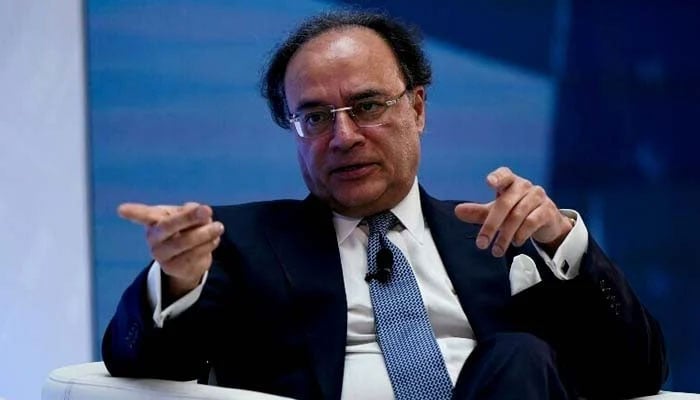
ISLAMABAD: Federal Minister for Finance Muhammad Aurangzeb has termed the external deficit “manageable” and announced that the National Finance Commission (NFC) will begin its deliberations on the resource distribution formula.
When asked about proposed constitutional amendments—specifically, the 27th Amendment to change the NFC Award’s resource distribution formula and amendments to the 18th Amendment to transfer education and population portfolios from the provinces to the Centre—the minister parried a direct reply. He reiterated that the NFC is the appropriate forum to take up such issues and that they cannot be discussed outside its ambit.
“The structural reforms are at the execution stage to avoid boom and bust cycles and for moving towards a sustained growth path. Without implementing them, the economic agenda cannot be taken to the finishing line,” Minister for Finance Muhammad Aurangzeb said while addressing a news conference on Monday. He was joined by key ministers at the FBR’s Headquarters.
To a question if an increasing trade deficit might pave the way for striking another bailout package from the IMF after the expiry of the existing one, the minister said that the government would move towards export-led growth and all structural reforms are geared towards reforming the economy. He said that exports grew at a modest 8 to 9 percent, but remittances performed well. The Current Account Deficit (CAD), he said, was envisaged at 0.5 percent of GDP, which is quite a manageable level.
The Federal Secretary of Finance, Imdad Ullah Bosal, said that the Direct Contribution (DC) for the pensions of the armed forces might become applicable from next year. He said that 8,419 new civilian officials have been enrolled under the Direct Contribution Scheme. The government has executed parametric reforms such as pension on a 24-month average pay, early retirement penalties, single pension, and the option of pension or salary, etc.
Federal Minister for Power Awais Ahmed Leghari announced electricity tariff reductions of Rs. 10.5 for general consumers and Rs. 16 for industries over 18 months. He confirmed the imminent launch of the Competitive Trading Bilateral Contract Market (CTBCM) to end government power purchasing. Key achievements include a Rs. 700 billion circular debt reduction, Rs. 48 billion saved from auctioning loss-making plants, and a Rs. 193 billion cut in losses. Industrial incentives include a three-year package at Rs. 26 per unit and reduced EV rates from Rs. 71 to Rs. 39. He warned that without the IGCEP agreement, consumers would have paid an additional Rs. 4 trillion.
FBR Chairman Rashid Mahmood Langrial reported retailers paid Rs. 82 billion in Income Tax last fiscal year, while disclosing a Rs. 1.2 trillion tax gap among top earners. Pakistan aims to raise its tax-to-GDP ratio to 18% within three years through federal (13.85%), Petroleum Levy (1.15%), and provincial (3%) contributions. Langrial noted an 18% increase in tax filers (4.9 million to 5.9 million) and a Rs. 275 billion shortfall recoverable without new measures. Enhanced monitoring yielded Rs. 43 billion in tobacco sector sales tax and Rs. 42 billion in sugar sector income tax gains.
Secretary of Finance Imdadullah Bosal reported strong progress on debt management and pension reforms. Due to State Bank policy rate cuts, the government saved Rs 30 billion in September and Rs 120 billion in August against the Rs 8.2 trillion earmarked for interest payments this fiscal year, contributing to total debt servicing savings of Rs 1 trillion last fiscal year. He also announced Pakistan’s plan to launch Panda Bonds, starting with a $250 million issuance that could expand to $1 billion based on market response.
The Advisor on Privatisation stated the privatisation process would accelerate in coming months, confirming the Rs 5 billion sale of First Women Bank and PIA’s privatisation completion this year, with four consortia including Airblue and Fauji Foundation competing. For major airports, the government seeks long-term private management rather than sales, with UAE talks ongoing for Islamabad and bidding planned for Lahore and Karachi airports, requiring approximately $1 billion investment.
He noted HBFC’s privatisation would be reattempted if no better offer emerges, while IESCO, GEPCO, and FESCO’s privatisation aims to improve service quality and ensure fair consumer tariffs.
SAPM Shaza Fatima Khawaja highlighted that approximately $400 billion of Pakistan’s economy remains undocumented, briefing on digital payment initiatives, IT sector growth, and institutional digitisation efforts.
The PM’s Coordinator on Right-Sizing reported the streamlining of 39 ministries and 441 departments, with 20 ministries currently undergoing right-sizing. The abolition of 54,000 posts saves Rs 56 billion annually, while loss-making entities including PASSCO and Utility Stores have been shut down. The Narcotics and Interior ministries have been merged, as have Aviation and Defence, while the PWD has been closed.


-
 Aurangzeb confirms Saudi Arabia $10bn interest, says B2B shift ongoing
 -
 Pakistan to build artificial island to boost oil exploration
 -
 Special pink bus service launched for women on Green Line route
 -
 Same number plates from other provinces lead to wrong e-challans for Karachiites
 -
 State institutions ‘fail’ to perform constitutional duties: KP CM
 -
 CTD orders psychological testing of police on VVIP security duty
 -
 Navy busts drug consignment valued at $130m
 -
 Three ex-secretaries in race for ETPB chief post