When you contemplate the present state of affairs in Pakistan from various perspectives and glide over the media headlines, the impression that we are locked in a struggle against terrorism and violent extremism would be hard to dispel. So, what are the prospects of Pakistan winning against these almost perennial threats to our survival?
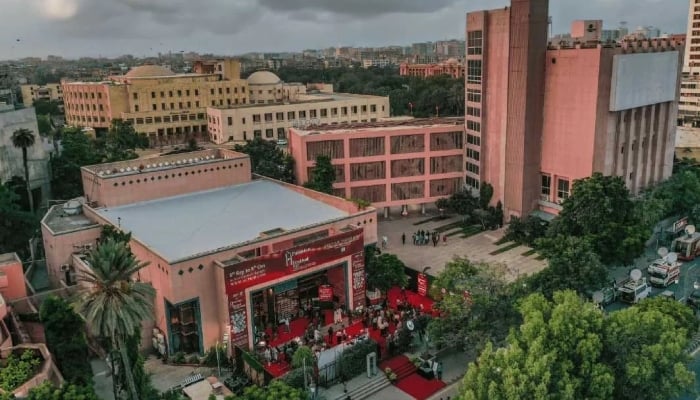
Incidentally, this is not how I wanted to begin my column this week. On Friday, a major cultural event was launched in Karachi, and it deserves particular attention because of its magnitude as an artistic achievement. Simply, the World Culture Festival, organised by the Arts Council of Pakistan in Karachi, is unprecedented in Pakistan’s cultural history. With over a thousand participants from around 140 countries of the world, it will continue for more than a month and conclude on December 7.
Hence, I would be justified in making this occasion the only subject for this week. There would be a lot to write about and also share some reflections on specific performances. The ultimate focus, I believe, should be on the role that art, culture and literature can play in the context of building a nation that is at peace with itself, a nation that is capable of harnessing its human capital for social change.
However, while we identify the importance of culture and highlight the contribution that the World Culture Festival is set to make to our struggle against hatred and violence and intolerance, it is hard to ignore the fact that the roots of religious extremism are so deeply lodged in our collective consciousness that the state seems uncertain about its own campaign against the menace. In that sense, the story of Pakistan is a tug of war between religious extremism and values that sustain a civilised society.
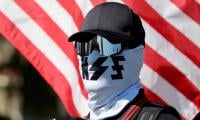
Do the ruling authorities of Pakistan fully understand the nature of this contradiction? Sadly, policies that have been pursued in recent decades do not suggest that they, the rulers, are firmly on the side of culture and art. For instance, the ongoing operation against the TTP and the recent bloody confrontation with the now-banned TLP would remind you of the time when both these outfits were not seen as enemies.
On Thursday, Pakistan and Afghanistan agreed to continue their ceasefire after five days of tense negotiations in Istanbul. It is all about the TTP and how the Afghan government is supportive of its terrorist activities in Pakistan, which have increased this year. Six Pakistan Army soldiers, including an officer, were martyred in an encounter in Khyber Pakhtunkhwa’s Kurram district on Wednesday.
But where did the TTP come from? There was a time when we wrote about the Talibanisation of Pakistan. Recently, there was this talk about the good Taliban and the bad Taliban. But the passions that gave birth to the Taliban were allowed to stay alive in the minds and hearts of some segments of our population because our fundamental policies and the national sense of direction did not change.
The story of how, after a bloody encounter, the TLP is now banned is similar in many respects. A religious or political party can be outlawed but no serious attempt is made to de-radicalise its members and to change the environment in which militancy is nurtured in the minds of vulnerable people.
On Wednesday, the Punjab government announced that it would hand over administrative control of mosques and madrassas run by the TLP to moderate clerics. Ah, but the TLP was itself considered moderate when it was almost patronised to isolate the extremists of, say, the TTP.
Let me now return to the colourful and inspiring launch of the second World Culture Festival at the Arts Council on Friday. I was there and felt that I was on an island of hope in the midst of a society in which extremism and intolerance have flourished. If the dynamic leadership of an Arts Council can make this possible, a planned national effort to energise the Pakistani society with culture, art and literature can surely make a big difference.
I should have been more enthusiastic about the World Culture Festival and the triumph it constitutes of the abilities of Ahmed Shah, President of the Arts Council. But I am restrained by the fact that I am a member of the Arts Council’s Governing Body. Take this as
a disclaimer.
But this also means that I am fully aware of how this project was planned and executed. Though it was conceived and administratively controlled by Ahmed Shah, the team he selected should also be applauded for doing an excellent job. And this commitment to hard work must persist for more than a month. Their reward is the joy and excitement that it has brought to so many people who will have the opportunity of watching the live performances.
I need not provide any details about the festival because it is being extensively covered by the media. My purpose primarily is to underline the healing power of the arts, something that is desperately needed in Pakistan. I was happy to hear the word ‘healing’ in the same context in remarks made by Chief Minister of Sindh Syed Murad Ali Shah, who was the chief guest at the inauguration.
In their speeches, both Murad Ali Shah and Ahmed Shah made some significant points about the contribution that arts and culture can make to building an inclusive and just society. Ahmed Shah invoked the genocide committed in Gaza and said that the artists and performers who had gathered from all over the world had a message for peace and for human rights.
In my view, the festival is also a message for those who sit at the table of high authority in Islamabad. They have accepted the clout of the clerics for too long and have neglected the importance of the kind of education that would liberate the minds of Pakistan’s youth. What is being staged at the Arts Council should be injected into the lives of our people to empower them to stand up to the TTP and the TLP.
The writer is a senior journalist. He can be reached at: ghazi.karachi@gmail.com