AI’s climate blindspot
Seven of nine planetary boundaries have been breached. Climate change, biosphere collapse, freshwater depletion and, for the first time, ocean acidification. These boundaries are the vital signs of a planet teetering beyond the range that sustained human civilization for 12,000 years. Alarm bells ring in every chart and graph of the Planetary Health Check 2025, yet our collective response remains inadequate.
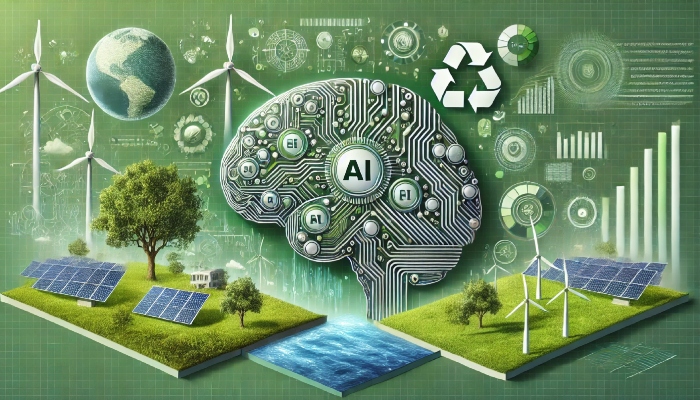
Meanwhile, a technological revolution is underway. Artificial intelligence now processes vast satellite datasets to deliver near-real-time indicators of Earth’s health. Initiatives from the Potsdam Institute and Stockholm Resilience Centre envision leveraging the latest satellite data and AI to create enhanced Earth monitoring systems, where machine-learning algorithms track carbon dioxide emissions, detect deforestation as it happens, and flag ecosystem stress long before human eyes register the crisis. AI promises faster, more precise environmental intelligence than ever before.
But there is a troubling blind spot in this approach. These powerful systems can quantify atmospheric CO2 down to decimal points, yet they cannot capture which communities suffer first when planetary boundaries break. They report that 22.6% of global land faces freshwater disturbance in streamflow, yet satellite dashboards remain silent on who lacks safe drinking water. They classify aerosol loading as within “safe” global limits even as monsoon disruptions devastate millions of farmers. Precise metrics obscure systemic inequities.
When aerosol pollution over South Asia weakens the monsoon – a lifeline for more than a billion people – satellites detect changing moisture indices but ignore caste-based water access, rural poverty, and entrenched social vulnerabilities that determine who drowns and who survives. Scholars warn of “computational asymmetries” and neocolonial dynamics in AI for climate action, perpetuating power imbalances by extracting information without empowering affected communities.
Moreover, who controls these AI systems? Research centers in Europe and North America design and deploy them. Satellites are launched by NASA, the European Space Agency, and private firms. Datasets and codes are often proprietary. Access barriers exclude local researchers and grassroots organizations from meaningful participation. As a result, climate solutions driven by AI risk concentrating power in the same institutions that shaped the crisis rather than democratizing environmental protection.
This is not a call to reject AI in environmental science. On the contrary, these tools can transform early warning systems, improve emissions accounting, and optimize conservation strategies. The challenge lies in embedding justice at their core. We must ask urgent questions: Who has access to the data? Who shapes the algorithms? Who defines the metrics of success?
Excerpted: ‘If AI Knows the Planet Is Dying, Why Can’t It Tell Us Who’s Drowning?’.
Courtesy: Commondreams.org