Climate diplomacy
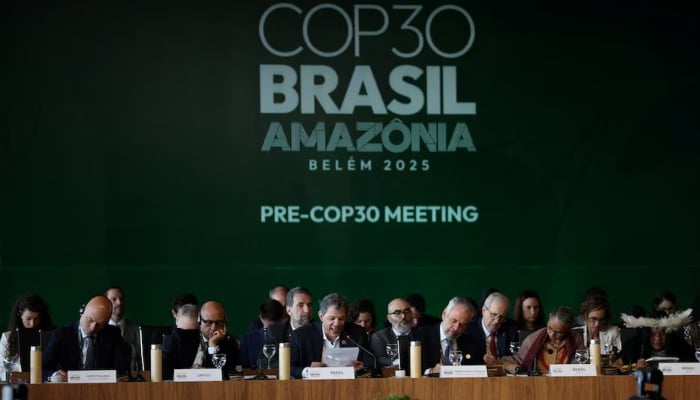
This November, the world is bracing for COP 30 in Belem, Brazil with a shift towards implementing climate financing. This moment holds great significance for Pakistan, as it advocates for its eligibility for just climate financing, given its status as one of the most climate-vulnerable countries in the world.
Although it is responsible for less than one per cent of global GHG emissions, Pakistan faces severe repercussions of climate change. For instance, the cumulative human losses from the floods of 2025 have resulted in 1,037 deaths and 1,067 injuries. While 229,763 houses have been damaged and 22,841 livestock have been reported lost to the flood.
Similarly, the 2022 floods displaced millions, causing an estimated $30 billion in damages and economic losses. This recurring devastation accentuates the need to reconcile climate targets with economic capacity. To achieve its climate adaptation and mitigation targets, Pakistan needs approximately $348 billion by 2030. However, an annual financing gap of nearly $17 billion makes Pakistan’s climate finance landscape intricate and fragmented.
In terms of climate finance, Pakistan has received around $8 billion from 2010 to 2020, which is less than $800 million per annum. Almost 75 per cent of climate finance inflows are in the form of loans, not grants, which has aggravated Pakistan’s debt burden. Some loans require meeting project-specific conditions and administrative procedures, which can result in implementation delays.
The national climate expenses average less than two per cent of GDP. While international climate finance inflows from bilateral donors, multilateral development banks and the Green Climate Fund (GCF) are insufficient and highly conditional. The structural gaps between needs and available resources hamper Pakistan’s trajectory to achieve its climate targets.
Pakistan faces certain institutional and policy bottlenecks. Though Pakistan has made certain policy advances, such as the National Climate Change Policy (2021), the updated NDCs 3.0 and frameworks for disaster risk financing, its institutional capacity is limited. The lack of a centralised climate finance authority to pool, allocate and track funds and resources strategically and efficiently.
Climate financing authorities, scattered across federal ministries, provincial governments and line departments, lack integration and coordination. Besides, the lack of project preparation capacity to meet the stringent technical, fiduciary, and safeguard requirements of the GCF or GEF also hampers Pakistan’s access to international climate funds. All this necessitates that Pakistan needs to strengthen its home readiness by building its technical expertise in proposal development and financial modeling, by developing high-impact bankable climate projects and streamlining climate finance into the Public Sector Development Program (PSDP) and provincial budgets to make optimal use of domestic resources.
Climate finance is not solely a public sector concern. The private sector can deliver its part in scaling climate investment. Green bonds, blended finance instruments and public-private partnerships can be potentially used to unlock additional resources, notably in energy, transport and urban development. Crowd capital can be attracted with the placement of regulatory support for green financial instruments, tax incentives for renewable energy, and credit guarantees for climate projects.
The moment when COP 30 aims to focus on operationalising the New Collective Quantified Goal (NCQG) offers Pakistan an opportunity to recalibrate its climate finance strategy and to align its climate diplomacy around clear priorities and viable national reforms. Pakistan’s climate finance challenge is both pressing and resolvable. COP30 is a vital moment where Pakistan can play a more strategic diplomatic role. Being a climate-vulnerable country with escalating debt pressures, Pakistan can strategically position its case to advocate for just and fair climate finance allocations.
To achieve this purpose, Pakistan should present its case with clarity and determination. The country can amplify its voice by showing its progress in adaptation and mitigation against the face of vulnerabilities. This will win Pakistan credibility among international partners. It can also advocate its case with its well-formulated finance strategy supported by clear priorities, flagship projects and high-level political commitment.
A strategic collaboration with other climate-vulnerable nations can secure the funds and resources Pakistan needs for climate adaptation and mitigation actions.
The writer is an assistant professor at the Pakistan Institute of Development Economics (PIDE). She can be reached at: akhurram@pide.org.pk