NDC 3.0 must deliver
The newly submitted NDC 3.0 by Pakistan to the UNFCCC exhibits a robust commitment to climate action, marked by its exclusivity, associated costs, & quantifiable nature. It aims for a 50 per cent reduction in projected greenhouse gas emissions, with 17 per cent through domestic efforts and 33 per cent dependent on international support.
This document appears more comprehensive than its earlier version, outlining a total financing package of $565.7 billion through 2035. Its priorities align with NAP 2023, covering agriculture, forestry, water and coastal zones. Its implementation framework also advances by establishing a transparent national system to track GHGs, complemented by a monitoring framework to oversee its adoption. However, the real challenge lies in translating ambitions into tangible outcomes on the ground, beginning with agriculture, which serves as the backbone of Pakistan's economy, food security and livelihoods.
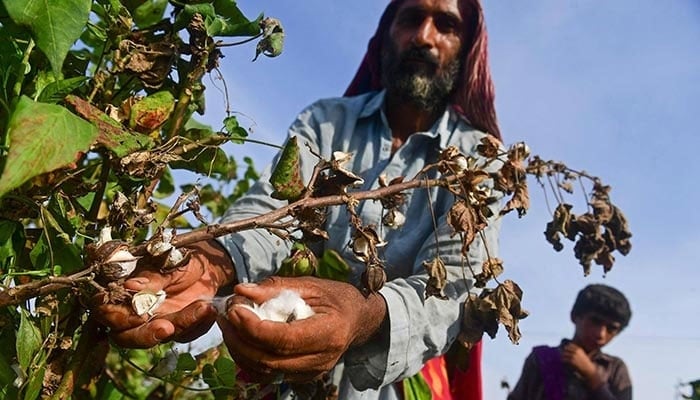
As Pakistan’s largest sector, agriculture accounts for about 24 per cent of GDP, employs nearly half of the workforce and drives foreign exchange earnings. However, it is becoming increasingly vulnerable to climate-related risks, including soil degradation, water scarcity, yield fluctuations and food insecurity. Although the NDC acknowledges the vulnerability of this critical sector and highlights some Climate Smart Agricultural (CSA) practices such as precision fertilizer use, alternate wet & dry cycles in rice cultivation and manure management, it stops short of setting adoption targets and timelines for transitioning from traditional to low-emission practices and specific methane reduction goals for paddy rice and livestock by 2035.
Therefore, a climate pledge that lacks measurable improvements in its most critical and climate-vulnerable sector risks being purely rhetorical. To effectively implement CSA in Pakistan, the country needs to move beyond mere pledges and take concrete actions by setting acreage targets with defined timelines, monitoring co-benefits, and linking them to financial support by incorporating CSA tags into the SBP’s green banking guidelines, enhancing climate credit scoring for smallholders, de-risking lending through refinancing programs and enabling digital aggregation for farmer communities. Without these steps, the agriculture section is just a wish list, not a roadmap.
The NDC projects a $565.7 billion cost through 2025, with around two-thirds of that cost dependent on foreign grants and external loans, which seldom arrive quickly. These overly ambitious targets can't wait for aid. To achieve these targets, it's essential to implement a two-track plan: develop a domestic ‘floor’ pathway based on public investment and policy reforms that deliver incremental emission reductions and build resilience and include an ‘accelerator' track activated once external funding is secured.
During the first three years, focus on ‘no-regret’ actions that are already within national capacity, prioritising practical and cost-effective measures like DRR, WASH infrastructure and reducing grid losses – all of which offer immediate resilience benefits. Currently, the NDC appears to be a wish list without a clear roadmap. The Ministry of Climate Change & Environmental Coordination and the Ministry of Finance need to convert it into measurable yearly budget allocations and disbursements. Otherwise, Pakistan’s conditional promise remains ‘in principle’, not in action.
Water – not carbon – is Pakistan’s most urgent climate concern. Although the NDC acknowledges use of advanced irrigation systems, it still allocates only $6.5 billion by 2035, which covers just a small part of the sector's needs for efficient sprinklers, canal lining, and aquifer recharge. Meanwhile, 90 per cent of available fresh water is used by the agriculture sector, contributing only one per cent of gross taxes.
This discrepancy between hydrological crisis and fiscal priorities is alarming. If irrigation reforms continue at the current pace, yield shocks will soon erode rural livelihoods faster than mitigation can offset. It’s high time for Pakistan to expand its irrigation investment options through blended finance, needs-based provincial grants and incentives for water-use efficiency. Climate adaptation begins with saving every single drop of water.
Although the new NDC rightly cites progress on data and transparency by establishing a national GHG-MRV and adaptation monitoring framework. However, the country's institutional capacity remains limited, especially at the provincial and district levels. After the 18th Amendment, power and responsibilities were devolved to provinces. Therefore, they must establish and oversee yearly climate goals with designated budgets.
At the same time, federal ministries are required to publish annual scorecards that monitor progress for each sector province. Without proper institutional infrastructure, even well-crafted NDCs lose momentum. Mitigation and adaptation responsibilities also remain spread across ministries. To overcome this, a unified Climate Finance & Resilience Authority jointly reporting to the MoF, MoCC & EC could convert fragmented projects into measurable outcomes.
In the NDC, power-sector reforms are rightly accompanied by detailed costs and timelines. Meanwhile, the transport sector has clear targets of 30 per cent new EV sales and 3,000 charging stations by 2030. However, agriculture and waste management are mentioned but lack short-term indicators, despite rice, livestock and landfills accounting for significant methane emissions. Pakistan’s climate challenge isn’t just about carbon; methane from livestock and rice fields is also substantial, but the NDC’s mitigation plan still mainly focuses on the power sector.
To stay credible, this NDC needs to extend its KPIs beyond energy sectors, including hectares of rice cultivated with water-efficient irrigation, livestock waste transformed into biogas, tonnes of landfill gas recovered and hectares of degraded land restored. Without interim targets, 2035 will deliver another report – not results.
NDC 3.0 accurately covers key aspects with clear goals, transparent costs and coordination between adaptation and mitigation. However, an NDC is assessed not by elegant tables but by delivery models. Pakistan’s next steps should be immediate and specific: implement phased financing by establishing a domestic core pathway independent of external funds, with clear annual climate budgets and targets; set CSA adoption targets & incorporate quantified metrics into SBP green banking guidelines & provincial programs; and accelerate irrigation by doubling water-efficiency investments with measurable savings and farmer-level monitoring.
Pakistan has made an ambitious climate promise. Now it's time to turn that promise into action. Ambition without clear goals can drift away. Anchor it in concrete reforms and it can become real, transforming NDC 3.0 from a glossy pledge into something concrete that builds resilience for Pakistan.
The writer is a climate finance consultant at Oxford Policy Management. She can be reached at: naureen.naveed27@gmail.com