America’s $100bn REE vulnerability
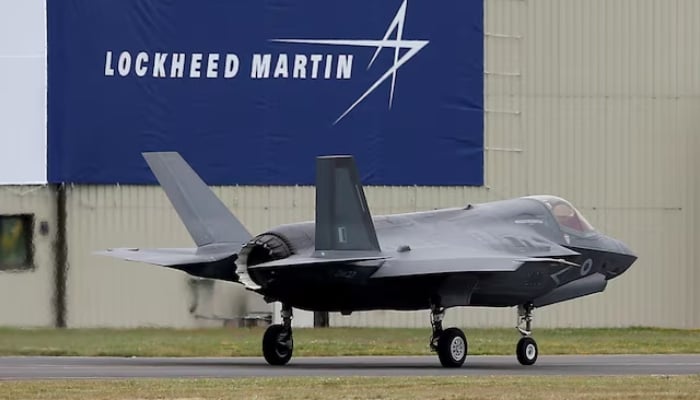
Lockheed Martin, the premier defence and aerospace contractor, produces the F-35 Lightning II, C-130J Super Hercules, CH-53K King Stallion and Aegis Combat System -- generating $71 billion in annual revenue through mission-critical platforms. The F-35 Lightning II, Lockheed’s flagship stealth multirole fighter, demands 400 kg of rare earth elements (REEs) per airframe for advanced avionics, fire-control radar and electro-mechanical actuators.
REE supply chain disruptions in 2025 have degraded production tempo, delaying 100+ jet deliveries and threatening a $20 billion revenue shortfall. RTX Corporation, the multinational aerospace and defence juggernaut, produces Patriot air defence missiles and Tomahawk cruise systems -- to secure $80 billion in annual revenue through mission-critical contracts. In Q3 2025, REE supply chain bottlenecks forced RTX to halt assembly lines for weeks, disrupting operational readiness and jeopardizing $15 billion in missile program funding.
Northrop Grumman, a leading aerospace and defence contractor, produces the B-21 Raider stealth bomber, Glide Phase Interceptor (GPI) hypersonic defence system and MQ-4C Triton ISR drone, generating $41 billion in annual revenue through mission-critical platforms. In Q3 2025, REE shortages disrupted 20 per cent of critical component supply lines, threatening $10 billion in programme delays.
General Dynamics manufactures the Virginia-class submarines and Abrams M1A2 tanks. The propulsion motors and targeting lasers require more than 4,000kg for REEs per sub. Production at Electric Boat has faced 20 percent input shortages, leading to Q2 2025 halts and $5 billion in deferred Navy contracts.
Ford Motor Company, the multinational automotive manufacturer, was forced to halt operations at its Chicago Assembly Plant for weeks due to rare earth magnet shortages, triggering production standstills, cost overruns, and the scrapping of 15,000 vehicles, resulting in a $1 billion operational loss.
Apple consumes around 120 tonnes of REEs annually across iPhones, AirPods, watches and Macs. Apple’s AirPods production has incurred tangible costs of $500 million from production delays and input price hikes. Other notables like Boeing, Tesla (Gigafactory delays), GM (Ultium battery lines), Intel and GE Vernova face similar 20-25 per cent production risks.
Peshawar is 11,265 kilometres from Bethesda, Maryland, the location of Lockheed Martin’s headquarters. Approximately 50 km northwest of Peshawar, near the Khyber Pass in the Jamrud area, about 20 km east of the Pakistan-Afghanistan border, lies Loe Shilman, a carbonatite complex renowned for its rich deposits of rare earth elements (REEs).
Roughly 80 km northeast of Quetta, in Killa Saifullah District, the Muslim Bagh Ophiolite Complex stands out as a geologically significant formation abundant in heavy rare earth elements (HREEs).
Situated about 150 miles southeast of Dalbandin in Chagai District, Dasht-e-Kain within the Chagai Volcanic Arc is a key site for rare earth elements (REEs), with the potential to supply 5-10 per cent of US annual REE demand. Additionally, Balochistan’s coastal sands hold an estimated 50,000 tons of recoverable total rare earth oxides (TREO).
According to USGS-aligned assessments and several Chinese analyses, Pakistan possesses an estimated 5 million metric tons of rare earth oxides (REO), positioning it as a mid-tier holder with approximately 2 to 4 percent of global reserves. Pakistan could potentially supply 15 to 20 per cent of the United States' annual REE demand.
America’s $100 billion vulnerability is Pakistan’s $100 billion opportunity -- if we choose to mine, refine and align.
The writer is an Islamabad-based columnist.


-
 Aurangzeb confirms Saudi Arabia $10bn interest, says B2B shift ongoing
 -
 Pakistan to build artificial island to boost oil exploration
 -
 Special pink bus service launched for women on Green Line route
 -
 Same number plates from other provinces lead to wrong e-challans for Karachiites
 -
 State institutions ‘fail’ to perform constitutional duties: KP CM
 -
 CTD orders psychological testing of police on VVIP security duty
 -
 Navy busts drug consignment valued at $130m
 -
 Three ex-secretaries in race for ETPB chief post