The drugs facade
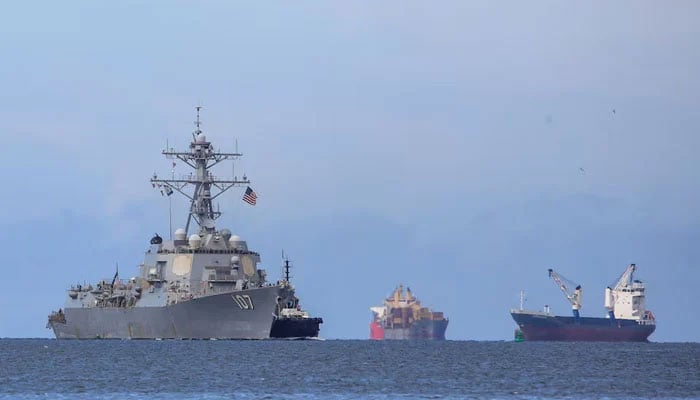
At first, the US display of force off the coast of Venezuela appeared to be an exercise in political theatre: an attempt by President Trump to project his “tough on crime” approach to domestic – including eager MAGA – audiences. “If you traffic in drugs toward our shores, we will stop you cold,” US Secretary of Defense Pete Hegseth said last week. Recent polls show that crime remains one of Americans’ primary concerns.
Another reading was that Trump’s build-up was a political stunt designed to appease the neo-cons in his administration, sectors of Washington’s foreign policy establishment, and radical elements of the Venezuelan opposition, including Maria Corina Machado, the new Nobel Laureate and hardline opposition leader who has called for foreign intervention in her own country. Unlike more moderate Venezuelan opposition leaders, these actors are all hostile to any perceived normalisation with Venezuela and oppose Trump’s recent granting of an operating licence to Chevron. The build-up appeared, in this light, as a typical Trumpian bluff: projecting toughness towards Maduro while simultaneously securing Venezuela’s oil.
One potential scenario is that the rhetorical escalation of the last few weeks will not be matched by direct attacks on Venezuela, and that the United States’s extrajudicial killings in the Caribbean will simply continue as they have over the last month and a half. In the absence of any serious US drug policy – especially on the vital issues of consumption or money laundering – the satellite imagery of small boats being blown up in the Caribbean serves Trump’s agenda well, albeit with tragic consequences for the boats’ unidentified occupants and their families.
But today, the sheer scale of the US military build-up does not align with the idea of a cynical political stunt, nor does Trump’s decision to cut off all diplomatic backchannels with the Venezuelan government and deauthorise special envoy Rick Grenell’s outreach to Maduro. The more we look at the military deployment and the increasingly belligerent rhetoric from Trump officials, the more the pursuit of regime change through military means appears to be the most plausible explanation.
Rubio and his fellow Florida Republicans have, of course, been ardently advocating for a more aggressive approach towards Venezuela for years. For Rubio, toppling the Venezuelan president – and perhaps, if he can ride the momentum, even overthrowing the Communist Party in Cuba – is a generational objective, more symbolic than strategic, and rooted in political passions and fantasies of return and revenge.
Given that US sanctions, coup attempts and the support of a parallel Venezuelan government in 2019, all measures strongly backed by Rubio, failed to overthrow Maduro, it appears that the secretary of state has concluded that direct military intervention is the only way to achieve this end, and that he is weighing heavily in favour of this outcome inside the administration.
The prospect of US boots on the ground, however, still feels incongruous, especially given Washington’s many more pressing geopolitical interests and Trump’s repeated promise, to the applause of his MAGA base, that he will not drag the country into new “forever wars”. But this is the Western Hemisphere, not the distant Middle East.
Excerpted: ‘The US warships off Venezuela aren’t there to fight drugs’. Courtesy: Aljazeera.com