
No more ambiguity
Terrorism, once wiped out by 2018, resurfacing in Balochistan and other areas, says premier
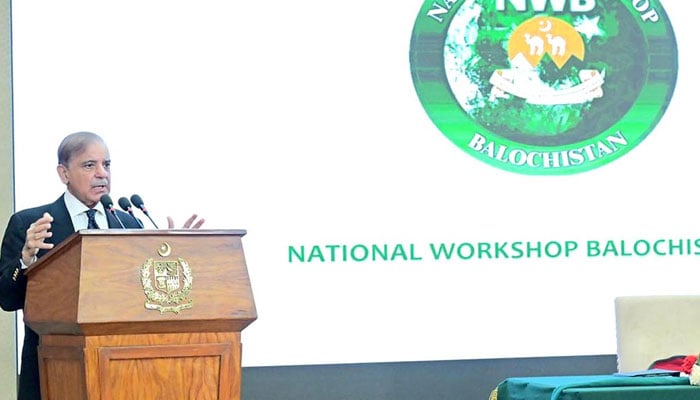
Prime Minister Shehbaz Sharif’s remarks at the Balochistan Workshop have once again drawn attention to one of Pakistan’s most pressing concerns: the re-emergence of terrorism. The prime minister has noted that, while terrorism had been 'completely eradicated' by 2018, it is now rearing its head again in Balochistan and other regions. That said, the prime minister’s emphasis on treating the people of Balochistan as equal partners in the country’s development must go beyond words. As he rightly pointed out, the Baloch have historically shown generosity towards those who migrated to their province or settled there generations ago – including Punjabi migrants and other communities. Yet, the landscape has changed dramatically, as can be seen in the brutal killings and abductions of Punjabi labourers in recent years.
Our militancy problem is multifaceted and deeply entrenched. While terrorism is not confined to Balochistan, with Khyber Pakhtunkhwa also suffering immensely in recent years, each region faces its own version of the menace. In Balochistan, militancy is largely home-grown and, alarmingly, often finds tacit sympathy within parts of the population. Groups like the BLA continue to exploit the sense of alienation many Baloch feel from the state, luring frustrated young men into their ranks and using them to carry out devastating attacks. It is no secret that the BLA and its Majeed Brigade are funded and trained with Indian support. Yet, even with external backing, the BLA’s strength ultimately lies in local discontent. And this problem cannot be resolved through military means alone; it requires a political solution. In this, the state must acknowledge the evolution of Baloch society. The traditional tribal sardars no longer hold the influence they once did. The new heroes for many Baloch youth are educated, middle-class individuals. Ignoring this reality only fuels further alienation. Dialogue with moderate Baloch nationalist parties and leaders is essential and must be pursued as a genuine effort to bring them back into the political mainstream. The mandate of the people of Balochistan must also be respected. When the Baloch have faith that their voices matter and their representatives can raise their issues in parliament, the likes of the BLA will lose their ability to exploit grievances.
The story in Khyber Pakhtunkhwa is no less concerning. The province has suffered a steady rise in terrorist attacks since the Afghan Taliban’s return to power in 2021. The TTP, once crushed and expelled from Pakistani territory, has found sanctuary across the border under the Taliban regime and the resurgence of terrorism in KP is directly linked to this cross-border facilitation. Going forward, Islamabad must refrain from meddling in Afghanistan’s internal affairs and instead focus solely on securing cooperation against the TTP. The Afghan Taliban must be pressed to deny safe havens to these militants and prevent cross-border attacks that destabilise Pakistan. Above all, Pakistan needs a clear, coherent and unwavering policy on terrorism – one free of ambiguity and political expediency. There can be no more 'ifs' and 'buts'. Defeating terrorism requires political consensus, institutional coordination and a firm resolve to address both its external enablers and its internal causes. This effort will also need genuine buy-in from all political stakeholders – including all major political parties – especially now that the country finally enjoys a rare moment of institutional coherence on the issue of terrorism.


-
 State institutions ‘fail’ to perform constitutional duties: KP CM
 -
 CTD orders psychological testing of police on VVIP security duty
 -
 Navy busts drug consignment valued at $130m
 -
 Three ex-secretaries in race for ETPB chief post
 -
 Punjab govt forms 71 JITs to probe cases against banned TLP
 -
 Some UNSC members ignoring broader reforms, seeking privilege: Pakistan
 -
 PAC body discusses non-recovery of Rs15bn gas cess
 -
 Pakistan received $2.29bn foreign loans in first 4 months of 2025