
Muzzled media
October 24 marks start of “Global Media and Information Literacy Week”
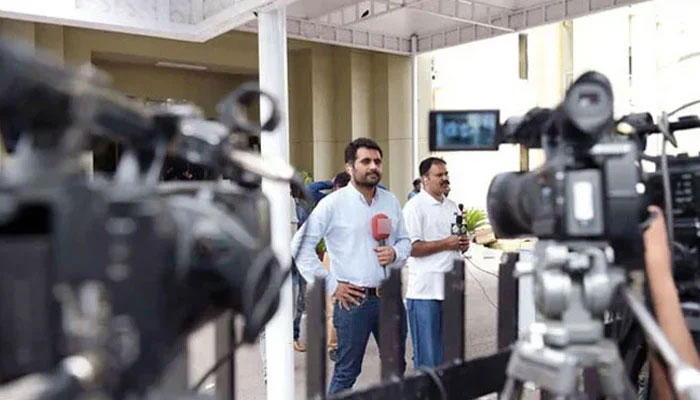
October 24 marked the start of ‘Global Media and Information Literacy Week’. The theme of the week for this year is 'Minds Over AI – Media and Information Literacy in Digital Spaces’. But while the UN urges the world to grapple with the impact of AI on the media and information consumption, many of the world’s journalists and other media professionals face far more elementary challenges. And few places are more challenging for the media than Afghanistan, at least according to a recent report by Human Rights Watch (HRW). Titled ‘Afghanistan: Taliban Tramples Media Freedom’, the report was released just a day prior to ‘Global Media and Information Literacy Week’ and brought to light a long list of restrictions imposed on the media by the Afghan Taliban regime currently running Afghanistan. According to the report, the Afghan Taliban have gutted Afghanistan’s media since taking control of the country in August 2021 and are subjecting the remaining news outlets to surveillance and censorship. News outlets report that Taliban officials monitor all content and compel Afghan journalists to produce ‘safe,’ pre-approved stories, censoring anything that they think has “a negative impact on the public’s attitude or … morale”. Those who step out of line can be subject to arbitrary detention and torture.
It is not just that the Afghan Taliban’s approach is harsh; it is also extremely arbitrary. After the group’s takeover in 2021, it announced '11 rules' for the media. As per the report, journalists are required to ensure 'balanced' reporting and 'only publish the truth', but the rules provide no criteria for interpreting the terms, leading to varying degrees of censorship across provinces and enabling officials to arbitrarily intervene at all levels. Simply failing to cover official events can lead to reporters being removed. As with most of the Afghan Taliban’s rules, the ones governing the media are also particularly anti-women. The report says that the Taliban have curtailed women’s representation in the media and the 'morality police' ensure adherence by staff to prescribed dress codes and other regulations.
The Afghan Taliban do not seem to want a press so much as they want a mouthpiece, and they cannot even be consistent about what tune they want it to sing. The fact is that the Afghan regime is stuck in the 90s. However, what could pass then will not do so now. The world is simply too different and any heavy-handedness by the state is now almost impossible to conceal nor can one any longer afford to completely cut themselves off from global norms. The fact that no other country in the Muslim world or the region is doing the same things it was three decades ago is proof of this. But, as of now, the Afghan Taliban do not seem to be interested in moderating their approach. And this is not just a factor in how they treat their own people, but one that can be seen in their relations with neighbouring countries as well. At every turn, the group seems unwilling to listen to valid concerns from others and modify its behaviour accordingly. In doing so they are not only damaging their own reputation but also stopping their country from functioning at its best. Any capital they once had has been squandered by their sheer obstinacy to change their ways.


-
 State institutions ‘fail’ to perform constitutional duties: KP CM
 -
 CTD orders psychological testing of police on VVIP security duty
 -
 Navy busts drug consignment valued at $130m
 -
 Three ex-secretaries in race for ETPB chief post
 -
 Punjab govt forms 71 JITs to probe cases against banned TLP
 -
 Some UNSC members ignoring broader reforms, seeking privilege: Pakistan
 -
 PAC body discusses non-recovery of Rs15bn gas cess
 -
 Pakistan received $2.29bn foreign loans in first 4 months of 2025