
‘KE consumers paying Rs3.23 per unit for circular debt they did not cause’
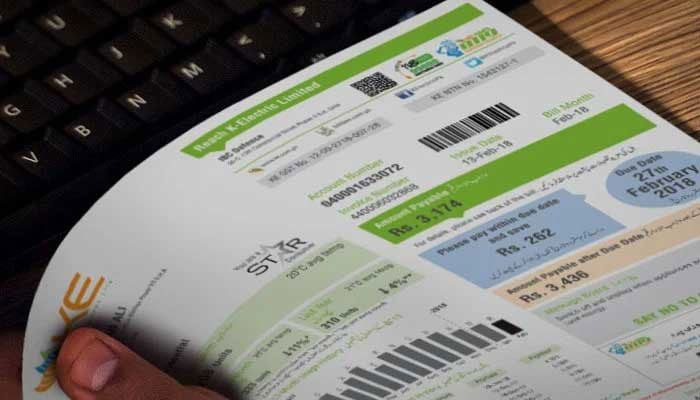
ISLAMABAD: K-Electric says its consumers are being billed Rs3.23 per unit as Debt Servicing Surcharge (DSS) against the loans raised by the Power Division despite the fact that the company has contributed nothing to the circular debt.
K-Electric, a privately operated utility serving Karachi and its adjoining areas, says consumers are being billed Rs3.23 per unit under the head of PHL (Power Holding Limited) surcharge — a levy tied to massive loans the federal government procured to manage the country’s chronic circular debt. The surcharge will remain in place for the next six years, even though the K-Electric has no role in the creation of this debt trap.
In an attempt to contain the spiraling circular debt, the federal government has borrowed Rs1.225 trillion from 18 commercial banks. However, rather than being confined to the state-run utilities responsible for the shortfall, the cost of this financial restructuring is being recovered from the K-Electric consumers.
A spokesperson for K-Electric also confirmed that the company’s consumers were being billed Rs3.23 per unit as DSS against the loans raised by the Power Division. “This policy effectively penalizes consumers in Karachi for inefficiencies they had no hand in creating,” said Rehan Javed, an energy expert from Karachi. “It raises serious questions about the fairness and sustainability of Pakistan’s power sector reforms.”
For now, the K-Electric consumers remain caught in the crossfire of a uniform tariff policy that blurs the line between accountability and equity — forced to pay for a debt that isn’t theirs, in a system still struggling to keep its own lights on. “The circular debt ballooned because of inefficiencies in the state-run DISCOs, but the Power Division has chosen to transfer this burden to the K-Electric consumers,” said official sources in the Power Division.
According to the sources, the ex-Wapda distribution companies (DISCOs) continue to hemorrhage an estimated Rs399 billion annually in losses due to theft, inefficiency, and poor recoveries. Although authorities claim to have reduced these losses from Rs589 billion to Rs399 billion, the figure remains staggering — and unless these inefficiencies are curtailed within the next five years, Pakistan’s circular debt is projected to rise once again, in violation of the government’s commitments to the International Monetary Fund (IMF).
When approached for comment, a Power Division spokesperson defended the continued surcharge, offering a terse justification: “We have a uniform tariff across the country — applicable tariff across the country is the same.” Energy analysts, however, argue that this justification is untenable. They note that while the federal government ensures a uniform national tariff through tariff differential subsidies financed from the federal budget, the Debt Service Surcharge is of a different nature — meant to service debt accrued due to the inefficiencies of public-sector DISCOs, not private operators like K-Electric.


-
 State institutions ‘fail’ to perform constitutional duties: KP CM
 -
 CTD orders psychological testing of police on VVIP security duty
 -
 Navy busts drug consignment valued at $130m
 -
 Three ex-secretaries in race for ETPB chief post
 -
 Punjab govt forms 71 JITs to probe cases against banned TLP
 -
 Some UNSC members ignoring broader reforms, seeking privilege: Pakistan
 -
 PAC body discusses non-recovery of Rs15bn gas cess
 -
 Pakistan received $2.29bn foreign loans in first 4 months of 2025