Operation pharma
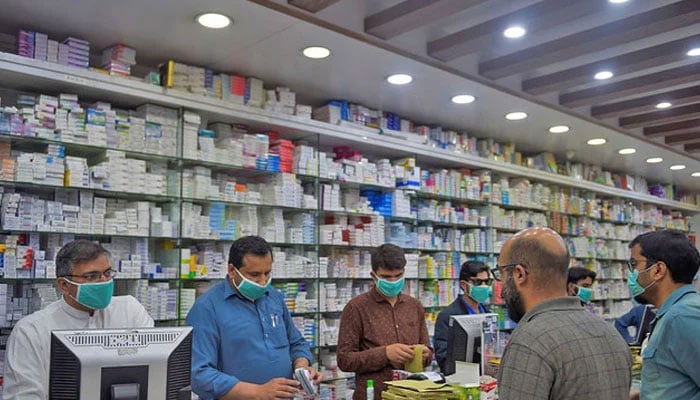
The spirit of Operation Bunyanum Marsoos, symbolising national unity, resilience and perfect coordination, is the exact blueprint our pharmaceutical sector must adopt.
We must channel this collective resolve to transform our industry from a regional producer into a global pharmaceutical powerhouse. While recent efforts have yielded commendable growth, the gap between our current exports and our true potential remains vast. It is time to augment ambition with ruthless adherence to the standards that govern the world's most lucrative markets.
It is heartening to see the dedication now visible in our sector. In the fiscal year ending June 2025 (FY25), our pharmaceutical exports reached a record high of $457 million, marking a remarkable 34 per cent growth, which is the highest surge recorded in two decades. This momentum proves that when focused, Pakistani companies can meet the growing pharmaceutical demand in international benchmarks.
Crucially, this growth is being driven by a strategic investment in quality. The industry has seen several companies achieve the World Health Organization (WHO) pre-qualification and the Pharmaceutical Inspection Co-operation Scheme (PIC/S) compliant status, with up to eight Pakistani firms attaining these critical international qualifications.
The Drug Regulatory Authority of Pakistan (DRAP) has rightly adopted the PIC/S guidelines as the new national standard for manufacturing. This is the correct and necessary pathway. Full compliance with these standards will enable a higher number of companies to access lucrative, strictly regulated markets, ultimately driving us towards our strategic target of $5 billion in exports.
Despite this progress, two significant vulnerabilities threaten our long-term stability and foreign exchange reserves.
One, dangerous export concentration. In 2020, Afghanistan alone captured approximately 31 per cent of Pakistan's total pharmaceutical exports, confirming our reliance on immediate neighbours. Given the current geopolitical volatility, this concentration is a major strategic risk. We must urgently mitigate this by aggressively pursuing the untapped markets of Africa, Central Asian Republics (CARs) and East Asia.
Two, while we celebrate export growth, we must confront the more than 2.0 billion annual burden imposed by pharmaceutical imports. This trade deficit, primarily driven by complex and expensive products, represents a massive opportunity for import substitution.
We must conduct a detailed analysis to pinpoint the highest value imported categories, such as specialised biologicals, patented vaccines and essential APIs (Active Pharmaceutical Ingredients), that can be replaced by local research and production. Our current dependence on imports for over 90 per cent of APIs is not only a drain on foreign exchange but also a critical security risk. The successful implementation of the API Promotion Policy and the swift creation of the API Industrial Park are foundational to achieving both import substitution and export scale.
The ultimate measure of our success lies in our ability to penetrate the world’s largest pharmaceutical import markets.
In 2023, the US emerged as the world’s leading importer, with total imports valued at $170 billion. It was followed by Germany, which ranked second with imports worth $71.1 billion, and Switzerland, which took the third spot with an import value of $58.2 billion. Our absence from these markets confirms the vast regulatory gap. We currently have no FDA-approved plants, a situation that is unacceptable when neighbours like Bangladesh have already succeeded in this area, despite having a comparatively weaker regulatory framework.
The truth is that no amount of talk can replace an FDA certificate. The onus is now squarely on the industry's leading manufacturers. They must apply the discipline of Operation Bunyanum Marsoos to their facilities, invest the necessary capital for upgrading and proactively pursue FDA and EMA certification with the full, expedited support of DRAP and the Government. This is a national mission to secure our public health, stabilise our economy and finally claim our rightful place in the global pharmaceutical market. Let the commitment of Operation Bunyanum Marsoos be our guide to that $5 billion destiny.
The writer is a former CEO of the Drug Regulatory Authority of Pakistan (DRAP). He can be reached at: asimrauf2002@yahoo.com