The unquiet frontier
For too long, Pakistan has endured the illusion that diplomacy alone could secure peace along its western frontier. The recent Pakistan–Afghanistan border clashes have merely torn that illusion apart. These are not impulsive exchanges of fire but the slow eruption of an exhausted patience years of appeasement, restraint, and misplaced faith in a regime that thrives on denial.
When the Taliban seized Kabul in August 2021, Pakistan stood by Afghanistan when the rest of the world abandoned it. Islamabad kept its embassy open, facilitated the chaotic evacuation of Western nationals, and pressed international forums to release Afghanistan’s $9 billion in frozen assets. Pakistan’s hope was simple: economic breathing space would moderate the Taliban’s behavior, and mutual trade would build interdependence. Yet, what Pakistan received in return was neither gratitude nor cooperation it was betrayal.
In 2021, Pakistan witnessed 89 attacks traced to cross-border militant activity; in 2022 that number ballooned to 262, in 2023 to 306, and in 2024 to 521. By October 2025, the running total stood at 585 attacks. That acceleration is no statistical quirk but a signal that militant forces, chiefly the TTP, have acquired sanctuary, logistics and audacity from across the border. Indeed, ACLED reporting underscores that the TTP has carried out “at least 600 attacks” against or clashes with security forces in the past year, and that its 2025 activity already exceeds that seen in all of 2024. That aligns with PIPS’s figure of 585 attacks by October, indicating the pace has not abated.
Meanwhile, Pakistan’s internal security metrics bear out an alarming trend: the number of “terrorist incidents” reportedly rose by 17 per cent in 2023 compared to 2022, with Khyber Pakhtunkhwa and Balochistan accounting for the highest shares of violence. This is not the failure of Pakistan’s counterterrorism apparatus, it is the result of deliberate Afghan inaction, if not complicity.
Islamabad’s restraint was not born of weakness. From Mufti Taqi Usmani’s ulema delegation in 2022 to Khawaja Asif’s high-level talks in 2023 and Interior Minister Naqvi’s mission in 2024, Pakistan exhausted every avenue of peaceful engagement. The Afghan Taliban, however, mistook patience for paralysis. When, during Pakistan’s 2025 confrontation with India, Afghanistan allowed a 40-member TTP unit reportedly led by relatives of Taliban officials to open a ‘western distraction’, it was an unmistakable signal that Kabul’s hostility had become institutionalised.
The October 2025 TTP assault on Pakistan’s border posts in Orakzai and D I Khan, killing 12 soldiers including senior officers, was not an isolated act of terror; it was an act of war by proxy. Pakistan’s retaliatory strikes were calibrated, not reckless a necessary reassertion of sovereignty long taken for granted.
Conflict at the Durand Line is not just a military matter but rather an economic and humanitarian tragedy. Each closure of the Torkham and Chaman crossings freezes vital arteries of trade. In 2024, Afghanistan’s bilateral trade with Pakistan was valued at $1.6 billion; today, that corridor lies paralysed. Every truck stranded at the border is a casualty of political short-sightedness.
Pakistan’s border communities are paying the price twice over, first in blood, then in poverty. Operations like Sarbakaf in Bajaur, launched to root out militant cells, displaced more than 100,000 residents. Schools, clinics and livelihoods crumble under the strain of constant insecurity. In the long run, these zones of instability risk becoming breeding grounds for extremism once more, a vicious cycle Pakistan has already lived through.
The conflict has implications far beyond Pakistan’s western border. It exposes a dangerous vacuum in regional responsibility and a silent competition among neighbouring powers. India stands to gain strategically from Pakistan’s western instability. A distracted Pakistan means less focus on its eastern front, greater strain on the economy, and slower progress on the China–Pakistan Economic Corridor. Delhi’s renewed outreach to Kabul, through ‘humanitarian diplomacy’ and selective engagement, is less about aid and more about leverage.
Iran views the clashes with cautious calculation. China, however, cannot afford instability. CPEC’s extension into Afghanistan is part of Beijing’s long-term Belt and Road vision connecting South and Central Asia. Any deterioration along the Durand Line threatens Chinese investments and regional energy corridors. Expect Beijing to quietly press Kabul to curb the TTP, not out of solidarity with Pakistan but out of self-preservation.
The Central Asian republics, Uzbekistan, Tajikistan and Turkmenistan, find themselves in an uncomfortable bind. They depend on Pakistan for southward access and trade, yet they are wary of Taliban adventurism spreading north. For them, Pakistan’s stability is a strategic necessity, not a diplomatic courtesy.
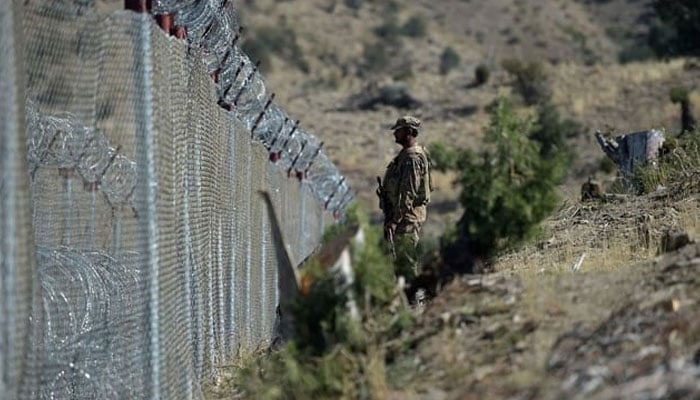
Pakistan faces a painful but unavoidable choice: tolerate continued aggression or assert control over its own security perimeter. The era of indulgent diplomacy must end. Islamabad must recalibrate its Afghanistan policy through a combination of deterrence, diplomacy and development.
Militarily, Pakistan must continue precision operations to dismantle TTP infrastructure but avoid wide offensives that cause mass displacement. Diplomatically, it must leverage its partnerships with China, Saudi Arabia, Qatar and the Central Asian States to pressure Kabul collectively linking transit rights, aid, and recognition to measurable counterterrorism outcomes.
Economically, Islamabad must diversify westward through Iran and northward through Central Asia, reducing its dependency on Afghan routes that have repeatedly become political hostages. At home, Pakistan’s counterinsurgency strategy must go beyond bullets and barbed wire. Rebuilding local governance, education and economic opportunity in the border belt is essential. Without development, every militant eliminated will be replaced by another.
The Durand Line today is not just a fault line between two nations but a test of regional maturity. The Afghan Taliban’s refusal to act against TTP sanctuaries undermines not only Pakistan’s security but also Afghanistan’s economic survival. For Pakistan, this is self-defence instead of aggression. For the region, this is not a distant border issue but the frontline of future stability.
Unless Kabul rethinks its defiance and regional powers stop playing double games, the frontier will remain unquiet and the fires that begin in the mountains of Khost and Kurram could one day engulf the entire region.
The writer is a trade facilitation expert, working with the federal government of Pakistan.