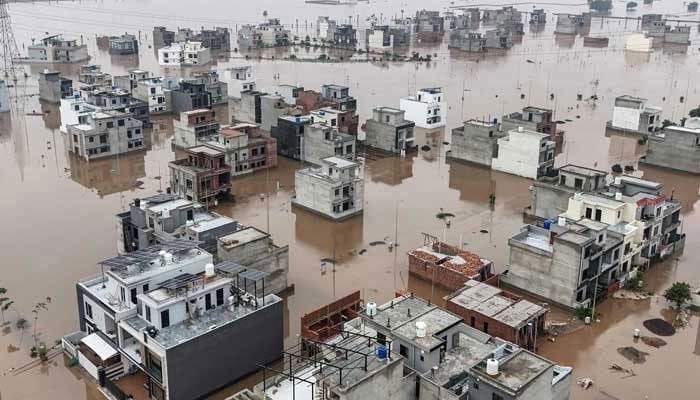
Over 1000 lives lost, over 1000 injured and some seven million people affected – that is the reality of this year's floods in Pakistan.
Even now when the floodwaters are receding, the crisis is far from over. Nearly 3,000 kilometres of roads, over 750 bridges and around 230,000 homes have been partially or completely destroyed. Recovery does not, and will not, happen overnight. It must be a sustained effort that goes on well after the floods stop dominating the headlines.
Sadly, this is not new. By virtue of Pakistan’s location and geography, it has always been vulnerable to periodic flooding. Weather patterns like the El Nino Southern Oscillation make some years wetter than others. Climate change is driving increasingly extreme weather and causing ever-greater harm to Pakistan’s population and infrastructure.
In the face of this climate-induced emergency, the government of Pakistan showed that through swift mobilisation of rescue teams and emergency services, thousands of lives can be saved. The federal and provincial Disaster Management Authorities (NDMA, PDMAs and DDMAs) played a central role in orchestrating these operations, ensuring evacuations and delivering aid. Their proactivity and coordination with humanitarian partners have been central to the success of the response.
In support of these government led efforts, the United Kingdom has contributed nearly GBP4 million (Rs1.5 billion) in support across 29 districts of Khyber Pakhtunkhwa, Punjab, Sindh and Gilgit-Baltistan, reaching over 650,000 people with food, shelter, and medical care. We have also supported the Start Ready Disaster Risk Financing system, which released GBP500,000 (Rs187.5 million) to ensure lives are saved and destruction is avoided.
In addition, we are contributing GBP500,000 (Rs187.5 million) to the United Nations Office for the Coordination of Humanitarian Affairs Pooled Fund to bolster Pakistan’s emergency response efforts.
Our support extends far beyond immediate relief, helping communities to rebuild in ways that makes them stronger and more resilient to future climate shocks. That’s why we are both supporting immediate early recovery for affected communities and building long-term resilience and addressing the needs of those most affected by crises, including floods. We cannot stop climate change, but we can help local communities to anticipate, prepare for and respond to climate-related shocks.
A key part of recovery is getting children back to school in a safe learning environment, so they can thrive. Working with provincial governments, we are establishing Temporary Learning Centres, rehabilitating damaged schools and providing essential learning materials. This package of UK support will enable 44,000 children to get back into the classroom.
But we must be honest: humanitarian aid alone is not enough. We recently funded a report on the cost of climate inaction in Pakistan. We found that if action is not taken immediately, Pakistan faces not just a $1.2 trillion economic loss by 2050, but a humanitarian crisis of an unprecedented scale. Without urgent adaptation, up to 400 million people could be displaced, millions of livelihoods destroyed and vulnerable groups pushed deeper into poverty and exclusion.
But that scenario will only take place if action isn’t taken. Progress is already being made, and further work is possible. We’ve already helped over two million people to cope with climate-related disasters, including through training farmers on climate-friendly practices such as using water more efficiently. We’re promoting the use of nature-based solutions to reduce the risk of flooding, while protecting biodiversity. We found that these not only survived this year’s floods, but also provided undisrupted food and water to communities.
The World Bank estimates that between 2023 and 2030, Pakistan needs a staggering $348 billion of investment to address climate change. This means that investment from the private sector for climate action is essential. We know that this is possible. Our innovative Climate Investment Fund Pakistan programme is set to mobilise over GBP420 million (Rs158.1 billion) of climate finance to support Pakistan's economic development and climate adaptation.
Through our own international investment body, British International Investment, we’ve committed nearly GBP300 million investment into Pakistan (Rs112.8 billion), with a dedicated focus on renewable energy projects, helping provide clean energy to over one million Pakistanis. The UK remains a steadfast friend and partner to Pakistan as it confronts the escalating impacts of climate change. Yet, the most decisive force in shaping Pakistan’s future lies within Pakistan itself. As the country faces increasingly severe climate challenges, it has the opportunity to lead the way in building resilience, protecting its people and driving sustainable solutions.
Pakistan’s leadership, nationally and locally, must keep climate at the forefront of their mind’s all year round, not just in the aftermath of floods, heatwaves or droughts. It is through spending more on building resilience today, that the crippling losses of tomorrow are avoided. Let us not treat these floods as just another disaster.
Let them be a turning point: a moment when we all decide to act for a safer, more sustainable future. Because the cost of doing nothing is not just financial. It is about lives, livelihoods and the future of the next generation.
The writer is the development director at the British High Commission.