Over 680-kanal state land reclaimed in Mandi Bahauddin
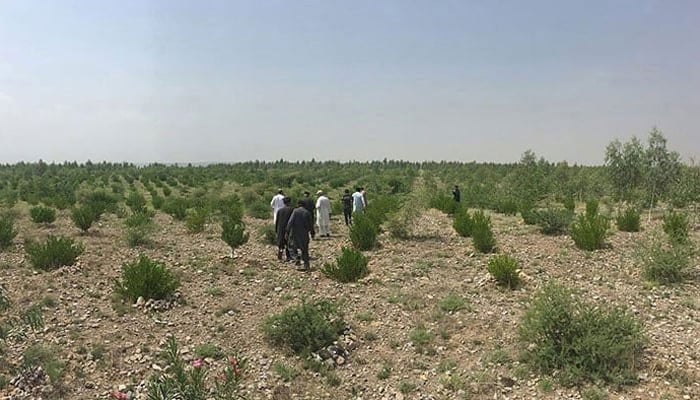
LAHORE: In one of the largest anti-encroachment recoveries of recent months, the Punjab Anti-Corruption Establishment (ACE) has retrieved 680 kanal and 9 marla of state land worth over Rs240 million in Tehsil Phalia, district Mandi Bahauddin, ending a decade-long illegal occupation by 28 influential individuals.
The operation followed a Lahore High Court directive and came on the orders of Chief Minister Maryam Nawaz Sharif and Director General of Anti-Corruption Punjab Sohail Zafar Chattha. According to documents available with The News, the recovered parcel—recorded as charagah deh (village grazing land)—had been under unauthorised possession since 2015 in the village Saida Sharif, Tehsil Phalia. Repeated court injunctions, interim stays and procedural delays had allowed the encroachers to retain control for nearly a decade.
Ultimately, the Lahore High Court ruled against the occupants and directed the district administration to get the land vacated. Acting upon the judgement and subsequent instructions from the provincial government, the Anti-Corruption Gujranwala Region launched an inquiry. Director Amjad Shehzad said the investigation confirmed that the occupants had been using the land for private benefit, causing losses to the public exchequer.
“A joint enforcement team of the Punjab Enforcement Regulatory Authority (PERA) and ACE executed the recovery operation, repossessing land valued at more than Rs 24 crore,” Shehzad told The News. He added that the agency would now begin recovery proceedings of over Rs4 crore in penalties against those who unlawfully used the property for 10 years.
The official list of 28 individuals includes Faiz Ahmed, Muhammad Inayat, Sikandar Hayat, Khizar Hayat, Anser Mehmood, Sher Alam, Muhammad Azam, Aurangzeb, Safdar Iqbal, Muddasir Imran and Amjad Iqbal, among others. For years, they pursued litigation in civil courts, filing successive petitions to resist administrative action and delay eviction. The LHC decision removed the last legal impediment, enabling the enforcement teams to act.
DG Anti-Corruption Punjab Sohail Zafar Chattha said the recovery demonstrates the government’s resolve to reclaim public property from entrenched interests. “These individuals exploited every procedural loophole to evade accountability, but the rule of law ultimately prevailed,” Chattha remarked. “The recovered land belongs to the people of Punjab, and its protection will now be ensured through digital mapping and coordination with the revenue authorities.”
Officials said the operation is part of a province-wide campaign launched under the direction of Chief Minister Maryam Nawaz Sharif to recover state assets from illegal occupation. Since early 2025, the ACE and PERA have intensified joint enforcement drives, using satellite imagery and GIS-based verification to identify encroachments and expedite recovery of state lands. Senior ACE officers told The News that the Mandi Bahauddin operation will serve as a model for similar actions in other parts of the province, where extensive tracts of communal land remains under illegal use. The recovered site has been handed over to the district revenue department for re-entry into official land records and reallocation for public use, officials added.
Land encroachment has long undermined public-asset management in Punjab, where “Shamlat and Charagah” lands are particularly vulnerable to occupation by politically connected groups. Analysts say weak land-record digitisation, fragmented administrative control and prolonged litigation have perpetuated the problem. “The Mandi Bahauddin recovery is a strong precedent, but long-term deterrence depends on consistent monitoring and prompt financial recovery,” said a senior governance researcher based in Lahore. “Without sustained oversight and transparent revenue tracking, such victories often lose impact once public attention fades.”
Sources within the ACE revealed that the provincial government is formulating new guidelines to integrate enforcement data with the Punjab Land Records Authority (PLRA) and district administrations. Under the proposed framework, each recovered parcel will be geotagged and its status periodically verified through the provincial dashboard. Officials say the model could help curb “re-encroachment”—a recurring issue when recovered lands are not properly secured after eviction.
For residents of Phalia, the repossession marks the end of a long dispute over communal resources. Local elders expressed hope that the land would now be restored to its original function as a grazing area for livestock, benefiting nearby villages. District officials confirmed that the revenue department would consult local stakeholders before finalising utilisation plans.
Speaking to The News, DG Anti-Corruption Punjab Sohail Zafar Chattha said: “Illegal occupation of public land is not merely a property offence—it is an attack on public trust. Our mandate is clear: protect what belongs to the people and ensure no one is above the law.”
The successful reclamation of state property in Mandi Bahauddin underlines a renewed administrative focus on land governance in Punjab. The real measure of this effort, however, will lie in institutional follow-through—ensuring that recovered land is productively utilised, its records transparently maintained, and encroachers held financially accountable.


-
 Aurangzeb confirms Saudi Arabia $10bn interest, says B2B shift ongoing
 -
 Pakistan to build artificial island to boost oil exploration
 -
 Special pink bus service launched for women on Green Line route
 -
 Same number plates from other provinces lead to wrong e-challans for Karachiites
 -
 State institutions ‘fail’ to perform constitutional duties: KP CM
 -
 CTD orders psychological testing of police on VVIP security duty
 -
 Navy busts drug consignment valued at $130m
 -
 Three ex-secretaries in race for ETPB chief post