Situationer: Is National Wheat Policy without a production target tenable?
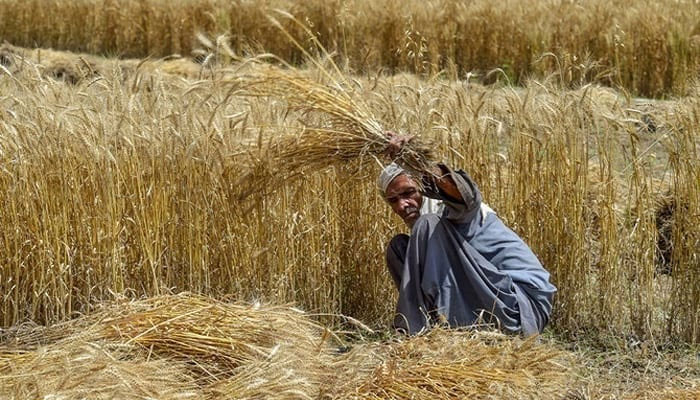
LAHORE: The federal government has unveiled the National Wheat Policy for 2025-26, but it has failed to establish a production target—a major oversight that could render the entire plan ineffective.
The absence of a production target is a fundamental flaw in the government’s wheat policy. Setting a production goal is essential not only to ensure food security but also to stabilize prices and support farmers. Without a clear target, it becomes challenging to design effective strategies for the procurement, storage and distribution of grains.
Following a policy shift last year, wheat production in the country has continued to decline, missing the output target by a significant margin. In 2023-24, production fell by 4.52 percent. The country missed its target of 33.58 million tons this year, achieving only 28.42 million tons —about 15 percent less than expected.
It is perplexing that the government plans to “obtain” 6.2 million tons of wheat as strategic reserves from the upcoming crop, according to the policy announcement, without providing any projections about the crop size itself.
To address this issue, the government should first set a realistic production target that reflects domestic demand. The target must be achievable, based on historical trends, climate conditions, and market dynamics. To meet this goal, authorities must introduce incentives—particularly through fair pricing—to encourage farmers to increase production. Only by addressing these gaps can the wheat policy effectively ensure food security and support the agricultural sector.
Another long-standing issue plaguing the wheat sector is the lack of fair returns for farmers. Low wheat purchase prices have discouraged growers and become a major factor behind the gradual decline in national production.
According to the latest National Wheat Policy (2025–26), “procurement will be made at Rs3,500 per 40 kg, in line with the international import price of wheat.” This announcement aligns with Punjab’s position, as the province—the largest producer and purchaser of wheat—has discontinued official procurement since last year. It appears that purchases will now be arranged through the private sector, as hinted by the Punjab chief minister’s recent vague statement.
However, the Rs3,500 per 40 kg rate announced by the federal government fails to meet farmers’ expectations, given the soaring cost of production. Moreover, it is merely an indicative price, meaning farmers are likely to receive around Rs3,000 from private buyers.
For comparison, Indian growers are set to earn about Rs3,200 per 40 kg next year under the Minimum Support Price (MSP) scheme—a guaranteed return, unlike Pakistan’s indicative rate.
The real crisis for Pakistani wheat farmers remains the unbearable cost of production, which is among the highest in the region—estimated between Rs2,800 and Rs3,400 per 40 kg for the average farmer, and even higher for some.
This cost disparity becomes clearer when compared to India, where the estimated cost of wheat production ranges between PKR 2,200 and Rs 2,250 per 40 kg. The key reason lies in input prices: in India, the government fixes the Maximum Retail Price (MRP) for fertilizers at much lower rates—around Rs1,200 per 50 kg bag of urea and Rs4,500 per 50 kg of DAP—compared to Pakistan’s staggering Rs4,600 and Rs14,700 respectively.
This stark contrast in fertilizer prices alone reflects the broader crisis facing Pakistani farmers. Thus, the Rs3,500 per 40 kg indicative price cannot be considered a “support” price—it may not even be a “survival” price for many growers. It offers either a loss or a meager profit margin that can easily vanish due to pest attacks, water shortages, floods or further increases in input costs.


-
 Aurangzeb confirms Saudi Arabia $10bn interest, says B2B shift ongoing
 -
 Pakistan to build artificial island to boost oil exploration
 -
 Special pink bus service launched for women on Green Line route
 -
 Same number plates from other provinces lead to wrong e-challans for Karachiites
 -
 State institutions ‘fail’ to perform constitutional duties: KP CM
 -
 CTD orders psychological testing of police on VVIP security duty
 -
 Navy busts drug consignment valued at $130m
 -
 Three ex-secretaries in race for ETPB chief post