Pakistan stands at a crossroads in its energy future. The country receives between 5 and 7 kWh/m² of solar energy daily, while the coastal winds of Sindh blow at consistent speeds above seven meters per second – enough to power thousands of turbines.
And yet millions still live with unreliable electricity and rising fuel costs. These contradictions define the core question of my research: How can Pakistan’s landscape be harnessed to create hybrid energy systems that combine wind, solar and micro-hydropower to deliver reliable and sustainable power?
The answer, as my study suggests, lies not in any single technology, but in their combination. By integrating Pakistan’s diverse renewable resources through a landscape-based hybrid approach, the country can build a resilient energy system capable of meeting both local and national needs.
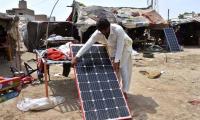
Each region of Pakistan has distinct renewable advantages. The Gharo–Jhimpir corridor in Sindh alone could generate nearly 50,000MW of wind energy across 9,700 square kilometers. The World Bank estimates that using just 0.07 per cent of Pakistan’s land area for solar photovoltaic panels could meet the nation’s entire electricity demand. In the north, where glacial rivers run year-round, the potential for micro-hydropower exceeds 10,000MW, yet less than 10 per cent of this has been utilised.
These resources are naturally complementary. Solar peaks during the day, wind tends to strengthen in the evening and night, and micro-hydro offers steady base generation. This temporal and seasonal balance reduces the need for large storage systems and ensures a continuous power supply. In simple terms, when one source dips, another fills the gap.
Hybrid energy systems could dramatically reduce both Pakistan’s energy costs and emissions. My analysis found that replacing just 10GW of fossil-fuel generation with hybrid renewable systems could save over $3 billion annually in fuel imports. The Levelized Cost of Energy (LCOE) for solar and wind in Pakistan – around $30–40 per MWh – is now among the lowest in Asia, making hybrid systems not just sustainable but economically competitive.
On a smaller scale, community microgrids show how this approach can transform lives. In Swat Valley, villages using micro-hydro plants have cut their energy expenses by nearly 90 per cent compared to diesel generators, while gaining access to reliable electricity for refrigeration, education and small businesses. Expanding these kinds of hybrid microgrids nationwide could help achieve multiple UN Sustainable Development Goals (SDGs) – from Clean Energy (SDG 7) and Climate Action (SDG 13) to No Poverty (SDG 1) and Decent Work (SDG 8).
Environmentally, hybrid systems can replace thousands of diesel generators that emit harmful gases. Wind farms on ridges and solar fields in arid zones can coexist with agriculture and livestock, minimising land conflicts. Run-of-river micro-hydro systems avoid the ecological damage caused by large dams, making this approach sustainable for both people and planet.
To better understand implementation, my paper compared Pakistan’s potential with hybrid systems in Jordan and Cambodia, two countries that successfully adopted region-specific renewable strategies.
In Jordan, large-scale projects like the Ma’an Wind Farm (117MW) and Tafileh Solar Plant (60MW) operate in tandem, feeding power into the national grid. Their hybrid setup smooths out fluctuations and has helped reduce the country’s reliance on imported gas by about five per cent.
In Cambodia, rural communities depend on smaller hybrid microgrids. Systems combining 30kW micro-hydro turbines with 15kW solar arrays power entire villages with 95 per cent uptime. When sunlight fades, water turbines take over; when rivers run low, solar fills the gap. These examples show that successful hybrid energy adoption depends on more than technology – it requires local design, smart control systems and supportive policies.
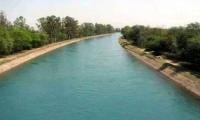
For Pakistan, the key takeaway is adaptability. The same hybrid framework can be scaled differently: utility-level hybrids in Sindh and Punjab, village microgrids in Khyber Pakhtunkhwa and Gilgit-Baltistan, and solar-hydro systems along canal networks in Punjab.
To assess national sentiment, I conducted a poll of 200 energy-aware respondents – including engineers, students and professionals across four provinces. The results were encouraging: 76 per cent supported hybrid energy systems, while only 11 per cent expressed scepticism, mostly due to concerns about upfront cost or complexity. Many participants emphasised the same theme: “Hybrid systems make sense – day, night, and seasons are covered”.
This widespread support highlights a growing recognition that renewables alone aren’t enough. Pakistan needs a hybrid approach to overcome intermittency and integrate clean energy into its existing grid.
The potential is vast, but success depends on execution. Pakistan’s Alternative and Renewable Energy Policy already targets 30–60 per cent renewable generation by 2030, but these goals must now evolve toward integrated hybrid projects.
Key steps include regional mapping and pilot projects that pair local resources intelligently; smart-grid control systems to balance multiple inputs and stabilize output; investment in storage, including battery and pumped-hydro systems; public-private partnerships (PPPs) to attract private investment; and community training for microgrid operation and maintenance.
By learning from Jordan’s financing models – where the IFC helped de-risk hybrid projects – and Cambodia’s community-led maintenance strategies, Pakistan can design its own framework suited to local conditions.
Pakistan’s energy challenges – rising demand, costly imports and climate pressure – cannot be solved by isolated technologies. But by integrating wind, solar and micro-hydro, the nation can build a resilient and self-sufficient energy network.
Hybrid systems are not futuristic experiments; they are practical solutions already proven worldwide. They align perfectly with Pakistan’s geography and economic priorities, offering cleaner air, reduced energy bills and jobs in green industries.
If implemented strategically, this approach could mark a turning point – where Pakistan shifts from energy shortages to energy security, from dependence to sustainability. The landscape already holds the answers; it’s time to connect the systems that bring them to life.
The writer is a freelance contributor.