ICJ on climate change
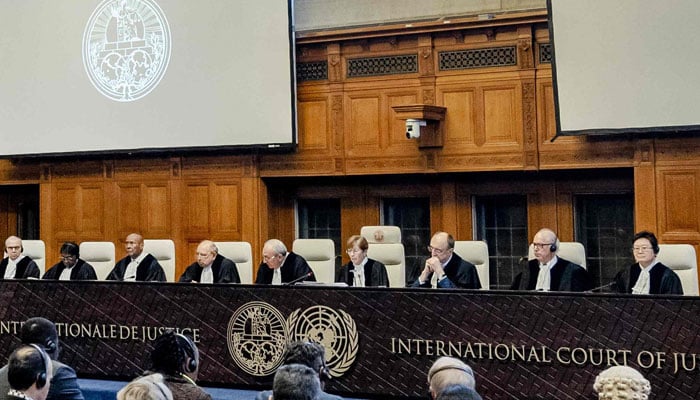
On July 23 (2025), the International Court of Justice delivered its long-anticipated Advisory Opinion on Climate Change, an epochal declaration that elevates climate responsibility to the pinnacle of international legal obligations.
The court recognised, in unequivocal terms, that anthropogenic greenhouse gas (GHG) emissions imperil humanity and the global environment with systemic risk of the gravest magnitude. States are bound under treaties, including the UNFCCC, Kyoto Protocol and Paris Agreement, as well as under customary international law and human rights law, to mitigate climate change, cooperate multilaterally and implement adaptation measures. These obligations, while directed at states, reverberate across private actors, whose conduct must now be more closely scrutinised, regulated and supervised through robust domestic frameworks.
The ICJ’s opinion arose from UN General Assembly Resolution 77/276 of 29 March 2023, which, invoking Article 65(1) of the ICJ Statute, requested clarification on states’ duties to protect the climate system and the consequences of dereliction, particularly for small island and developing states and for present and future generations. Following unprecedented engagement by states and international organisations, the court furnished decisive guidance on the normative scope and practical enforceability of climate obligations, emphasising both legal and moral imperatives. It should be noted that, as an advisory opinion, though not legally binding, it nevertheless carries profound authority and persuasive weight.
The ICJ emphasised that these obligations emanate from a confluence of treaty law, including the UN Charter, UNFCCC, Kyoto Protocol, Paris Agreement, UNCLOS and other environmental and human rights instruments, and from customary international law. Central to this framework is the human right to a clean, healthy and sustainable environment, indispensable to the enjoyment of all other rights.
Customary duties, most notably the duty to prevent environmental harm and to cooperate, operate alongside principles of sustainable development, intergenerational equity, the precautionary principle and common but differentiated responsibilities, forming a coherent corpus juris of climate law.
State obligations are threefold: mitigation, adaptation and cooperation. Mitigation requires reducing GHG emissions and enhancing carbon sinks, combining obligations of conduct, such as due diligence, reporting and regulatory control, with obligations of result under treaty commitments.
Adaptation mandates proactive measures to reduce vulnerability and enhance resilience, binding under both the UNFCCC and Paris Agreement. Cooperation, foundational to international environmental law, obliges states to coordinate scientific, technological and financial responses. While the primary duties lie with states, the ICJ opinion highlights their responsibility to regulate and exercise due diligence over private actors to ensure compliance with these obligations.
Crucially, the court affirmed that the duty to protect the climate system, particularly the obligation to prevent significant transboundary harm, possesses an erga omnes character, owed to the international community as a whole. Treaties such as the UNFCCC and Paris Agreement frame climate change as a ‘common concern of humankind’, thereby generating erga omnes partes obligations among their parties and enabling any state to hold another accountable for breach. Legal standing is thus expanded: states may act not merely in self-interest but to defend the global climate commons.
Customary rules of state responsibility apply with full force. Any conduct of state organs – legislative, executive or administrative – is attributable to the state. Failure to curb GHG emissions, whether through fossil fuel production, consumption, licensing or subsidies, may constitute an internationally wrongful act. Wrongfulness arises not from emissions per se but from breaches of treaty or customary obligations, including failures of due diligence or regulatory oversight. States may also incur responsibility for failing to prevent harm caused by private actors under their jurisdiction or control.
While breaches of legal obligations may be established by reference to such failures, causation remains essential for reparations. The ICJ adopted a “sufficiently direct and certain causal nexus” standard, linking climatic events to anthropogenic causes (scientific attribution) and resultant harm to specific state conduct (legal attribution)
Internationally wrongful acts entail full state responsibility, encompassing treaty breaches, such as failure to submit or implement NDCs, customary law violations, such as inadequate regulation or environmental assessment, and human rights infringements, including failure to uphold the right to a clean and healthy environment. Consequences include cessation, guarantees of non-repetition, performance and reparation, with compensation owed where a causal nexus is established.
Although international law alone cannot halt climate change, the ICJ emphasised its indispensable role in structuring accountability and guiding conduct. By affirming the state’s regulatory authority over private actors, the ICJ opinion incentivises rigorous due diligence, robust enforcement and proactive regulatory reform. Private entities must recalibrate operations, policies and compliance frameworks to mitigate both regulatory and litigation risk.
The ICJ transcended doctrinal confines, emphasising the magnitude and complexity of the climate crisis. Solutions demand the confluence of law, science, economics and human will and, above all, a transformation of entrenched habits, comforts and consumption patterns. This opinion is both a juridical pronouncement and a normative clarion call, framing climate responsibility as a collective duty to present and future generations, requiring foresight, diligence and unwavering commitment across all strata of governance and society.
The writer is a law student.