Punjab’s cotton share shrinks to 40%
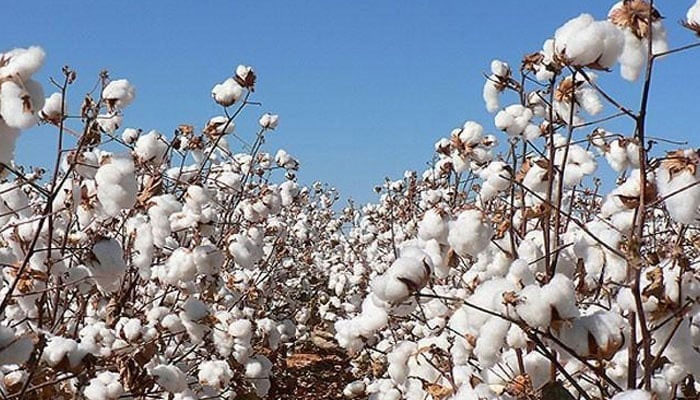
LAHORE: Punjab’s cotton arrivals at ginning stage has fallen to 40 per cent of the total recorded output as Sindh shines on the national agricultural scape with a thumping 56 per cent share.
As per the fortnightly report released by the Pakistan Cotton Ginners’ Association (PCGA), of the total 3.795 million bales received, Punjab accounts for 1.52 million bales, whereas Sindh has surged ahead with 2.136 million bales as of October 15, 2025. Balochistan recorded 0.138 million bales with a share of 3.65 per cent.
The relative low share of Punjab in the national cotton output has regrettably become an annual feature for the last three years. Last year, till October 15, 2024, Punjab’s arrivals stood at 1.185 million bales while Sindh registered an output of 1.821 million bales. In 2023, Punjab managed to produce 2.543 million bales till the first fortnight of October, as compared to Sindh’s arrival of 3.279 million bales.
The shift from Punjab, once the cornerstone of the national cotton industry contributing around 70 per cent of the total crop, to now only 40 per cent, has increasingly become a disturbing norm. It has resulted in its dominance being eclipsed, as Sindh emerges as the new leading producer.
This confirms the exponential increase in Sindh’s share, which has seized the role of Pakistan’s primary cotton-producing region from Punjab for this season, multiplying its traditional share from 28 per cent to an impressive 58 per cent. The traditional ~70-30 balance in Punjab’s favour has been reversed.
This alteration in the cotton landscape could have significant consequences for national agricultural development, resource distribution and the strategic planning of the essential textile sector. It is more worrying due to the fact that Punjab’s per acre yield has been lower than the Sindh. It simply means that despite having larger acreage under cotton, Punjab is producing lesser quantity of cotton.
At district level, Sanghar, which falls in Sindh, is the top volume region in the country with an arrival of 0.1067 million bales. This massive volume is crucial to the national total, even though its year-on-year (YoY) growth rate is a more modest 4.64 percent. Several districts in Sindh have more than doubled their arrivals. Umerkot leads with a 135.98 per cent increase, followed by Nawabshah 108.4 per cent and Dadu 107.41 per cent.
Bahwalnagar leads in Punjab as the top-performing district of the province with the highest arrival volume nationally at 0.323 million bales. Its substantial 28.21 percent increase highlights its growing importance as a cotton production hub.
The lesser-than-expected flows in the month of October indicates that overall production of cotton would be on lower side against the earlier projections. Consequently, it is expected that the rate of lint is going to be higher from next week or so.


-
 Aurangzeb confirms Saudi Arabia $10bn interest, says B2B shift ongoing
 -
 Pakistan to build artificial island to boost oil exploration
 -
 Special pink bus service launched for women on Green Line route
 -
 Same number plates from other provinces lead to wrong e-challans for Karachiites
 -
 State institutions ‘fail’ to perform constitutional duties: KP CM
 -
 CTD orders psychological testing of police on VVIP security duty
 -
 Navy busts drug consignment valued at $130m
 -
 Three ex-secretaries in race for ETPB chief post