How many doors does your passport open?
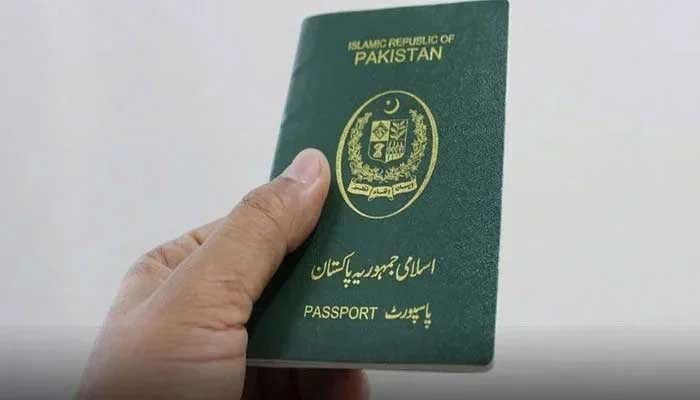
When a border officer examines your passport, they are not simply checking your nationality. They are weighing your country’s reputation – its credibility, stability and record of honesty. A passport is a country’s resume, a silent verdict on how much the world trusts its citizens.
A blue or burgundy booklet from Europe or North America opens hundreds of doors. For those from fragile nations, it is a document of doubt – a guarantee of questioning, suspicion and often rejection. Nowhere is that imbalance starker than in Pakistan.
In 2025, Pakistani travellers can enter barely thirty-odd countries without a prior visa. According to global mobility indexes, the country’s passport sits close to the bottom of the table, alongside conflict zones such as Syria and Yemen. By contrast, Indians, Sri Lankans or Bangladeshis can travel far more freely.
It would be comforting to dismiss such rankings as mere bureaucracy. They are not. A passport’s power mirrors the moral and political standing of the state that issues it. Each new restriction tells a story of lost credibility – and Pakistan’s story has been one of steady erosion. The weakness of Pakistan’s passport is the cumulative result of decades of economic instability, political turmoil and poor governance, amplified by the behaviour of a small but damaging minority of Pakistanis abroad.
In the early decades after independence, the green passport was accepted across continents. Pakistani engineers helped build Gulf cities; doctors worked in Africa and Britain. But the military coups, Islamisation and extremism that reshaped Pakistan from the late 1970s onwards also reshaped how the world saw it. The Afghan jihad made the country a supplier of arms and militants.
After 9/11, the association deepened: Pakistan was cast, often unfairly, as both incubator and victim of terror. That image has never entirely faded. Visa officers in Western embassies still treat Pakistani applicants with extraordinary caution. Students and professionals encounter extra scrutiny, while families face humiliating interviews. Security concerns may explain some of this, but they are no longer the whole story. Economics also drives suspicion.
Visa rules are written by ministries of finance as much as by ministries of foreign affairs. Rich countries fear that visitors from poorer states will not return home. Pakistan’s repeated IMF bailouts, rising unemployment and currency shocks reinforce the impression that every traveller is a potential migrant. This anxiety is magnified by high-profile scandals. In June 2025, Japanese authorities detained a group of Pakistanis posing as a football team at Tokyo’s airport. The men, carrying forged sports credentials, claimed to be attending a youth tournament. When questioned, their documents collapsed under inspection.
The episode made global headlines. For a world already inclined to doubt, the story was irresistible. The ‘fake footballers of Tokyo’ are not alone. Over the years, Pakistani nationals have appeared in headlines for visa fraud, human-trafficking rackets and even organised begging schemes abroad. Each incident fuels the belief that Pakistanis are not to be trusted with easy entry.
In Europe and East Asia, such stories reinforce the notion that Pakistani men, in particular, are unruly or unsafe. Once lodged in the public imagination, such perceptions take generations to undo. None of this occurs in isolation. Other South Asian countries face similar economic pressures, yet their passports fare better. India’s passport, despite its vast population and political populism, allows access to nearly twice as many destinations. Bangladesh, through steady growth and a softer image centred on women’s empowerment and garment exports, is gradually improving its standing. Even Nepal, Bhutan, and the Maldives – small, poor, and peripheral – are seen as peaceable and predictable.
Pakistan alone carries the baggage of militancy and volatility. The reputation gap also stems from institutional weakness. For years, Pakistan’s passport system was riddled with fraud. Fake or duplicate passports could be purchased; identity verification was loose. Though recent reforms introduced biometrics and digitisation, global trust lags behind reform. Religious extremism compounds this distrust. Sectarian killings, blasphemy riots, and the persecution of minorities create an image of a society intolerant and unpredictable.
Western governments that tie human-rights performance to mobility see little incentive to ease restrictions for a country unwilling to protect its own citizens’ freedoms. Pakistan’s malaise, however, is not permanent. Passports gain power when countries project reliability and reliability can be rebuilt. The path runs through governance, diplomacy and behaviour. At the state level, Pakistan must professionalise what might be called its ‘mobility diplomacy’. Instead of treating visa access as a footnote, the foreign ministry should make it an explicit goal of foreign policy. Bilateral negotiations could prioritise reciprocal visa relaxations with friendly states such as Turkiye, Malaysia, Indonesia and the Central Asian republics.
Even small successes would signal momentum. But diplomacy alone will fail unless backed by credibility at home. That means eradicating corruption in passport offices, prosecuting document fraud and maintaining world-class identity security. If Pakistan can guarantee that every passport is genuine, half the global scepticism will evaporate.
At the societal level, citizens must recognise that they are custodians of the nation’s image. Overstaying visas, working illegally or flouting local customs become national liabilities. The state should run awareness campaigns through schools, travel agencies and the media, making it clear that misbehaviour carries collective consequences.
The same applies to criminal accountability. When Pakistanis are convicted overseas, the government’s instinct is often embarrassment or denial. A better approach is cooperation: share evidence, assist prosecutions and publicise punishments. The message must be unambiguous: Pakistan does not shield its wrongdoers; it disciplines them.
Beyond enforcement lies the subtler task of reputation rebuilding. Pakistan spends lavishly on security but invests little in cultural diplomacy. Showcasing artists, scientists and entrepreneurs would humanise the country far more effectively than slogans about resilience or faith. Literary festivals, film collaborations and academic exchanges can achieve what press releases cannot.
Equally important is reciprocity in openness. Pakistan’s visa regime is notoriously opaque. Business visitors and tourists face red tape and suspicion. If the country wants to be welcomed abroad, it must first welcome others. Simplified e-visa systems, friendly airport procedures and a functioning tourism authority would project confidence. When foreigners experience hospitality in Pakistan, they carry that memory to their own governments. Tourism is not trivial in this calculus. The Karakoram valleys, Mohenjo-Daro ruins and Makran coast could be magnets for travellers.
The more foreigners enter Pakistan without incident, the easier it becomes for Pakistanis to argue for similar treatment abroad. There is also scope for regional cooperation. South Asia remains one of the least connected regions in the world. A modest ‘Saarc mobility pact’ allowing easier movement of students, journalists and professionals could showcase a new pragmatism. If Pakistan worked constructively with India, Bangladesh and Nepal on travel facilitation, it would signal maturity and reliability – qualities that influence how far its passport carries.
Yet none of these steps will matter unless Pakistan addresses its internal contradictions. A country that fails to protect journalists, tolerates mob violence or targets minorities cannot expect other countries to see it as safe. Rule of law, women’s rights and religious tolerance are not Western impositions; they are global currencies of credibility. When these decline, so does the passport’s value.
Ultimately, a passport’s ranking is not a technical scorecard but a moral barometer. It tells the world whether a country is respected, feared, or pitied. For Pakistan, the reading is painfully low, but not irreversible. The nation still commands vast human potential: a young population, an industrious diaspora and a geography linking South Asia, Central Asia and the Middle East.
What it lacks is coherence and credibility. Rebuilding that will take time. Japan and South Korea once suffered from reputations for forgery and labour migration. Through discipline, education and diplomatic steadiness, they became trusted. Pakistan’s journey will be longer, but the principle is the same: states earn respect the way individuals do – by keeping promises, behaving decently and learning from mistakes.
The government must therefore see each scandal not as isolated embarrassment but as evidence of deeper neglect. Until Pakistan cleans its own house, others will continue to bolt their doors.
A future in which Pakistani travellers are greeted with courtesy rather than suspicion will not arrive through speeches or lobbying. It will come when the state governs predictably, citizens act responsibly and the world begins to associate the word ‘Pakistani’ with competence, not chaos.
The writer holds a PhD from the University of Birmingham, UK. He tweets/posts @NaazirMahmood and can be reached at:
mnazir1964@yahoo.co.uk