FBR’s ‘homegrown’ transformation earns spot as global case study at WB forum
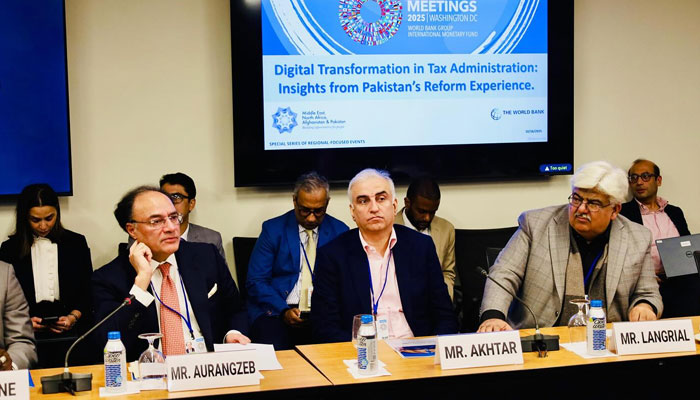
ISLAMABAD: The Federal Board of Revenue (FBR) Friday showcased its Transformation Plan as a global case study in the public sector during the annual meeting of the IMF/World Bank in Washington, DC.
FBR Chairman Rashid Mahmood Langrial showcased Pakistan’s achievement in enhancing the tax-to-GDP ratio from 8.83% in FY2023–24 to 10.33% in FY2024–25, marking the strongest single-year improvement in 23 years.
He credited this turnaround to a homegrown, data-led plan focusing on transparency, efficiency, and compliance.
The World Bank invited FBR to showcase its successful transformation efforts as a global case study in public sector reform during the World Bank Annual Meeting held in Washington, D.C.
Federal Minister for Finance and Revenue Muhammad Aurangzeb, Chairman FBR Rashid Mahmood Langrial, secretary finance, secretary Economic Affairs Division and other senior officials attended the annual meeting.
In his opening remarks, Aurangzeb highlighted how Pakistan had successfully executed one of its most ambitious institutional transformations in its recent history, rebuilding its tax system across people, processes, and technology under the direct guidance and ownership of the prime minister.
He underscored that the transformation plan was homegrown, encompasses all critical areas of reforms and enjoyed full support of the prime minister and the federal cabinet. The plan is already delivering clear early wins and visible markers of turnaround of revenue administration.
The minister emphasized that these reforms, while already contributing to visible improvement in macroeconomic indicators along-with revenue administration reforms, will lay the foundation for sustained and long-term economic growth.
In his presentation, the chairman explained that the transformation journey began with an eight-week planning sprint in 2024, involving input from field officers across Pakistan and supported by a dedicated Delivery Unit.
Unlike past reform efforts managed in isolation, this plan was fully owned by the prime minister and the entire cabinet. He further noted that technology and digitalization, while vital, are not silver bullets.
The session was an engaging interactive discussion with delegates from other countries and development partners.
Egypt’s Minister of Finance Ahmed Kouchouk lauded Pakistan’s effort as “the right way to do reforms”, and a model for other countries noting that in his ten years of experience with the World Bank, he had not witnessed a more powerful case presentation on tax reform.


-
 Aurangzeb confirms Saudi Arabia $10bn interest, says B2B shift ongoing
 -
 Pakistan to build artificial island to boost oil exploration
 -
 Special pink bus service launched for women on Green Line route
 -
 Same number plates from other provinces lead to wrong e-challans for Karachiites
 -
 State institutions ‘fail’ to perform constitutional duties: KP CM
 -
 CTD orders psychological testing of police on VVIP security duty
 -
 Navy busts drug consignment valued at $130m
 -
 Three ex-secretaries in race for ETPB chief post