Islamabad, Kabul extend ceasefire ahead of Doha peace talks

PESHAWAR: Pakistan and Afghanistan agreed on Friday to extend their 48-hour ceasefire until the conclusion of the proposed peace negotiations in Doha, scheduled to begin on Saturday (today), according to official sources.
Pakistan insists this is a bilateral track of negotiations, and that the primary track, which was used for agreeing on the ceasefire, was the bilateral track, following the request Pakistan received from the Taliban regime. Senior government officials in both Pakistan and Afghanistan said that Qatar had offered to facilitate the peace process between the two countries and invited delegations from both sides to meet in Doha.
Security sources said Pakistani delegation is ready in Islamabad to leave for Doha on Saturday (today), and denied a foreign news agency report that Pakistani delegation had already reached Doha. The sources said an Afghan delegation was also expected to arrive there on Saturday.
Pakistan’s Defence Minister Khawaja Mohammad Asif and Afghanistan’s Defence Minister Mullah Mohammad Yaqoob are expected to represent their respective countries in the peace talks.
“Mullah Yaqoob is due to leave Kabul for Doha on Saturday along with a high-level delegation. No one in Afghanistan is happy over what happened in the past few days on the border between Pakistan and Afghanistan, and everyone is eagerly waiting for success of the peace talks,” a Taliban leader told The News in Kabul.
However, a foreign news agency reported late on Friday that Pakistan targeted a faction of the outlawed Tehrik-e-Taliban Pakistan (TTP) terrorist group in “precision aerial strikes” in Afghan border areas. A senior security official told AFP the alleged “precision strike” had targeted a local group of Taliban fighters, the Gul Bahadur Group, which Islamabad says is given safe haven by Kabul.
Meanwhile, US President Donald Trump told reporters at the White House on Friday that he could quickly stop the fighting between Afghanistan and Pakistan. “I have saved millions of lives by stopping wars,” Trump said. “Ending the war between Pakistan and Afghanistan is very easy for me. I have to run America too, but I like stopping wars.”
Following recent clashes between the two neighbouring countries, in which several people were killed and dozens of others injured, both governments agreed on a 48-hour ceasefire to pave the way for peace talks.
Border crossings between the two countries have remained closed since the start of the fighting, causing millions of rupees in losses to traders from Pakistan and Afghanistan. Thousands of loaded trucks and containers have been stranded on both sides of the border, anxiously waiting for the crossings to reopen and trade activities to resume.
Ziaul Haq Sarhadi, Senior Vice President of the Pakistan and Afghanistan Joint Chamber of Commerce and Industry, stated that thousands of traders in both countries have suffered millions in losses due to the closure of the border over the past five days.
“The border crossings have been closed for all types of movement, including trade and commercial activities, transportation, as well as pedestrian traffic. We urge the governments of Pakistan and Afghanistan to take note of the traders’ sufferings and reopen the borders for trade and commercial activities,” Sarhadi told The News.
Separately, Prime Minister Shehbaz Sharif directed all provincial governments as well as federal and provincial institutions to work together to ensure swift repatriation of Afghan nationals residing illegally in Pakistan.
“During the repatriation of illegal Afghan refugees, elderly, women, children, and minorities should be treated with dignity,” the PM said while chairing a meeting regarding repatriation of Afghan refugees here on Friday.
The meeting was attended by Army Chief Field Marshal Asim Munir, federal ministers, the prime minister of Azad Jammu and Kashmir, chief ministers of Punjab, Sindh, Balochistan, and Gilgit-Baltistan (GB), a representative of the Khyber-Pakhtunkhwa (KP) chief Minister and senior federal and provincial officials.
During the meeting, the PM also stressed that KP is a vital unit of the federation, and the federal government is committed to supporting the provincial government for welfare and development of its people.
Welcoming all participants in the meeting, Shehbaz said he congratulated the KP chief minister on Thursday via telephone and assured him of full cooperation of the federal government. In the meeting, Provincial Adviser Muzammil Aslam represented KP CM Sohail Afridi.
The meeting was briefed that around 1.5 million Afghan nationals have so far been sent back. It was told that no further extensions will be granted and the repatriation process will be expedited while only Afghan nationals with valid Pakistani visas will be allowed to stay in the country.
The meeting was updated that the number of exit points for Afghanistan is being increased to facilitate and accelerate the repatriation process.
It was also informed that providing shelter or placing illegally residing Afghan nationals in guest houses is a legal offense, and identification of such individuals is underway.
The public will be made partners in the repatriation process, and no one will be allowed to shelter Afghans in violation of government policies.
The PM said the brave people of Pakistan, who sacrificed their loved ones in the war against terrorism, are now asking how long the government will continue to bear the burden of Afghan refugees. He said Pakistan has consistently supported Afghanistan through decades of hardship. He noted that Pakistan has suffered thousands of precious lives and billions of dollars in economic losses in the war against terrorism.
Shehbaz Sharif expressed concern over terrorist attacks on Pakistan from Afghan soil and the involvement of Afghan citizens in these attacks. He mentioned that the deputy prime minister and foreign minister, the defence minister, and other senior officials have made multiple visits to Afghanistan to hold talks with the interim Afghan government to prevent the use of Afghan territory for terrorism in Pakistan. He added that Pakistan has made strong diplomatic and political efforts to stop the infiltration of militants from Afghanistan.
The PM also expressed concern over Afghanistan’s recent attack on Pakistan and its support for militant infiltration attempts.
He said the valiant armed forces of Pakistan gave a befitting response to the attack. Under the leadership of Field Marshal Asim Munir, the Pakistan Army repelled Afghanistan’s aggression, and the entire nation pays tribute to their valour.
He said that under Field Marshal Asim Munir’s leadership, the Pakistan Army has already proven during Indian aggression that our brave forces are fully capable of defending the homeland with their professional skills.
The Azad Jammu and Kashmir premier, chief ministers of Punjab, Sindh, Balochistan, Gilgit-Baltistan, and a representative of the Khyber-Pakhtunkhwa government appreciated Pakistan’s diplomatic efforts and commended the central role played by PM Shehbaz Sharif and Field Marshal Asim Munir.
However, KP CM Sohail Afridi’s absence from the federal cabinet meeting drew sharp political attention, with analysts describing it as a missed opportunity to advocate for the province’s financial and administrative interests.
Political observers said the chief minister could have effectively presented KP’s stance on law and order, the Afghan refugee crisis, the wheat and flour shortage, and flood damages, as well as pressed for outstanding federal dues estimated at Rs250 billion and the long-pending NFC Award discussions.
CM Afridi later explained that he skipped the meeting out of respect for the people’s mandate given to Imran Khan, saying he would not participate in such federal meetings until he receives policy guidance from his party leader. “Until I meet Imran Khan and receive directions, attending such meetings would be a disrespect to the people’s mandate,” he stated.
He added that his legal team is pursuing all relevant forums, including the Islamabad High Court, to facilitate his meeting with Imran Khan.
Political circles, however, cautioned that Afridi’s non-participation could strain relations between the federal and provincial governments, urging both sides to maintain constructive dialogue to prevent confrontation and ensure KP’s concerns are properly addressed.
Separately, the Foreign Office (FO) Friday rejected Afghan claims that the recent 48-hour ceasefire was initiated by Islamabad, reiterating that it was agreed upon only after a specific request from the Taliban regime.
At the weekly media briefing, the spokesperson clarified, “The ceasefire took place after the Taliban regime approached Pakistan, requested it for the ceasefire, and then the ceasefire was ultimately agreed and settled for the 48-hour period.”
Anticipating Kabul’s version, he added, “I can preempt a question that the Taliban regime is saying that the request came from Pakistan. So, what I can say is that I have provided the facts to you, I cannot comment on the fantasy world or a bizarre world creating alternative facts.”
On Pakistan’s strikes inside Afghanistan, the spokesperson said they were guided solely by considerations of national security and undertaken in self-defence against unprovoked and destabilising activities along the border.
He strongly condemned the mutilation of bodies of Pakistani soldiers, describing it as “beyond humanity”.
“This kind of savagery, bestiality, is condemnable… It has deeply offended us and deeply hurt the Pakistani people. It is not something to be forgiven and forgotten easily. We reserve the right to respond appropriately and call upon the Afghan authorities to hold the perpetrators to account,” he said.
Reiterating Pakistan’s principled position, he stated, “Pakistan reaffirms its unwavering commitment to the security and wellbeing of its people. Our security forces conduct targeted operations in border regions to safeguard citizens from terrorist threats, particularly those posed by groups such as Fitna-al-Khawaraj or the TTP.”
He added that Pakistan respects Afghanistan’s sovereignty and remains committed to dialogue and cooperation to address shared challenges of terrorism.
When asked whether Pakistan had informed CENTCOM or any allied country before the strikes, he responded firmly, “We are under no obligation to inform anyone, be it CENTCOM or any other country… taking green signal or specifically informing a military command of a particular country? No.”
On the situation in Doha, he said, “Frankly speaking, I have nothing concrete to share with you… there is no specific information which I can share with you about the agreement for a dialogue.”
Responding to questions about India’s role, he remarked, “India’s negative influence is casting its dark shadow over entire South Asia… nurturing and supporting terrorists who are attacking Pakistan and based in Afghanistan.”
He dismissed India’s recent remarks as “deliberate mischaracterisation”, adding that New Delhi was “in no position to cast aspersions on others” given its record of extraterritorial assassinations and interference.
Clarifying Pakistan’s position toward the Taliban interim government, the spokesperson said, “There is a group in power in Kabul. There is no constitution, no legal framework but we are working with it… We hope that a truly representative constitutional system of government takes root in Kabul.”
He stressed that Pakistan’s diplomacy remains consistent with all governments in Kabul, stating, “We do not enjoy the luxury of deciding that we will have diplomatic relations with this group and not with that group.” He reaffirmed Pakistan’s hope that “sense and sanity will prevail in Kabul.”
Regarding China’s role, he noted, “China remains a factor of stability in its entire neighbourhood… always supporting initiatives which stabilise the situation.”
On Pakistan’s defence ties with Saudi Arabia, he said, “Pakistan and the Kingdom of Saudi Arabia are long-time close allies… Saudi Arabia’s balanced stance complements regional efforts to avoid escalation and promote peace.”
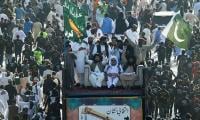
Meanwhile, Federal Minister for Information and Broadcasting Attaullah Tarar Friday said that the protest calls from the Pakistan Tehreek-e-Insaf (PTI) and Tehreek-e-Labbaik (TLP) for Friday were inconclusive and had ended up in a no-show.
Talking to the media, he said cities and markets were bustling, as people from all walks of life, including traders, had completely rejected their calls for protest.
Tarar said the public is celebrating Pakistan’s crucial role in the Gaza peace process and its foreign policy successes.
He specifically highlighted the honour PM Shehbaz Sharif received from US President Donald Trump who invited the prime minister to address on the occasion of Gaza peace process in Sharmal Sheikh.
The minister also condemned the “political stunt” of KP CM Sohail Afridi, who did not attend a high-level meeting chaired by PM Shehbaz Sharif on the repatriation of Afghan refugees. Tarar noted that the meeting, which lauded the sacrifices of Pakistani soldiers, involved important decision-making and follow-up on previous decisions. He stressed that all provincial governments and institutional representatives were present, except for the KP CM.


-
 Aurangzeb confirms Saudi Arabia $10bn interest, says B2B shift ongoing
 -
 Pakistan to build artificial island to boost oil exploration
 -
 Special pink bus service launched for women on Green Line route
 -
 Same number plates from other provinces lead to wrong e-challans for Karachiites
 -
 State institutions ‘fail’ to perform constitutional duties: KP CM
 -
 CTD orders psychological testing of police on VVIP security duty
 -
 Navy busts drug consignment valued at $130m
 -
 Three ex-secretaries in race for ETPB chief post