Pakistan’s off-grid and net-metered capacity hits 18,000 MW
Net-metering capacity reaches 6,000 megawatts, and off-grid solar installations are estimated at 12,000 MW
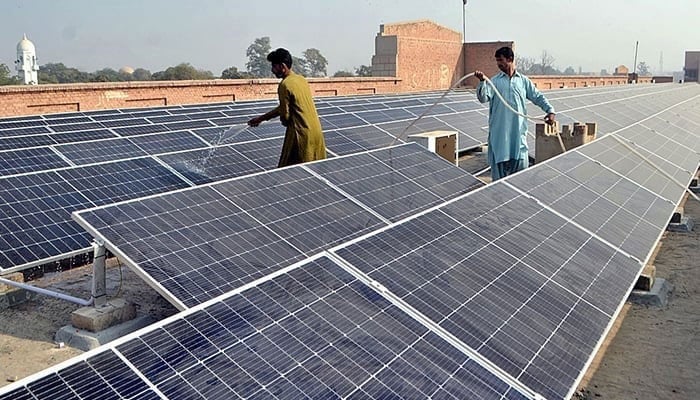
ISLAMABAD: Pakistan’s off-grid and net-metered solar capacity has surged to 18,000 MW, creating challenges for grid stability as the government monitors the integration of renewable energy with the national grid.
Power Division Secretary Dr. Fakhr Alam Irfan noted that electricity generated through the grid and net-metering cannot be directly compared, with grid power carrying additional costs of 14 rupees for capacity and 9 rupees for taxes, while net-metered electricity is cheaper.
Net-metering capacity has now reached 6,000 megawatts, and off-grid solar installations are estimated at 12,000 MW, based on satellite imagery. Officials warned that the growing load from these systems could threaten the stability of the national grid if not carefully managed.
The National Assembly’s Standing Committee on Power that met here with MNA Muhammad Idrees in the chair discussed the "Multi-Vendor Electricity Distribution Bill, 2025," introduced by MNA Shahida Rehmani, but deferred it until February 2026 for further consideration. Rehmani highlighted Karachi’s ongoing electricity challenges, citing inefficiency and rising losses under K-Electric.
The Power Division official said that Karachi and other parts of the country, electricity users will be able to buy power from any company starting January 2026.
Dr. Fakhr Alam Irfan said that 200 MW of electricity will be available for bulk purchase in the initial phase in the country. The open-market access will first apply to consumers drawing up to one megawatt of power.
Dr. Irfan said distribution companies have been instructed not to shut feeders even if losses reach 20 per cent, to avoid further financial damage. Losses have fallen from Rs600 billion in 2024 to Rs397 billion in 2025.
He also noted growing pressures on the grid from off-grid and net-metered solar systems, which now total 18,000 MW combined, raising stability concerns. While cheaper, solar cannot fully replace grid electricity, which carries additional costs including Rs14 per unit for capacity and Rs9 per unit in taxes.


-
 Aurangzeb confirms Saudi Arabia $10bn interest, says B2B shift ongoing
 -
 Pakistan to build artificial island to boost oil exploration
 -
 Special pink bus service launched for women on Green Line route
 -
 Same number plates from other provinces lead to wrong e-challans for Karachiites
 -
 State institutions ‘fail’ to perform constitutional duties: KP CM
 -
 CTD orders psychological testing of police on VVIP security duty
 -
 Navy busts drug consignment valued at $130m
 -
 Three ex-secretaries in race for ETPB chief post