Govt for giving PBS lead role in resolving trade data disparities
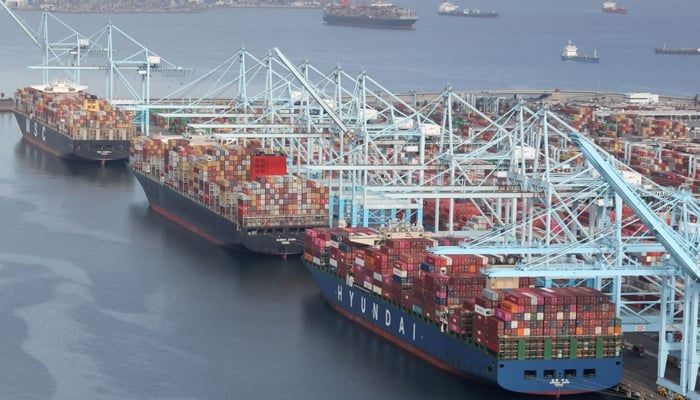
ISLAMABAD: The government has proposed giving a leading role to the Pakistan Bureau of Statistics (PBS) comprising a representative of the State Bank of Pakistan and Chief of International Trade & Finance (ITF) from the Ministry of Planning to address the discrepancies in trade data, official documents available with The News revealed.
Earlier, the government had constituted a committee led by the Planning Commission’s Chief Economist, Dr Imtiaz Ahmed, before the arrival of the IMF mission, but the committee remained unable to resolve the lingering controversy. The IMF mission raised the issue with Pakistani authorities. The Planning Ministry has shifted the responsibility to the PBS, arguing that there is a need to review the shift of sources of trade reporting data from the existing PRAL system to the Pakistan Single Window (PSW).
According to the official communication, Section 4(2) of the General Statistics (Re-organisation) Act 2011 mentions that the PBS shall regulate statistical activities of national interest and provide overall coordination, monitoring, evaluation and review of the statistical work conducted by other agencies in the statistical system. This makes the PBS the sole regulator and coordinator of all activities, including trade data handled through Pakistan Revenue Automation Limited (PRAL) or Pakistan Single Window. This empowers the PBS to manage trade and commercial statistics, including import-export reporting and to coordinate with relevant organisations such as the SBP and FBR.
When contacted, a senior official said that the PBS was solely responsible for this trade data. He said that the IMF took up the issue, and now the Planning Ministry has proposed to formulate another committee under the PBS to resolve this lingering controversy amicably. He explained that data collection methodologies change with the passage of time as new data series comes to the surface, so the required changes in data collection were incorporated in the rebasing of national accounts or the collection of pricing data.
Sources said that the PBS received data on the basis of Goods Declarations, but new schemes were introduced in the trade, and the Pakistan Single Window (PSW) also came into being. Now there is a widening discrepancy in the trade data, which has ballooned to $6 billion in the last fiscal year. In totality, this number has gone up to an unimaginable level of $25 to $30 billion. Ultimately, the SBP data compiled on the financial transactions will provide a solution, but there is a known fact that under-invoicing or over-invoicing persists.


-
 Aurangzeb confirms Saudi Arabia $10bn interest, says B2B shift ongoing
 -
 Pakistan to build artificial island to boost oil exploration
 -
 Special pink bus service launched for women on Green Line route
 -
 Same number plates from other provinces lead to wrong e-challans for Karachiites
 -
 State institutions ‘fail’ to perform constitutional duties: KP CM
 -
 CTD orders psychological testing of police on VVIP security duty
 -
 Navy busts drug consignment valued at $130m
 -
 Three ex-secretaries in race for ETPB chief post