India’s Afghan play
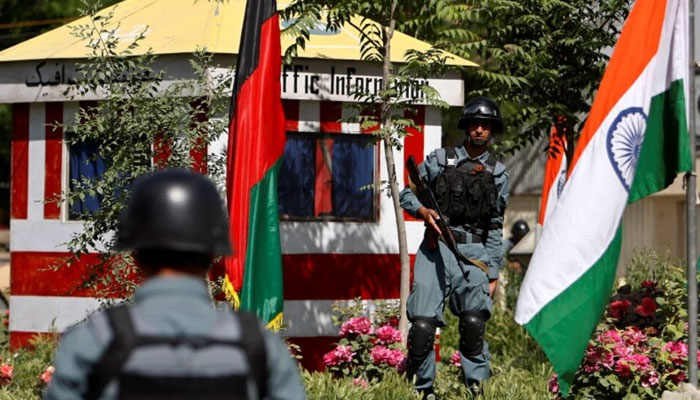
India’s renewed outreach to the Taliban government in Kabul marks a notable shift in South Asia’s strategic landscape. After two decades of staunch opposition to the Taliban and close alignment with the US–backed Afghan Republic, New Delhi is reopening its embassy, expanding humanitarian programmes and holding high-level contacts with Taliban officials. Far from signalling reconciliation, this move reflects an interest-driven attempt to recover lost influence and counter regional rivals.
Through the 1990s, India interpreted the Taliban’s rise almost entirely through the lens of its enduring rivalry with Pakistan. In what could be described as Chanakya’s Strategy 2.0 – the maxim that the enemy’s enemy is a friend – New Delhi refused to recognise the Taliban government and instead aligned itself with the Northern Alliance, maintaining a limited logistical and medical presence in Tajikistan. This policy reflected India’s overriding objective at the time: to deny Pakistan what is sometimes perceived as ‘strategic depth’ on its western frontier.
The collapse of the Taliban regime in 2001 transformed India’s position overnight. Riding on US and Nato protection, it became one of Afghanistan’s largest development partners, committing more than $3 billion to infrastructure, education and governance projects. Flagship ventures such as the Afghan parliament building, the Salma (Friendship) Dam in Hera, and the Zaranj–Delaram Highway linking Afghanistan to Iran’s Chabahar Port were celebrated as symbols of Indo-Afghan friendship – but each also advanced India’s effort to bypass Pakistan and secure continental access to Central Asia.
The 2011 Strategic Partnership Agreement deepened Indo-Afghan security cooperation. Though it stopped short of a formal defence treaty, its language on training, equipping and supporting Afghan security forces was widely read in Kabul as a de facto security assurance, suggesting that India might stand by the republic in the event of external aggression or significant instability. This heightened Pakistan’s concern that Afghanistan was being drawn into India’s strategic orbit.
When the Afghan Taliban returned to power in August 2021, India’s two-decade investment evaporated. Trained cadres fled, projects stalled and soft-power capital disappeared. The abrupt US withdrawal – leaving behind an estimated $7 billion in advanced weaponry – further reshaped the landscape. Whether that abandonment reflected oversight, compulsion or a deliberate scorched-earth policy, the outcome is clear: the Taliban now possess unprecedented military capability, and India sees opportunity in re-engagement where it once saw threat.
By mid-2022, New Delhi quietly stationed a ‘technical team’ in Kabul to manage aid flows. Dialogue expanded through backchannels in the Doha and Moscow formats, culminating in Afghan Foreign Minister Amir Khan Muttaqi’s 2025 visit to New Delhi and India’s announcement that it would reopen its embassy in Kabul. For a government that once branded the Taliban a terrorist proxy, the U-turn is striking.
Three calculations underpin this pivot. First, India wants direct security access to gather intelligence, monitor militant activity and strategically sandwich Pakistan from both the west and east, keeping it politically and diplomatically pinned down. The Taliban’s public statement on the Pahalgam incident in IIOJK provided the political cover New Delhi needed to justify its renewed outreach to Kabul.
Second, India aims to counter Pakistan and China. Islamabad’s frictions with Kabul and Beijing’s deepening role in Afghan infrastructure and mining give New Delhi both motive and opening. Limited US tolerance for India’s outreach – allowing Washington to observe developments indirectly – adds a layer of quiet convergence without formal coordination.
Third, India seeks economic recovery of influence. Access to Afghanistan’s copper, lithium and rare-earth deposits dovetails with its push to diversify critical-mineral supply chains. In this sense, aid and diplomacy again become instruments of strategy.
For the Afghan Taliban, Indian overtures bring short-term legitimacy but long-term peril. Alignment with a power once tied to their battlefield adversaries could erode claims of independence and antagonise neighbours who have so far adopted a cautious, cooperative posture. Many within the Northern Alliance diaspora would view India’s new friendship with disbelief, interpreting it as a betrayal of past commitments. The Taliban, too, are unlikely to forget India’s role in their isolation during the 1990s and early 2000s.
If Kabul allows India a privileged intelligence or security presence, it risks reverting to the pattern that doomed previous Afghan governments – external reliance in exchange for aid. The optics of a foreign power operating from the same compounds once used by the Republic’s intelligence service will sit uneasily with a population promised sovereignty free of outside manipulation.
Pakistan views India’s return to Kabul as another chapter in a long pattern of serial opportunism: the Northern Alliance yesterday, the Taliban today. Islamabad’s policy, by contrast, has emphasised continuity: support for an Afghan-led, Afghan-owned peace process and non-interference in domestic affairs. Geography, cultural affinity and people-to-people ties give Pakistan a depth of connection that no distant power can replicate.
For China, the picture is different. Beijing’s cautious economic engagement and counterterrorism dialogue with the Taliban aim to stabilise, not dominate, Afghanistan. India’s actions, however, seek to blunt this constructive role and re-insert itself as a geopolitical counterweight. The result is a contest between development-driven stabilisation and visibility-driven competition.
India’s re-entry into Afghanistan is not a moral awakening but a tactical adjustment. It highlights the flexibility and fragility of foreign policies built on transient alignments. By shifting from the Northern Alliance to the Taliban without acknowledging the contradiction, New Delhi is signalling that principle will always yield to expediency.
For Afghanistan, the danger lies in becoming once again a platform for others’ rivalries. For Pakistan, the task is to respond with composure. Once the ongoing military response concludes, maintaining dialogue with Kabul, advancing regional connectivity and assisting the Taliban in normalising a troubled Afghanistan will become imperative.
South Asia’s future stability depends less on who gains a foothold in Kabul and more on whether external actors learn from the repetition of history. Thus far, India appears intent on repeating it.
The writer is the president of the Global Peace Strategy Forum.